A cold room or silent outdoor unit can quickly trigger a search for Bonsall heating repair. Before arranging service, document what the heat pump is doing and avoid opening its equipment panels. Those details can help a licensed technician begin with a clearer picture.
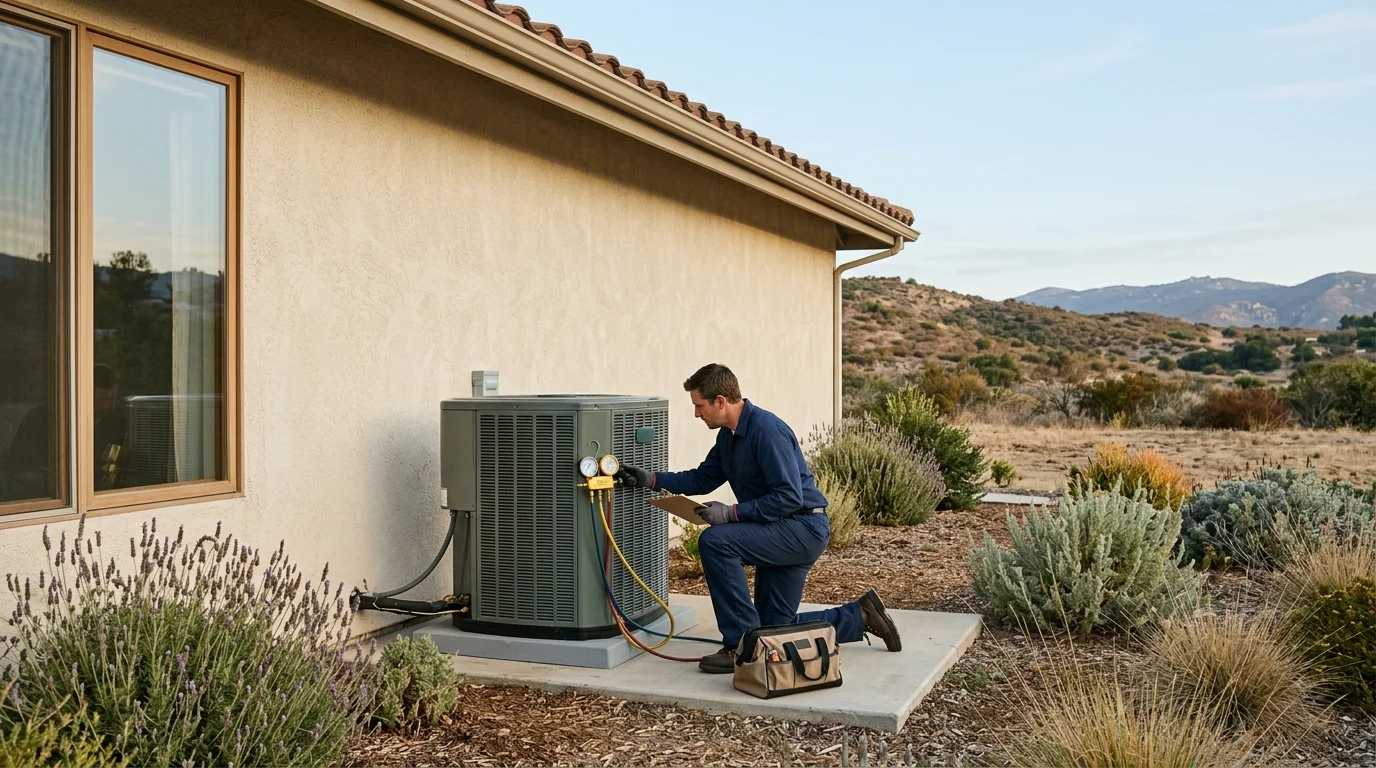
How to separate a thermostat problem from equipment trouble
Start at the thermostat, but don’t assume it caused the problem. Record the displayed temperature, selected mode, fan setting, and requested temperature. If the screen shows a warning or unfamiliar symbol, photograph it instead of guessing what it means.
Check whether the thermostat follows a schedule. A programmed change may explain why the requested temperature shifted. If someone recently changed a setting, write that down too. Don’t alter several settings at once. Doing so can erase the pattern a technician needs to see.
Next, note how the heat pump responds. Does the thermostat display change when you request heat? Do you hear the indoor equipment start? Does air come from the registers? Is the outdoor unit running, silent, or starting and stopping? These observations don’t identify the failed part. They help separate a control complaint from a broader equipment complaint.
A blank screen, an incorrect setting, and equipment that won’t respond are different starting points. Each still needs proper diagnosis. Our guide to thermostat problems that resemble heat pump trouble explains what information may help before service.
Tell the technician which rooms feel affected. A whole-home problem differs from one uncomfortable room. If the home has several thermostats or separate indoor units, identify which zone has trouble. That keeps heating system repair in Bonsall focused on the equipment and area involved.
What to check without opening the heat pump
Keep this first review visual. Don’t remove covers, reach into equipment, probe wiring, or handle refrigerant components. The goal is to collect useful information, not attempt an internal repair.
Walk through the home and note which registers or indoor units are producing airflow. Record whether the airflow feels different from room to room. Look for furniture, rugs, or stored items directly blocking an accessible register. Don’t dismantle a register or duct to investigate further.
Look at the thermostat settings again. Write down whether the system is set for heating, cooling, or automatic operation. Note the fan selection and any displayed message. If the thermostat uses batteries, follow its manufacturer instructions rather than improvising a procedure.
From a normal viewing position, inspect the outdoor unit. Note visible debris, standing water, physical damage, or anything leaning against the cabinet. Don’t open the unit or put your hands through its grille. Take a wide photo showing the surrounding area, then photograph anything unusual.
You can also observe the electrical panel without opening HVAC equipment. Record whether a labeled breaker appears out of position. Don’t repeatedly reset it. A technician should hear about any breaker movement, recent outage, or electrical work at the property.
These checks support a conversation about heat pump repair service. They don’t replace diagnosis by the licensed independent contractor who visits the home. Heat Pro SD makes the connection and performs no physical repair work.
Signs that mean the system should stay off
There isn’t a verified, universal shutdown checklist supporting this page. Heat pump designs and manufacturer instructions differ. Follow the warning labels and operating instructions supplied with your system. If those materials direct you to stop operation, leave the equipment off until a qualified professional evaluates it.
Treat an unfamiliar smell, sound, visible condition, or repeated shutdown as information for the contractor. Don’t open a cabinet to locate its source. Don’t bypass a control, defeat a shutoff, or keep restarting equipment to see whether the symptom returns.
Write down exactly what happened before the system stopped. Include any thermostat message and the equipment operating mode. Note whether the event followed a power interruption, thermostat change, maintenance visit, or work elsewhere in the home. Avoid assigning a cause unless a technician has confirmed it.
Immediate hazards need an appropriate emergency response, not a blog checklist. Move away from the affected area and follow the directions of the relevant emergency authority or utility. Don’t rely on Heat Pro SD for emergency dispatch. The published phone line routes to voicemail and isn’t answered live.
Some situations can wait for a normal diagnostic appointment. Others may need a different response. Because this page can’t verify which category fits an unknown condition, don’t treat it as a safety diagnosis. Our emergency heat pump repair guide offers a clearer framework for deciding whom to contact.
Details to gather before speaking with a technician
Good notes make the first conversation more useful. Begin with the problem in one sentence. For example, describe whether the system won’t start, won’t maintain the requested temperature, makes a new sound, or affects only one area.
Then create a short timeline. Record when you first noticed the change and whether it happens constantly or intermittently. Note the thermostat mode and requested temperature at that moment. If a message appeared, copy it exactly or attach a clear photo.
Photograph the thermostat display and equipment data plate without removing any cover. Make sure the text is readable. A technician may use that information to identify the system before discussing possible next steps. Don’t publish those images online if they contain personal or property information.
Gather any documents you already have. These might include the owner’s manual, prior service findings, installation records, or written warranty terms. Don’t assume coverage. Ask the contractor or manufacturer to confirm any warranty that may apply.
Your service notes should include:
- Which rooms or zones are affected
- Whether the complaint occurs in heating, cooling, or both
- What the thermostat displays
- What the indoor and outdoor equipment appear to do
- Any recent power interruption or property work
- Every setting or reset attempted
- Photos of visible conditions and equipment labels
Describe the Bonsall property accurately, but don’t diagnose it yourself. Tell the contractor whether the system serves the entire home or separate zones. Mention access constraints that could affect an inspection. Clear facts are more valuable than a confident guess.
When repair and replacement both deserve a quote
A repair recommendation should explain the observed problem and proposed correction. A replacement recommendation should explain why replacing the equipment is being considered. When both paths are presented, request separate written scopes so you can compare the same information.
Don’t let an unverified price range decide the issue. This page doesn’t publish a repair average, replacement average, or expected savings figure. Those amounts weren’t confirmed in the approved source material. Ask each contractor for a written quote tied to the actual Bonsall home and identified equipment.
The repair quote should identify the contractor’s findings, proposed work, parts, labor, exclusions, and payment terms. Ask what happens if additional trouble appears after work begins. Any warranty should come from the independent contractor or manufacturer, not Heat Pro SD.
A replacement quote should identify the proposed system and included work. New equipment sold must meet the applicable federal efficiency minimum. A licensed installer can quote compliant equipment. Don’t compare an older SEER label directly with SEER2 as though the scales are identical. SEER2 uses a harder test, so the ratings aren’t directly comparable.
Current incentives shouldn’t be assumed. TECH Clean California reported single-family heat pump HVAC incentives as nearly reserved statewide on November 14, 2025. HEEHRA reported Southern California single-family funds fully reserved on January 7, 2026, with later statewide restrictions. Verify current information with the California Energy Commission before relying on any program.
Our guide to deciding whether to repair or replace a San Diego heat pump can help organize that comparison.
How to compare the written findings
Place the written findings side by side. First, check whether each contractor described the same symptom and inspected the same equipment. A low total isn’t directly comparable if the scope leaves out work included elsewhere.
Separate confirmed findings from possible causes. Ask the contractor to mark what was observed, what was tested, and what remains uncertain. If the recommended work changes, request an updated written scope before approving it.
Check the document for these points:
- The equipment and area covered by the quote
- The diagnosed condition
- The proposed repair or replacement work
- Included parts and labor
- Items specifically excluded
- Payment timing
- Written warranty terms, if offered
- Permit handling, if a permit is required
- The contractor’s identifying information
Verify the contractor through the California Contractors State License Board license check. Heat Pro SD matches homeowners with licensed independent local pros, but you should still confirm the current license record before signing.
California’s limited exemption for casual or minor work applies only when the aggregate contract price is under $1,000 and no building permit is required. That threshold became effective January 1, 2026. The exemption doesn’t permit splitting a larger job into smaller contracts, and someone advertising as a contractor loses it at any price.
For a home-improvement contract, California limits the down payment to $1,000 or 10 percent of the contract amount, whichever is less. Review the contract against the current state requirements before paying.
Finally, ask for plain answers. You should understand what was found, what work is proposed, and which uncertainties remain. If the documents don’t answer those points, request clarification before choosing a quote.
When to call us
Call when basic observations don’t explain the problem or internal diagnosis is needed. Heat Pro SD can match you with a licensed independent pro, while the contractor performs the inspection and repair. Call us at (858) 400-4374 and we’ll connect you with a licensed local HVAC contractor.