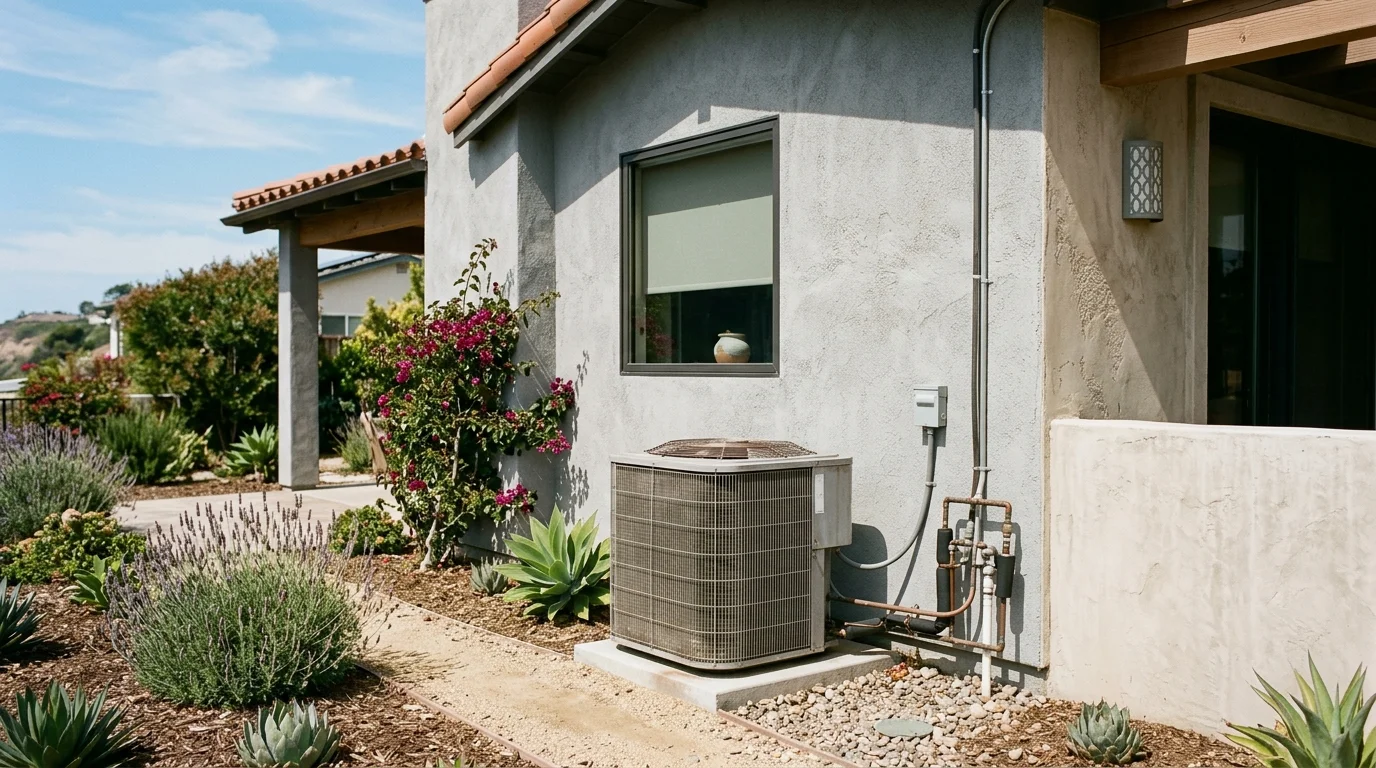
The thermostat goes dark after sunset, and the house starts losing comfort. Emergency heat pump repair makes sense when the failure includes smoke, fire, a fuel odor, electrical damage, or water near electrical parts. A quiet system without those warning signs may be documented and handled after morning.
The three failures that genuinely cannot wait
Some heat pump problems are uncomfortable. Others create an immediate reason to stop using the equipment and seek help.
The first is visible fire, smoke, sparking, or an intense burning odor. Turn the system off only if you can do so without approaching the affected equipment. Leave the area if needed. Contact emergency services when there’s a fire or anyone faces immediate danger. Don’t keep restarting the heat pump to test it.
The second is a fuel odor near a hybrid or dual-fuel system. A heat pump may share a home with fuel-burning equipment. Don’t assume the smell comes from dust or the outdoor air. Leave the affected area and contact the utility or emergency services. The HVAC diagnosis can follow once the immediate concern has been addressed.
The third is active water reaching electrical parts. A small amount of moisture and a spreading leak aren’t the same situation. Water running toward wiring, a disconnect, or an electrical panel needs prompt attention. Don’t remove covers or reach into the equipment.
These conditions call for more than ordinary troubleshooting. If there’s no immediate danger but you need a licensed contractor, request emergency heat pump service. Heat Pro SD can connect you with an independent local pro, but it doesn’t perform the repair or promise an arrival window.
Signs that may be able to wait until morning
A failed heat pump can make a quiet house feel urgent. Still, a loss of heating or cooling isn’t automatically a building emergency.
A blank thermostat, an error message, weak airflow, or air that feels wrong can indicate a repair need. Those symptoms may be reasonable to monitor until morning when there is no smoke, fuel odor, sparking, exposed damage, or spreading water, and when everyone in the house can stay in a suitable indoor environment. This is not a certificate that an unknown failure is safe.
A system that runs but doesn’t deliver the expected air deserves a closer look. Our guide to a heat pump blowing warm air explains the observations that can help separate a thermostat issue from a broader performance problem. Don’t open the cabinet or repeatedly cycle the equipment while investigating.
Your location within San Diego County also shapes the decision. A home near Oceanside or Point Loma may feel different overnight than one in Escondido, El Cajon, or Alpine. Focus on the conditions inside your home, not a countywide weather summary.
Waiting becomes less reasonable when an infant, older adult, or medically vulnerable person can’t stay comfortable. The same applies when the indoor environment is no longer manageable for anyone in the household. Moving to another suitable location may be the better choice while a contractor assesses the equipment.
No checklist can certify an unknown failure as safe. When the signs are unclear, stop operating the system and describe exactly what happened to a licensed HVAC contractor.
What to do the night a heat pump quits in San Diego
Start by observing the system without taking it apart. Read the thermostat display and note its mode, setpoint, and any error message. Check whether the rest of the home has power. This helps distinguish a whole-property outage from a problem limited to the HVAC equipment.
Look at the electrical panel from a safe position. Record whether a breaker appears tripped, but don’t keep resetting it. A breaker that trips again needs professional assessment. Don’t remove an electrical panel, disconnect, thermostat, or equipment cover.
Next, make a short timeline. Note when the failure began and what the system did beforehand. Write down unusual sounds, odors, visible moisture, and changes in airflow. Photograph the thermostat and any visible error code. A brief video can capture a sound that stops before the contractor arrives.
If there’s a neighborhood outage, check SDG&E’s current outage information. The utility controls restoration information for its system. An HVAC contractor can’t restore power to the neighborhood.
For a condo or HOA property, find the access instructions before requesting service. The outdoor unit may sit behind a locked gate, on a roof, or inside a shared mechanical area. Have the property manager’s current access process ready. Don’t assume an after-hours contractor can enter a restricted area.
When the issue has no immediate danger signs, you can request a connection through our emergency service page. Describe the symptoms without guessing at the failed part.
How to keep a house liveable until a tech arrives
Choose one comfortable part of the home and reduce unnecessary movement between rooms. Close doors to unused spaces. Use curtains, bedding, and suitable clothing to manage comfort. Follow every manufacturer instruction for any portable appliance you use, and don’t improvise a heating method.
Keep phones charged and place flashlights where they’re easy to reach. Save thermostat photos, equipment details, and contractor information together. This reduces confusion if someone else needs to handle the repair conversation.
Don’t sacrifice safety to protect the house from discomfort. If the indoor conditions become unsuitable for someone, move that person to another appropriate location. Family, friends, or a hotel may provide a workable backup. The right choice depends on the people in the home and the conditions that night.
San Diego County covers coastal, inland, mountain, and South Bay communities. Conditions around Chula Vista can differ from those near Ramona or the backcountry. Check the current local forecast for your specific address. Don’t rely on a reading from another part of the county.
Avoid making repeated thermostat changes. Those changes can make the original symptom harder to describe. Leave the system off when it produced smoke, sparking, a fuel odor, or signs of electrical damage.
You don’t need to diagnose the equipment before speaking with a contractor. Your job is to preserve clear observations and keep the household somewhere suitable. The licensed pro can determine whether the problem calls for a control repair, electrical work, a component replacement, or further testing.
What to have ready when you call
Good information helps the contractor understand the request. Begin with the property address and the best callback contact. Then share the heat pump’s brand and model if the labels are visible without opening anything.
Describe what you experienced in plain language. “The thermostat went blank after the outdoor unit made a buzzing sound” is more useful than naming a part you haven’t tested. Include the first symptom, what happened next, and whether the system is currently off.
Have these details nearby:
- Photos of the thermostat and visible equipment labels
- Any error message shown on the thermostat
- Unusual sounds, odors, moisture, or airflow changes
- Recent thermostat changes or power interruptions
- Whether the system serves the whole home or one zone
- Gate, parking, roof, condo, or HOA access instructions
- The name of anyone authorized to approve work
Ask which licensed contractor will handle the visit. You can confirm a California contractor’s status through the CSLB license check. Heat Pro SD is a referral service, not the contractor performing the work.
Before authorizing work, request a written, itemized quote from the independent pro. Ask what covers diagnosis, labor, parts, after-hours scheduling, and any temporary measure. Confirm whether the proposed work is a complete repair or only a step toward one.
For ordinary failures without immediate danger signs, our heat pump repair service page offers another way to request a connection.
Why after-hours work is priced differently
The independent contractor sets the price for emergency heat pump repair. Heat Pro SD doesn’t set service charges, repair prices, or payment terms.
After-hours pricing can reflect technician scheduling, travel, property access, diagnostic difficulty, and parts sourcing. A contractor may also separate an initial assessment from the final repair. Ask about those pieces before approving the work.
Start by requesting an itemized written quote. It should identify the work being authorized and the charges connected with it. Ask whether the quote covers diagnosis only, a temporary measure, or the completed repair. If a part must be obtained later, ask what will happen during the return visit.
Don’t rely on a verbal total without understanding the scope. A low initial figure may describe only the service visit. A different figure may include labor and parts. Clear categories make competing proposals easier to compare.
Ask the contractor to explain the failed component in plain language. You can also request photos when the problem isn’t visible from the living space. If replacement is recommended, ask why repair isn’t the preferred option and what further testing supports that recommendation.
Warranty terms come from the contractor or equipment manufacturer, not Heat Pro SD. Ask for those terms in writing. Confirm who handles a return concern and which parts or labor are included.
Urgency shouldn’t erase basic hiring checks. Confirm the contractor’s license, review the written scope, and approve only the work you understand.
When to call us
Call emergency services for fire, smoke, or immediate danger. For a suspected gas leak, leave and contact the utility or emergency services first. Electrical damage belongs with a licensed electrical provider after the immediate hazard is handled. Heat Pro SD can later match you with a licensed independent HVAC pro for equipment diagnosis. The Heat Pro SD line is voicemail with a recording-consent notice. Leave a message at (858) 400-4374 only after those safety routes are covered.