The power is back, but your heat pump still won’t start. Before requesting service, record what has power, what remains silent, and what changed during the outage. Keep the checks simple and leave closed electrical equipment closed.
Confirm which parts of the system have power
Start by confirming that ordinary household power has returned. Check a familiar light or appliance in the same part of the home. This separates a continuing household power problem from a heat pump that remains off.
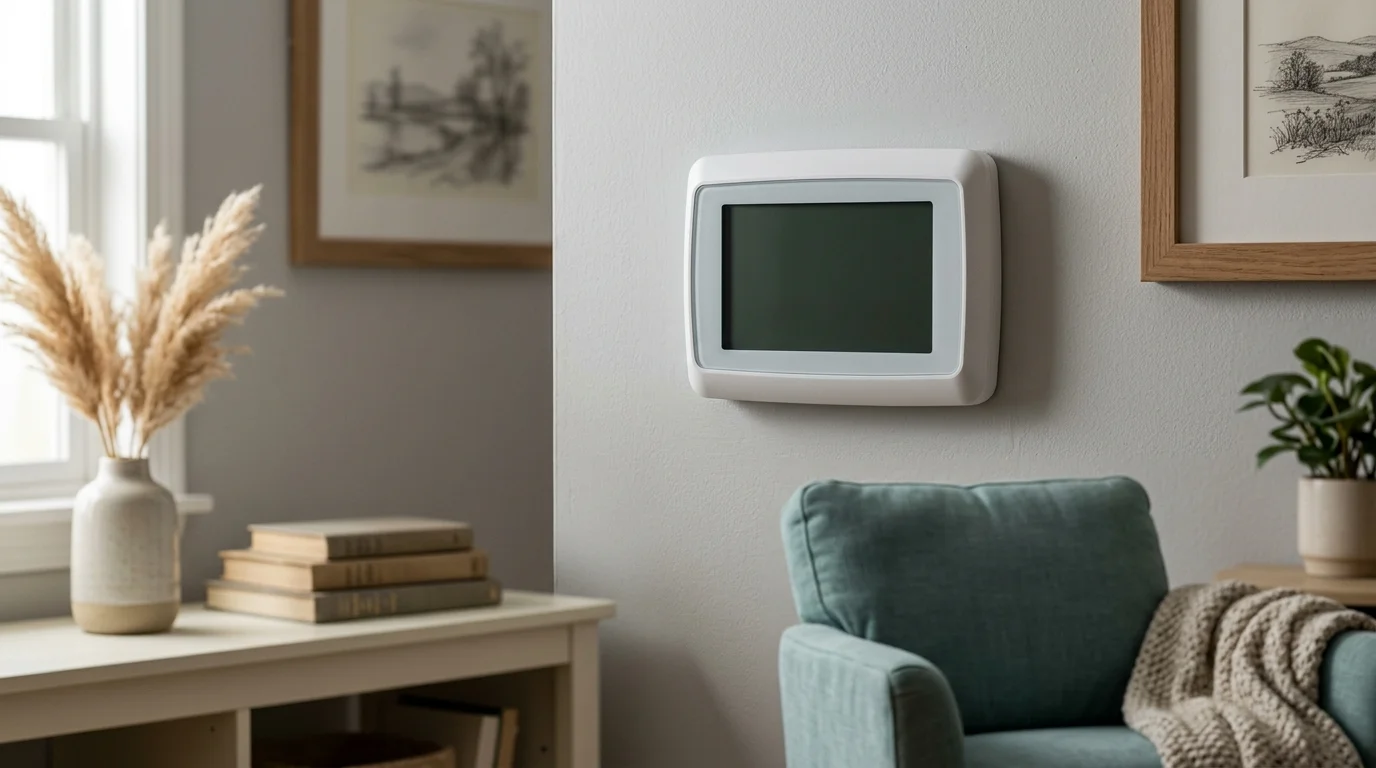
Treat each visible part of the system as a separate observation. Look at the thermostat, indoor equipment, and outdoor unit from a normal viewing position. In a multi-zone home, check each wall control. Write down which displays are lit and which are blank.
Keep the electrical panel closed. If its normal door can be opened without removing a cover, read the labels and note the visible breaker positions. Don’t remove screws, open equipment panels, touch wiring, or handle an outdoor disconnect. This page also doesn’t direct you to reset a breaker. Repeated resets can erase useful information about what happened.
A blank thermostat doesn’t prove where the problem sits. A working thermostat also doesn’t confirm that the indoor and outdoor equipment have power. Record those details separately instead of drawing a conclusion.
Location matters when you request an inspection. Note whether the equipment is on a roof, in an attic, inside a garage, or beside the house. A City Heights roof, an Encinitas side yard, and a Chula Vista condo can involve different access arrangements. Include gate, parking, HOA, and shared-equipment details that may affect access.
What to observe without opening electrical equipment
Use your eyes and ears, but keep covers and cabinets closed. A useful record describes exactly what the system does after you select heating or cooling. Avoid translating a sound or display into your own diagnosis.
Stand at a comfortable distance from the indoor equipment. Note whether it stays silent, starts and stops, or produces a new sound. Check whether air reaches the rooms. If it does, describe the airflow as absent, weaker than usual, or familiar. Don’t reach into a grille or equipment opening.
Observe the outdoor unit from outside its enclosure. Record whether the fan appears still or moving. Note any sound using ordinary words such as click, buzz, hum, or rattle. A short video can preserve an intermittent sound for the contractor. Don’t remove a guard or touch the cabinet to investigate it.
Look for visible changes around the equipment. Photograph anything that wasn’t present before the outage. Keep the frame wide enough to show where the condition appears. Don’t move a wire, hose, cover, or loose object to improve the picture.
Record whether other home systems also behave differently. That detail can help the licensed contractor decide what needs testing. It still doesn’t establish the cause.
If you want a professional review instead of making more observations, request a heat pump inspection. Heat Pro SD connects San Diego County homeowners with licensed independent pros. The matched contractor performs the inspection and any physical work.
Why thermostat settings may need review
The thermostat shows what you’re asking the system to do. Review the visible screen before changing several settings at once. Your goal is to preserve a clear starting point for the contractor.
Write down whether the display is blank, dim, or normally lit. Copy any message or code exactly, including punctuation. Don’t rely on memory or substitute a description such as “error message.” A photo usually captures more detail.
Next, record the selected mode, displayed temperature, and requested setting. If the thermostat has separate fan and schedule settings, record those too. For a multi-zone system, repeat this for each controller. Label the photos by room so the contractor can follow them.
Check whether the thermostat’s date and time match the current date and time. If a schedule appears on the screen, note whether it matches what you expected. Don’t assume the outage erased, preserved, or changed a setting. The visible result is the useful fact.
Avoid cycling rapidly among heat, cooling, and off. Several changes make the sequence harder to explain later. If you do change one ordinary user setting, write down the change and the time. Then describe what followed without guessing why.
Some thermostat symptoms resemble heat pump symptoms. Our guide to thermostat problems that look like heat pump problems explains how to organize those observations. It doesn’t replace testing by a licensed HVAC contractor.
What details to record before requesting an inspection
A short timeline gives the contractor a clearer starting point. Begin with the approximate time power went out and returned. If you don’t know the exact time, label it as approximate instead of inventing precision.
Note what the heat pump was doing before the outage. It may have been heating, cooling, running its fan, or already off. Record the first thing you noticed afterward. Examples include a blank thermostat, no airflow, a new display message, or an outdoor unit that remained quiet.
Build your notes around observable details:
- Your city or San Diego County neighborhood
- The thermostat’s exact display and selected mode
- Whether indoor airflow is present
- What the indoor and outdoor equipment do
- Any visible message or code
- Any sound, odor, or visible change you observed
- Any step someone already took
- The equipment’s accessible brand and model label
- Whether one zone or the whole home is affected
Photograph labels only when they’re visible without opening equipment. Don’t remove a panel to find a model number. Tell the contractor when a label can’t be reached safely from a normal standing position.
Keep the outage and backup-power questions separate. A battery or generator planning decision won’t diagnose the current no-start condition. If you’re considering future outage preparation, read our guide to battery backup for a San Diego heat pump.
Finally, mention access conditions. Tell the pro about a locked equipment area, condo rules, rooftop access, or a narrow side yard. Precise notes are especially helpful across San Diego County, from coastal North County through the central city, East County, and the South Bay.
When the system should remain off
Leave the system off if you’ve already stopped it because something about its condition concerns you. Don’t turn it back on merely to reproduce a sound, smell, display message, or visible change for a recording. Share the observation with a licensed contractor instead.
Don’t open electrical or equipment panels. Don’t handle wiring, touch internal parts, or repeatedly reset a breaker. The approved sources for this site don’t provide a specific electrical diagnosis homeowners can make after an outage. Because that rule couldn’t be confirmed, this page won’t label a particular sound, odor, code, or breaker position as safe.
Keep other people away from equipment you’re leaving off. Preserve any photos, videos, and written notes from the first observation. Don’t move a loose part or attempt to recreate the sequence that caused concern.
A loss of heating or cooling and a concern about equipment condition are different details. Tell the contractor about both. Describe the indoor temperature only as the thermostat displays it. Also mention anyone in the home whose comfort needs affect how you plan the next step.
For a situation you’ve determined needs prompt professional attention, use the emergency heat pump service page. It explains how to request a connection without promising an arrival time. Heat Pro SD doesn’t inspect equipment or dispatch its own crew. The independent HVAC contractor decides how to assess the property and what work is appropriate.
For a separate property emergency, contact the appropriate local emergency authority. Don’t rely on a blog post to classify an electrical or building emergency.
What a professional inspection should test
Ask the licensed HVAC contractor to test the system rather than diagnose it from one symptom. “It stopped after the outage” is useful context, but it isn’t a finding by itself. The inspection should identify what has power, what receives a control request, and where normal operation stops.
Ask the pro to review the thermostat and any zone controls. The inspection should account for the exact messages, settings, and sequence you recorded. If a display code appeared, ask what the manufacturer’s documentation says it means for that model.
The contractor should also evaluate the accessible electrical supply and the indoor and outdoor equipment. Those checks belong to the professional inspection. Don’t open the equipment beforehand to make those areas accessible.
Before approving work, ask for a plain explanation of:
- What was tested
- What finding explains the no-start condition
- Which part or connection needs attention
- Whether another condition also needs correction
- What test will confirm operation afterward
- What written options the contractor recommends
If replacement is proposed, ask why repair isn’t the recommended path. If repair is proposed, ask what was found and what the repair is intended to correct. Don’t accept a diagnosis based only on the timing of the outage.
Heat Pro SD matches homeowners with licensed independent local pros. You can verify a contractor’s license through the California Contractors State License Board. Confirm the license belongs to the contractor named in your paperwork before work begins.
When to call us
Call when your heat pump stays off after power returns, or when you’ve stopped troubleshooting because the equipment needs inspection. A licensed Heat Pump Installation pro should handle testing inside electrical and HVAC equipment. Call us at (858) 400-4374 and we’ll connect you with a licensed local HVAC contractor.