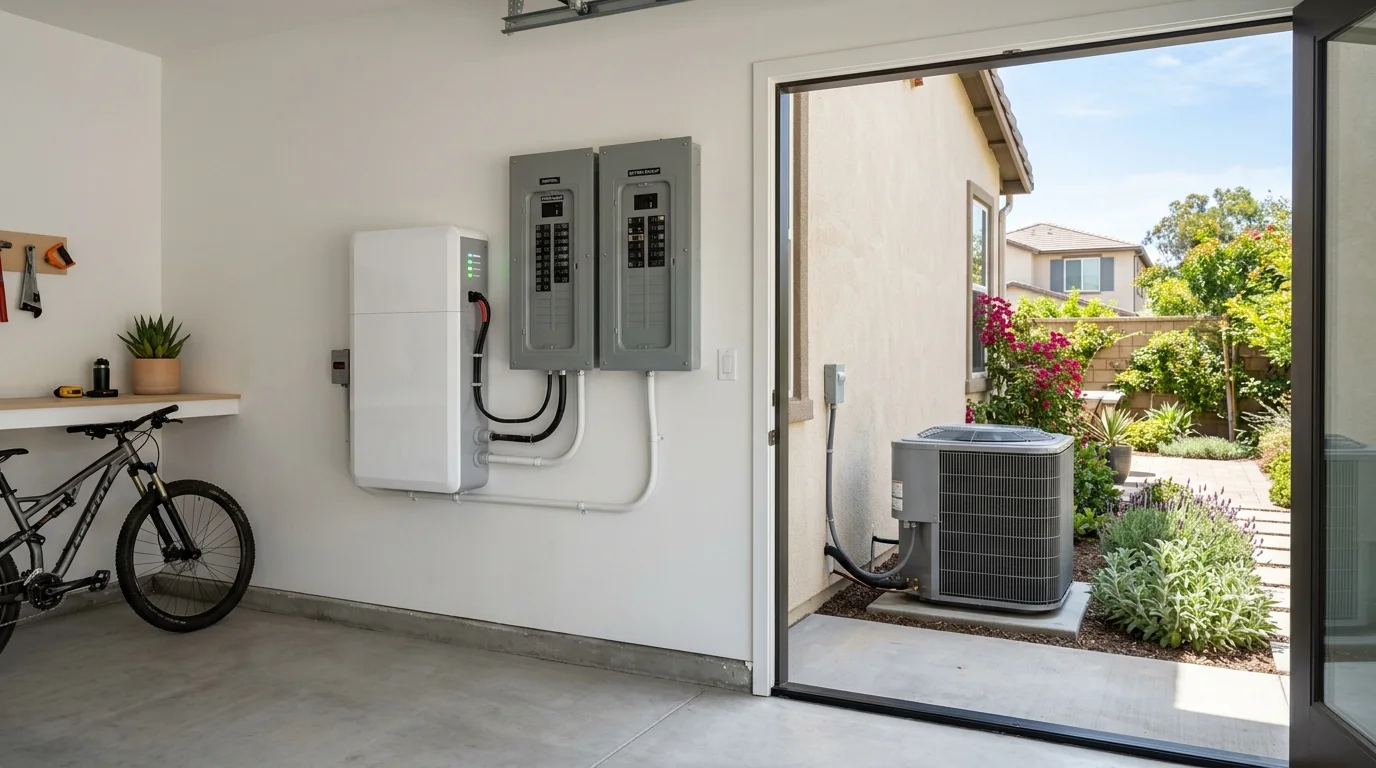
A home battery may run a heat pump during an outage, but there is no universal yes-or-no answer. Start with the heat pump’s exact electrical requirements, the circuits you want backed up, and the battery manufacturer’s written compatibility and output limits. Heat Pro SD can help with the HVAC side of that investigation. We do not install or refer battery or electrical work, so you will need to choose an appropriately licensed electrical provider for that scope.
Why a heat pump is one of the hardest loads to back up
A heat pump isn’t one small, predictable electrical load. The backup plan may need to account for outdoor equipment, indoor equipment, controls, and other connected components. The exact combination depends on how your system was designed.
That makes the equipment schedule more useful than the home’s square footage. Two Rancho Santa Fe homes near Paseo Delicias could have very different backup needs. One might have a central system serving most rooms. Another might use separate systems for different areas. Their panels, controls, and outage priorities may also differ.
Start by deciding what must remain available. Heating or cooling one occupied area is a different goal from supporting every room. Keeping refrigeration, lighting, communications, and medical equipment available can also affect the plan. Those loads compete for the same stored energy and output capacity.
The HVAC contractor should document which heat pump components must operate together. The electrician can then compare that information with the proposed battery equipment and backed-up circuits. Don’t accept a proposal that lists only the heat pump’s model name or the battery’s advertised capacity.
Proper heat pump sizing matters before battery planning begins. An unclear or mismatched HVAC design makes the electrical plan harder to evaluate. Ask both professionals to put their assumptions in writing, including which equipment will run and what the battery won’t support.
Starting current, and what soft start kits change
A steady running measurement doesn’t tell the entire story. The electrician should also determine whether your specific heat pump creates a higher demand when its compressor starts. That brief event may control whether the proposed battery inverter can start the equipment reliably.
Ask for the startup requirement and normal operating demand as separate line items. They shouldn’t be blended into one unexplained estimate. The proposal should identify the model information, the measurement method, and the conditions used for the evaluation.
Some battery or HVAC manufacturers may allow a compatible device intended to change compressor startup demand. Treat that as an equipment-specific question, not a general solution. Ask both manufacturers to confirm the exact model combination in writing before adding a device.
The HVAC contractor should address equipment compatibility. The electrician should address the battery system and connected circuits. If a battery seller recommends a soft start kit, ask the HVAC contractor to review that recommendation before work begins. Likewise, the electrician should review any electrical assumptions made by the HVAC contractor.
Get the resulting plan in writing. It should say whether a soft start device is included, where it will be installed, and how the finished system will be checked. It should also explain what happens if the heat pump and another selected load call for power together.
Don’t treat a soft start kit as a substitute for load calculations. It’s one possible design component. The full plan still needs to account for the home’s selected outage loads and the battery system’s usable output.
How long a typical battery actually carries a heat pump
There isn’t a defensible typical runtime for a Rancho Santa Fe heat pump battery installation. Runtime depends on the selected battery, the heat pump’s actual demand, weather, thermostat settings, building conditions, and every other backed-up load. A single universal figure would hide those differences.
Ask the installer for a written runtime worksheet instead. It should identify the proposed battery’s usable stored energy and available inverter output. It should then show the assumed heat pump demand and each additional circuit included in the calculation.
Look closely at the assumptions. A worksheet based on continuous heat pump operation describes a different situation from one based on intermittent operation. Neither assumption should be presented as a promise. The contractor should explain why it fits your equipment and planned use.
Request several operating scenarios. One can cover the heat pump and essential household circuits. Another can show the effect of removing optional loads. A third can address a limited heating or cooling zone, if your HVAC design allows it. Written comparisons make tradeoffs easier to see.
The plan should also state what isn’t backed up. Pool equipment, cooking appliances, vehicle charging, or other large loads shouldn’t be assumed either way. Their inclusion must appear clearly in the electrical scope.
Don’t rely on a verbal runtime estimate. Ask how the result will be tested after installation and where you can see battery status. If the proposal can’t connect its runtime claim to identified equipment and loads, request a revised calculation before signing.
Backing up one zone instead of the whole house
A focused backup plan can be easier to evaluate than a whole-house promise. Choose the rooms that matter during an outage, then ask whether the existing HVAC layout can serve only those spaces.
Zoning isn’t created by the battery itself. The HVAC system must already support that operating strategy, or the scope must explain the changes needed. Closing random supply registers isn’t a substitute for an HVAC design review.
A ductless mini-split installation may be worth discussing when one occupied area is the priority. That doesn’t mean ductless equipment is automatically the right answer. The HVAC contractor still needs to assess the space, equipment placement, electrical needs, and operating goal.
For an existing central system, ask whether its controls can support a limited outage mode. The answer should identify the equipment that must stay energized. It should also explain whether indoor fans, controls, dampers, or other components affect the proposed setup.
The electrical proposal should name every circuit assigned to battery backup. Labels such as “HVAC” or “essential loads” aren’t detailed enough by themselves. Ask for a circuit schedule that matches the HVAC contractor’s equipment list.
Walk through the proposed outage routine before approving it. Confirm which thermostat or controller you’ll use, which areas receive heating or cooling, and which household loads must remain off. A clear operating plan is more useful than a broad whole-home claim with undocumented limits.
Pairing with rooftop solar in San Diego
Rooftop solar adds another design question: can the proposed system recharge the battery during an outage? Don’t assume the answer from the presence of solar panels. Ask the designer to confirm how your specific solar equipment, battery, inverter, controls, and transfer equipment interact when utility power is unavailable.
The written scope should describe both daytime and nighttime operation. It should also state what happens when solar production is below the home’s active demand. Weather, shading, household use, and system design all affect that balance, so the proposal shouldn’t promise a fixed outage duration.
Ask the electrical provider to show how the proposed system behaves when utility power is unavailable, using the battery and inverter manufacturer’s documents for the exact models. The final circuit schedule should match the loads used in the runtime worksheet.
For a property near Via de la Valle or Del Dios Highway, the correct design still comes from site-specific equipment records and measurements. A nearby installation isn’t evidence that the same battery configuration will work at your home.
Current rates and energy programs can affect the financial comparison, but they shouldn’t be guessed. Check SDG&E’s current rate pages for the electric plan tied to the property. Review California program information through the California Energy Commission.
If a proposal includes a federal energy credit, confirm the current rules and eligibility on the IRS energy credit page. Don’t count an incentive until the responsible authority confirms it for your project and timing.
Who to have size this: the electrician or the HVAC contractor
This isn’t an either-or decision. The electrician and HVAC contractor should answer different parts of the same design.
Ask the licensed HVAC contractor to document the heat pump equipment, operating requirements, controls, and any proposed soft start device. If you’re considering central heat pump installation, the contractor should also explain which indoor and outdoor components need power together.
Ask the licensed electrician to evaluate the panel, selected circuits, battery equipment, inverter output, transfer arrangement, and proposed runtime worksheet. The electrician’s plan should use the HVAC contractor’s equipment information, not a general assumption about heat pumps.
Both scopes should use matching equipment names and operating scenarios. If one proposal describes whole-home backup while the other assumes one zone, stop and reconcile the difference. The same applies when solar charging or optional household loads appear in only one document.
Confirm the permitting authority for the exact property address. Ask each contractor to state who handles the permits and inspections within their scope. Don’t assume a Rancho Santa Fe mailing address identifies every approval involved.
Before signing, check each contractor through the CSLB’s official license lookup. Request an itemized written proposal covering equipment, labor, exclusions, testing, permit responsibility, and payment schedule. California’s home improvement deposit limits apply, so review the current requirements before paying.
Heat Pro SD matches homeowners with licensed independent HVAC pros and performs no physical work. We do not match battery installers or electricians. Your chosen electrical provider and HVAC contractor remain responsible for their respective designs and installation scopes.
When to call us
Call when battery planning exposes unanswered questions about heat pump size, controls, zoning, or equipment compatibility. A licensed HVAC contractor can document the HVAC requirements for your electrician’s battery design. The Heat Pro SD line is voicemail with a recording-consent notice. Leave a message at (858) 400-4374 and we will match you with a licensed independent HVAC contractor.