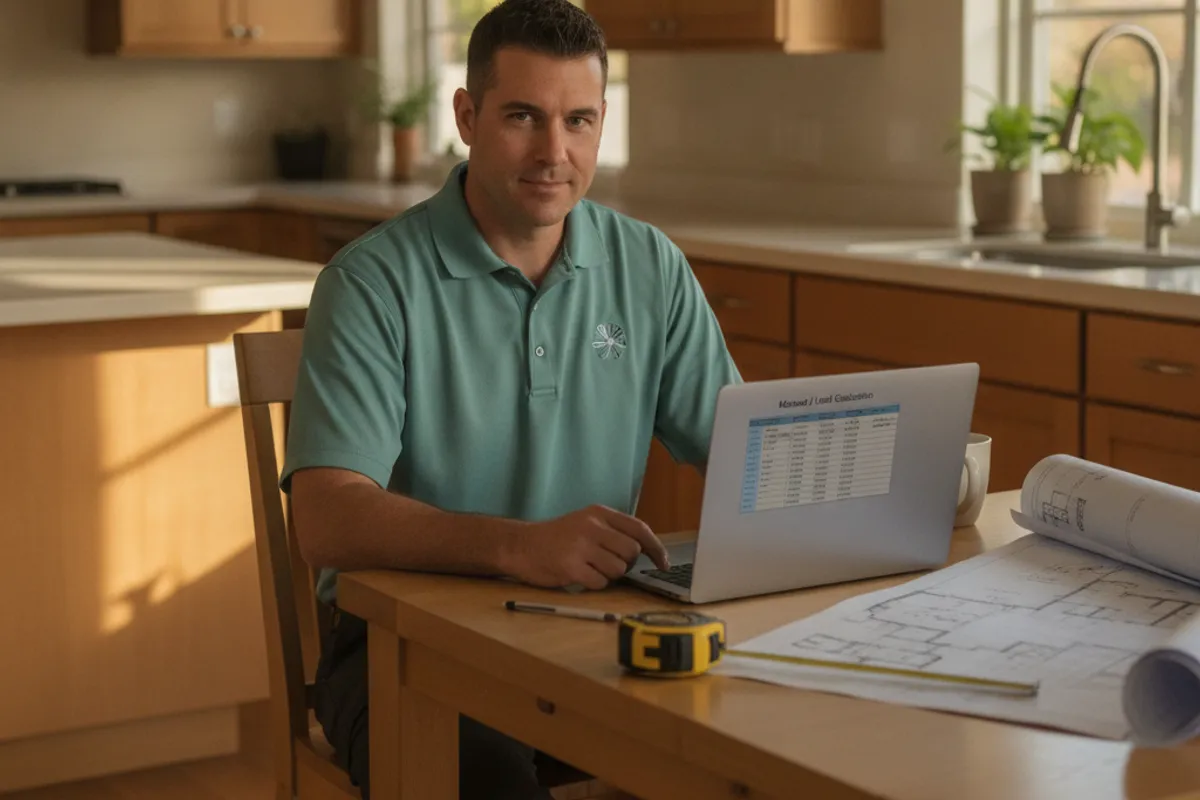
Why sizing matters more than most people think
An undersized heat pump runs constantly and still can’t maintain temperature on the hottest days. An oversized one short-cycles, which means it turns on, reaches setpoint quickly, shuts off, and repeats, never running long enough to properly dehumidify. Short-cycling in a San Diego home during marine-layer months can mean rooms that feel cool but clammy.
Getting sizing right requires a calculation, not a guess. ENERGY STAR tells homeowners that a system that is too large or too small will struggle, and that the contractor should verify size with Manual J. See ENERGY STAR air-source heat pumps.
What Manual J is and why it matters
Manual J is the ACCA (Air Conditioning Contractors of America) method for residential load calculations. It is the engineering method used to determine how much heating and cooling capacity a home actually needs. Contractors often express the result in BTUs per hour or in tons, but the method is the point, not a shortcut formula.
A Manual J calculation considers:
- Square footage and ceiling heights
- Insulation levels in walls, attic, and floor
- Window area, orientation, and glass type
- Local design temperatures (the outdoor temperatures used for worst-case calculations)
- Internal heat gains (people, appliances, lighting)
- Ductwork losses (for ducted systems)
- Local climate data used for that address
For San Diego County, design temperatures differ by location. A house in La Jolla and a house in El Cajon of the same floor area can need different capacity. Ask the contractor which outdoor design temperatures they used and where those numbers came from. Generic square-foot-per-ton rules ignore that difference. This page does not publish design temperatures or climate-zone lists.
Any contractor quoting a system size without performing or reviewing a Manual J calculation is guessing. It is worth pressing them on this.
Why San Diego is not one climate for sizing
Coastal marine layer, inland valley heat, and backcountry winters are different design problems. Dehumidification can matter more than raw cooling capacity near the water. Inland homes often care more about peak cooling. Higher-elevation homes need the contractor to show heating capacity at the outdoor condition they selected.
The Manual J design temperatures for your specific address drive the sizing. If your contractor is using a national average or a square-footage rule without adjusting for your house, the result may be a system that doesn’t perform well. Ask them to name the weather-data source.
The “bigger is better” trap
A heat pump that is oversized for a home will short-cycle. In San Diego, where many days are mild and humid rather than design-day hot, short-cycling can mean the heat pump never runs long enough to pull moisture out of the air. The result is a cool but muggy house. Variable-speed equipment can turn down, but it still has a minimum output. Ask the contractor how the proposed model behaves at part load, using that model’s published data, not a percentage oversize rule from this page.
Oversized equipment also costs more upfront. There is no performance advantage to buying more capacity than the calculation supports.
Ductwork affects effective capacity
For central ducted systems, the actual capacity delivered to the living areas is lower than the equipment’s rated capacity if the ducts leak or are poorly insulated. California’s residential energy code process can require duct testing on new HVAC installations. Ask whether your permit includes a duct leakage test and who performs it.
If your existing ductwork has significant leakage, the contractor should account for this in sizing or seal the ducts before or during the heat pump installation. Sealing ducts can change the effective load and may allow different equipment to meet the load. That is a documented finding, not a tons-per-area shortcut.
What to ask your contractor
Before signing a quote, ask these questions:
- Can you show me the Manual J calculation for my home?
- What outdoor design temperatures are you using, and what is the source?
- Are you accounting for my duct system condition?
- What published efficiency ratings does the proposed equipment carry, and where can I look them up?
- Is the equipment variable-speed, two-stage, or single-stage?
A contractor who brushes off these questions or says sizing is based on experience and square footage is not following the ENERGY STAR sizing approach. Experience matters, but the math matters more.
Variable-speed equipment and San Diego’s mild climate
San Diego’s mild climate means many heat pumps spend a lot of time below peak load. A variable-speed heat pump can run at lower output on mild days, then increase output when the house needs it. Ask the contractor for the model’s published operating range rather than a modulation percentage from memory.
Single-stage equipment runs at full capacity whenever it is on. It can be a simpler quote. It is not automatically the wrong choice, but it is a different comfort profile on part-load days. Ask them to explain the tradeoff against the Manual J result.
For more on comparing heat pump types, see the guide to ductless mini-splits vs central heat pumps in San Diego.
Getting a properly sized system
Heat Pro SD matches homeowners with licensed independent HVAC contractors across San Diego County. We perform no physical work and we do not run Manual J ourselves. Ask the matched contractor to include the load calculation in the quote. Visit the San Diego heat pump service area page or call (858) 400-4374 and leave a voicemail. The line plays a recording-consent notice.
How many tons of heat pump do I need for a San Diego home?
It depends on the Manual J calculation for your specific home. There is no verified tons-per-area rule on this page. Insulation, windows, orientation, ducts, and the outdoor design condition all move the result. Coastal and inland houses of the same size can differ.
What happens if a heat pump is oversized for my home?
An oversized heat pump short-cycles, turning on and off frequently without completing a full run. In San Diego, this can mean poor dehumidification during marine-layer months and uneven temperatures. It also puts extra wear on the compressor.
Is a Manual J calculation required in San Diego?
Ask the contractor and the building department that controls the address. Permitted HVAC work often requires a documented load calculation. Any quote that skips Manual J should explain why in writing.