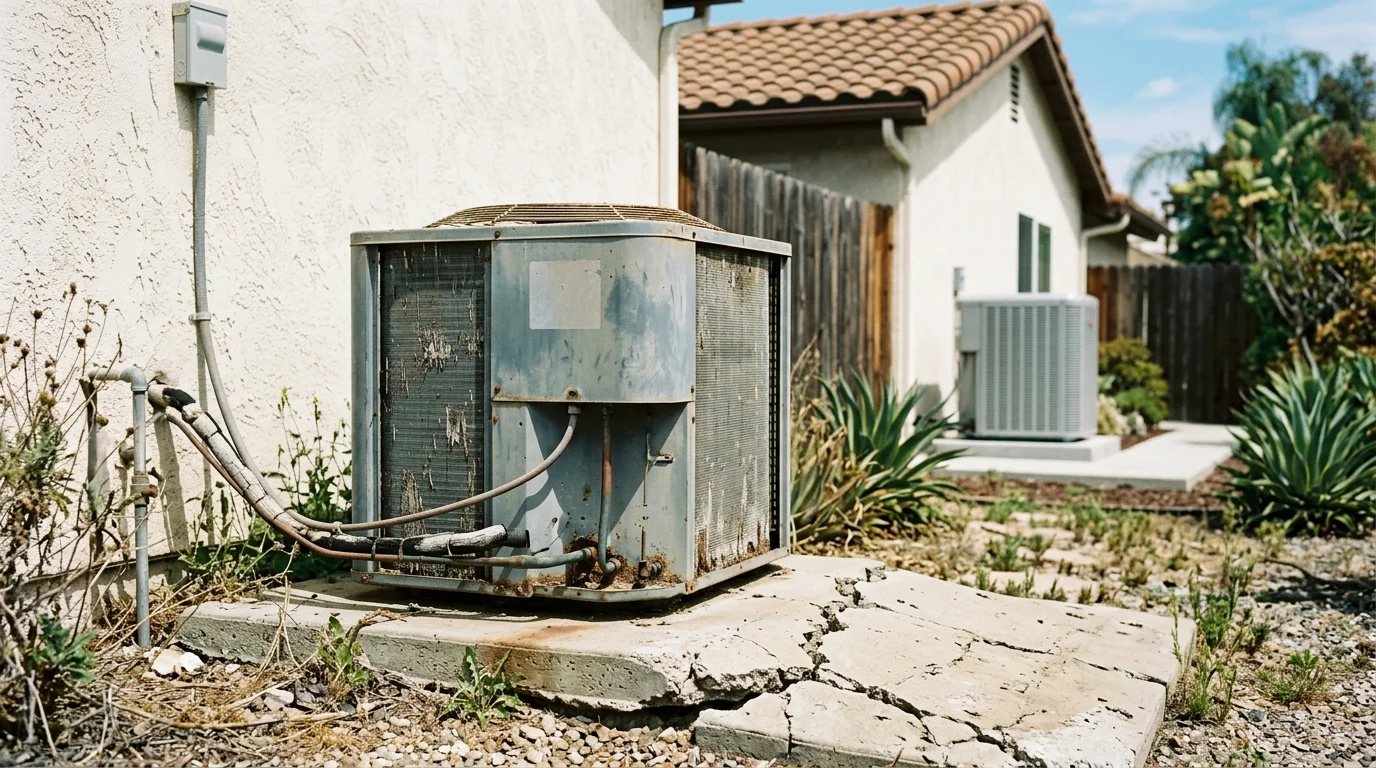
A failing heat pump forces a choice between another repair and complete replacement. Favor repair when the written diagnosis supports a defined fix. Consider replacement when parts, warranty coverage, or the proposed repair remain uncertain.
Start with the cost of the repair against the cost of the system
Start with two itemized written quotes from licensed HVAC contractors. One should cover the proposed repair. The other should describe the complete replacement scope for your property. Comparing vague totals won’t tell you enough.
The repair quote should identify the failed part and related labor. It should also name any refrigerant, controls, or other materials included. Ask what happens if the diagnosis changes after work begins. Any possible additions should be explained before you authorize the job.
The replacement quote needs the same level of detail. Ask which equipment is included and what happens to the existing system. The scope should address controls, electrical work, duct connections, removal, and permit responsibilities when applicable. It should also identify every warranty being offered and who provides it.
Don’t compare the repair figure with an unsupported replacement total. Compare both written scopes line by line. A Chula Vista condo and an El Cajon detached home can require different property-specific conversations. Your quote should reflect the actual equipment and installation area at your address.
If incentives might affect your decision, verify them on the day you compare proposals. Program status can change during the year. Check the California Energy Commission and the IRS energy credit page for current information.
Review heat pump replacement options when the replacement scope is clear. If the diagnosis still supports a contained fix, compare it with the available heat pump repair service.
Refrigerant type, and why it can decide this for you
Ask the contractor to document the system’s refrigerant designation in writing. The answer should come from the equipment or its records, not from an assumption based on appearance. Keep that designation beside the model information in each proposal.
Next, ask how that refrigerant affects the proposed repair. The contractor should explain whether the needed material is available for this job. Ask where availability was confirmed and whether the quote depends on a future supplier order. Don’t accept “older refrigerant” as a complete explanation.
You also need to understand what replacement changes. Have the contractor identify the proposed equipment and its specified refrigerant. Ask whether the replacement scope affects other existing components. The answer should cite the manufacturer’s requirements for the exact equipment being proposed.
Federal refrigerant rules come from the Environmental Protection Agency under the AIM Act. Check the EPA’s own pages for the current limits and transition dates rather than an undated summary. Ask the licensed contractor to identify the current rule affecting your proposed equipment and show you the supporting manufacturer or agency information.
That approach keeps the decision tied to your system. It also prevents a broad refrigerant claim from deciding an expensive project without documentation. If one contractor recommends replacement solely because of refrigerant, take that written explanation to another licensed contractor for comparison.
San Diego homeowners should make this decision from current supplier and manufacturer information. A general statement from an old estimate or online discussion isn’t enough.
Parts availability on a discontinued model
A discontinued model doesn’t automatically settle the repair question. The useful question is whether the exact required part can be obtained for your exact equipment. Ask the contractor to document the model, part identifier, supplier response, and any manufacturer-approved substitute.
Get specific about the word “available.” A part listed in a catalog may not be ready for the proposed job. Ask whether the contractor confirmed stock, ordering terms, and compatibility. Don’t rely on a verbal guess about a part that hasn’t been identified.
If an approved substitute exists, request its documentation. The written proposal should explain how that substitute changes labor, warranty coverage, or other parts in the repair. If no substitute was confirmed, the quote should say that plainly.
Also ask what happens if the ordered part doesn’t match the existing unit. The contract should explain approval for changed work and how any new cost will be presented. Don’t authorize an open-ended search for components without a written process.
Compare the answers across repair and replacement proposals. A repair with confirmed parts and a defined scope deserves a different conversation from one built around uncertain sourcing. Replacement can become the clearer choice when the repair can’t be described reliably. That’s a decision standard, not a claim that discontinued equipment must be removed.
Equipment age may provide context, but it shouldn’t replace a diagnosis. Our guide to heat pump lifespan in San Diego explains how to discuss condition without treating age alone as the deciding factor.
Whether the compressor is the failed part
A compressor diagnosis deserves a careful written explanation. Ask the contractor to name the tests and observations supporting that conclusion. “Compressor issue” is too broad for an approval. The proposal should identify what failed and what the recommended work includes.
Request the complete repair scope, not just the component name. Ask which related materials and labor are included. The quote should also explain whether any additional problem was found and whether more diagnosis is still needed.
Then compare that proposal with a replacement proposal built for the same property. Make sure both contractors are discussing the same existing system. Each proposal should identify which equipment stays, which equipment changes, and how the selection follows the manufacturer’s requirements.
Don’t let sunk repair spending make the next decision for you. Past invoices can help reveal recurring symptoms, but the current written diagnosis matters most. Give the contractor any service records you have. Ask whether those records change the recommendation and why.
If two diagnoses conflict, don’t average them together. Ask each licensed contractor to explain the evidence behind the conclusion. A clear disagreement can show where more testing or manufacturer guidance is needed.
Avoid deciding from a single phrase such as “major failure.” The decision should connect the confirmed failure to a defined repair, documented parts availability, warranty findings, and the complete replacement scope. If those pieces remain missing, you don’t yet have a usable comparison.
What the manufacturer warranty still covers
Check warranty coverage before choosing either path. Don’t assume a component is covered because the system seems recent. Don’t assume coverage has ended because the cabinet looks weathered. Confirm the terms for the exact model and serial information.
Ask the manufacturer or licensed contractor what information is needed for verification. That may involve records held by the homeowner, installer, seller, or manufacturer. Provide only documents you can confirm. If an installation date or registration status isn’t known, mark it unknown rather than guessing.
Get the answer in writing. You need to know what the manufacturer says is covered, what isn’t covered, and what conditions apply. Ask separately about parts, labor, shipping, diagnosis, and replacement equipment. A statement that something is “under warranty” doesn’t explain the actual project scope.
The contractor’s workmanship warranty is a separate question. Heat Pro SD doesn’t perform HVAC work and doesn’t issue a workmanship warranty. Ask the matched independent contractor to state its warranty terms in the written contract.
If replacement is proposed, request the new manufacturer warranty terms before signing. Ask who handles registration and which documents you should retain. Keep the final proposal, contract, model details, and warranty documents together.
Warranty information can change the comparison without deciding it alone. Covered parts may still leave other work outside the manufacturer’s coverage. An uncovered repair may still make sense when its scope is clear. Use the confirmed terms alongside the diagnosis, parts findings, and replacement proposal.
A short decision checklist to take into the conversation
Bring a written checklist to every repair or replacement discussion. It keeps the conversation tied to evidence from your equipment and property.
- Does the diagnosis name the failed part and supporting findings?
- Does the repair quote describe all included labor and materials?
- Is the refrigerant designation documented from the system or its records?
- Has the needed part been identified and its availability confirmed?
- Does the proposal distinguish confirmed work from possible additions?
- Has the manufacturer answered the warranty question in writing?
- Does the replacement quote identify the exact proposed equipment?
- Does that quote explain what stays, what changes, and what gets removed?
- Does the contractor state who handles permit questions when they apply?
- Are manufacturer, contractor, and other warranty terms separated clearly?
- Have current incentives been checked with the issuing authority?
- Do competing proposals describe the same problem and property conditions?
Verify the contractor through the official CSLB license check. Heat Pro SD connects homeowners with licensed independent local pros, but the contractor performs the work. Confirm the contractor’s license record before signing.
If a proposal can’t answer several checklist items, ask for revisions. Don’t fill gaps with assumptions. A clear repair proposal may support keeping the existing system. A clear replacement proposal may show why changing equipment is the better path. The paperwork should make the difference understandable.
Keep every answer with the final contract. If the scope changes, request the change in writing before approving it. Your goal isn’t the shortest quote. It’s a proposal that states what was found, what will be done, and who stands behind the work.
When to call us
Call when a failing system needs a licensed independent HVAC contractor to diagnose it or prepare comparable repair and replacement proposals. Heat Pro SD does not perform the work. The Heat Pro SD line is voicemail with a recording-consent notice. Leave a message at (858) 400-4374.