A heat pump that runs without cooling needs a clear diagnosis. For AC repair in Descanso, CA, Heat Pro SD can connect you with a licensed independent local HVAC contractor. We don’t diagnose or perform the repair ourselves.
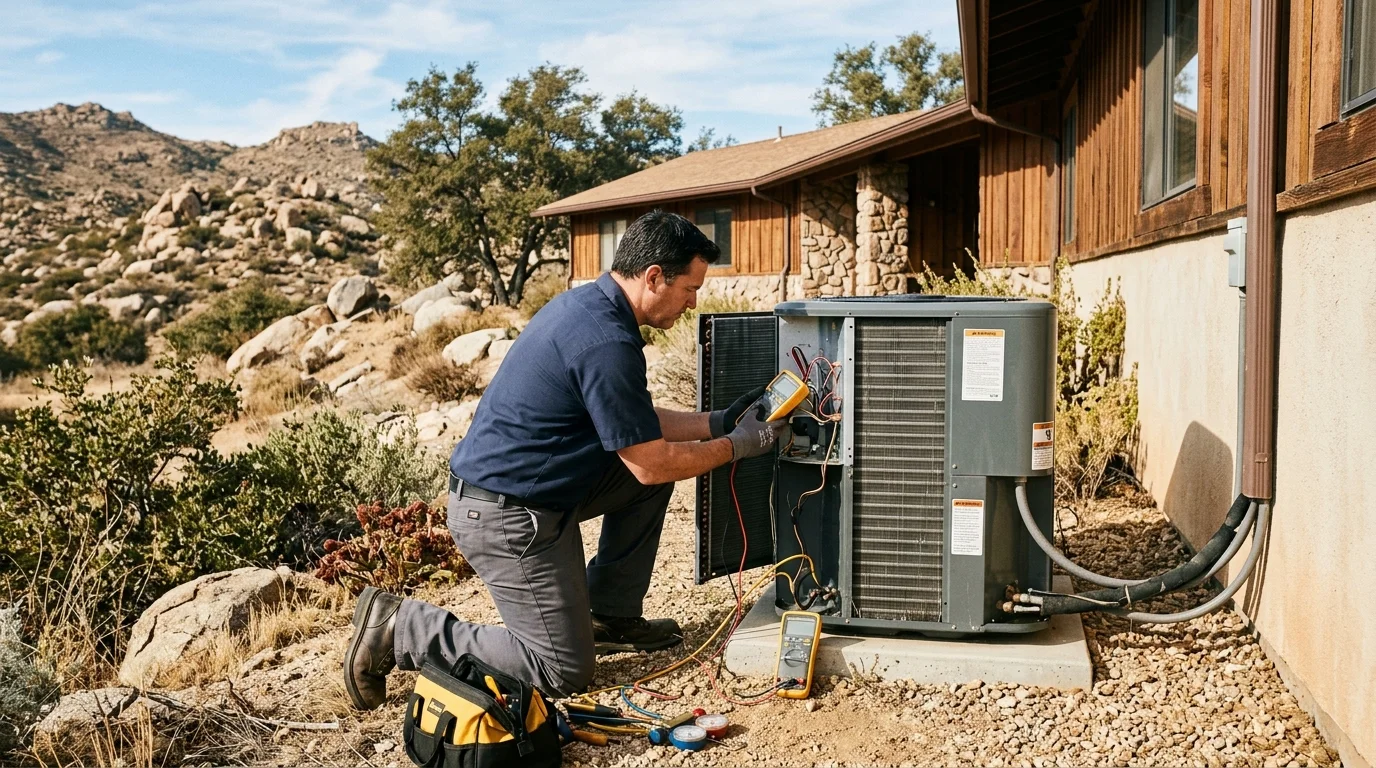
How to confirm the cooling system is a heat pump
An outdoor unit doesn’t always tell the whole story. Central air conditioners and heat pumps can look similar from outside. Start with the thermostat and equipment labels instead of guessing.
Set the thermostat aside for a moment and find its available modes. A cooling-only system usually pairs an air conditioner with another heat source. A heat pump provides both cooling and heating through the same outdoor equipment. An “emergency heat” or “auxiliary heat” setting is a useful clue, though thermostat labels vary.
Next, photograph the outdoor unit’s data plate without removing any panel. Capture the manufacturer, model number, and serial number. Take another photo of the indoor equipment label if it’s easy to reach. A contractor can use those details to identify the system configuration and suitable parts.
Don’t rely only on an old property listing or invoice. Equipment may have changed since those records were created. A home can also have separate systems serving different rooms or structures.
For a ductless system, photograph each indoor head and its remote. Include any error symbols shown on the display. If the house has a furnace, tell the contractor that too. It may be part of a dual-fuel setup rather than proof that the outdoor unit is cooling-only.
These details help place the request with the right heat pump repair professional. They also reduce confusion before anyone discusses parts or replacement.
Checks to make without opening equipment
Begin with observations that don’t require tools or cabinet access. Confirm that the thermostat is set to cooling, not heating or fan-only mode. Record the displayed room temperature and selected temperature. A photo preserves the exact screen.
Check whether air comes from several supply vents. Make sure furniture, rugs, or closed registers aren’t blocking them. Look at the return grille and the accessible filter. Note whether the filter appears heavily loaded, but don’t force open a panel to reach it.
From outside, observe the unit from a safe distance. Note whether it starts, stays quiet, cycles, or makes an unfamiliar sound. Look for visible ice, standing water, damaged panels, or debris pressing against the cabinet. Don’t reach inside the unit or remove its cover.
Check the electrical panel only from the front. Tell the contractor if a breaker appears out of position. Don’t repeatedly reset a breaker that won’t remain set. Repeated attempts can hide useful information about the original symptom.
Write down when cooling last worked normally. Include any recent thermostat changes, filter work, utility interruption, unusual noise, or odor. Mention whether the issue affects the entire house or one area.
These checks aren’t a repair. They create a clean symptom record for the licensed contractor. If the equipment stops, shows damage, or behaves differently after a setting change, leave it as found and report that sequence.
What thermostat and airflow symptoms can reveal
Thermostat and airflow symptoms can narrow the inspection, but they don’t prove a failed part. Describe what you see without naming the cause.
A blank thermostat screen differs from a thermostat showing “cool” while nothing starts. Airflow with little temperature change also differs from no airflow at all. Give the contractor the exact pattern.
Useful observations include:
- The thermostat display is blank or restarting.
- The thermostat shows cooling, but no equipment starts.
- The indoor fan runs, but the outdoor unit doesn’t.
- Both sections run, but the rooms remain warm.
- Airflow is weak at every vent.
- One room has weak airflow while others feel normal.
- The system starts and stops repeatedly.
- Ice appears on an accessible line or cabinet surface.
- The thermostat shows a code or service message.
Report whether the thermostat reading seems believable compared with the room. Also mention where the thermostat sits. Direct sun, a nearby supply register, or a recently changed thermostat can matter to the diagnosis, but the contractor should determine whether it actually does.
If the problem began after a thermostat replacement or settings change, say so. Heat pump controls can have different equipment settings than cooling-only controls. Don’t change hidden installer menus unless the contractor directs you.
Our guide to thermostat and heat pump problems can help organize the symptoms. A licensed contractor still needs to test the system before assigning a cause.
Which Descanso property details to share before service
The street address alone may not explain how to reach or inspect the equipment. Tell the contractor whether the Descanso property has a gate, private access instructions, limited parking, or animals outside. If directions are easy to miss, provide a clear landmark without posting private access codes publicly.
Describe the home’s equipment layout. Say whether the indoor section is in a closet, attic, crawlspace, garage, or another structure. Note whether the outdoor unit is beside the house, behind fencing, above ground level, or inside a restricted area. Don’t climb or move heavy objects to investigate it.
Mention every conditioned space connected to the complaint. That may include the main house, an addition, an accessory unit, or a converted room. Explain whether one thermostat controls everything or whether separate zones exist.
Share any information you already have about the electrical panel, fuel equipment, ducts, and prior repairs. Photos of the thermostat, equipment labels, filter, and visible symptom are more useful than a guessed equipment age. Keep invoices or installation records available if you have them.
Our overview of heat pumps in the San Diego backcountry offers broader planning context. For the repair call, stay focused on the current equipment and property access.
A Descanso-specific permit fee or local repair rule couldn’t be confirmed from the approved sources used for this page. If proposed work may require approval, ask the contractor to identify the authority for your exact address. Confirm any current fee directly with that authority before paying it.
When repair and replacement both deserve comparison
A failed cooling call doesn’t automatically mean the entire heat pump needs replacement. It also doesn’t mean every repair is the better choice. Ask for a diagnosis first, then compare written options when the contractor can support both.
Start with the failed function. Ask what test identified the problem and which component needs attention. Then ask whether the proposed repair addresses the complete fault or only one visible symptom. If another condition affected the failure, it should appear in the explanation.
Replacement deserves comparison when the repair proposal leaves major uncertainty. Parts availability, refrigerant type, previous service history, recurring faults, comfort problems, and equipment compatibility may affect the decision. These aren’t automatic reasons to replace. They are questions for the licensed contractor to document.
Compare the scope, not just the total. A repair quote and a replacement quote cover different work. Ask each contractor to identify included equipment, controls, electrical work, duct changes, disposal, permits, labor, and contractor-provided warranty terms. Heat Pro SD doesn’t set those terms or provide the warranty.
New equipment sold must clear a federal efficiency minimum. A licensed installer should quote compliant equipment. SEER and SEER2 aren’t directly comparable because SEER2 uses a harder test, so don’t compare those labels as though they share one scale.
Don’t assume an incentive shown on an older page remains available. Check the California Energy Commission and IRS energy-credit page on the day you compare options. Our repair-versus-replacement guide provides more questions, while the replacement service page explains the referral path.
What the written diagnosis should explain
A useful diagnosis connects the symptom, test results, and proposed correction. Ask the contractor to put that connection in writing before you authorize work.
The document should identify the equipment inspected and the complaint reported. It should distinguish confirmed findings from items that weren’t tested. If measurements drove the conclusion, ask for those readings and what they showed. You shouldn’t have to rely on a part name without an explanation.
The proposed scope should name the work and included materials. It should also flag exclusions. Ask whether the quote covers related controls, refrigerant work, electrical corrections, duct changes, permit handling, cleanup, and equipment disposal when those items apply.
Request separate options when the contractor recommends both repair and replacement. Each option should explain what changes, what remains, and who supplies any warranty. Confirm warranty coverage, registration steps, and exclusions directly with the contractor. Heat Pro SD doesn’t issue warranties.
If the diagnosis changes after work begins, ask for an updated written scope before approving additional work. That keeps the decision tied to the condition actually found.
Verify the contractor through the California Contractors State License Board. Match the business name and license information to the proposal you’re reviewing. Ask the board or the permitting authority about requirements that the contractor can’t confirm.
Keep the diagnosis, proposal, equipment photos, and final invoice together. Those records can help with later service, even if a different licensed professional handles it.
When to call us
Call when exterior checks don’t explain the cooling failure, equipment won’t operate normally, or the diagnosis requires cabinet, electrical, or refrigerant work. Call us at (858) 400-4374 and we’ll connect you with a licensed local HVAC contractor.