A heat pump inspection before winter starts with one controlled heating test. Check what you can see, hear, and feel, then leave closed equipment and electrical work to a licensed HVAC contractor. Heat Pro SD matches homeowners with licensed independent local pros. We perform no physical inspections.
What homeowners can check without opening equipment
Begin with the areas you normally use. You shouldn’t remove panels, reach behind guards, or touch wiring. The goal is to gather clear observations without entering the equipment.
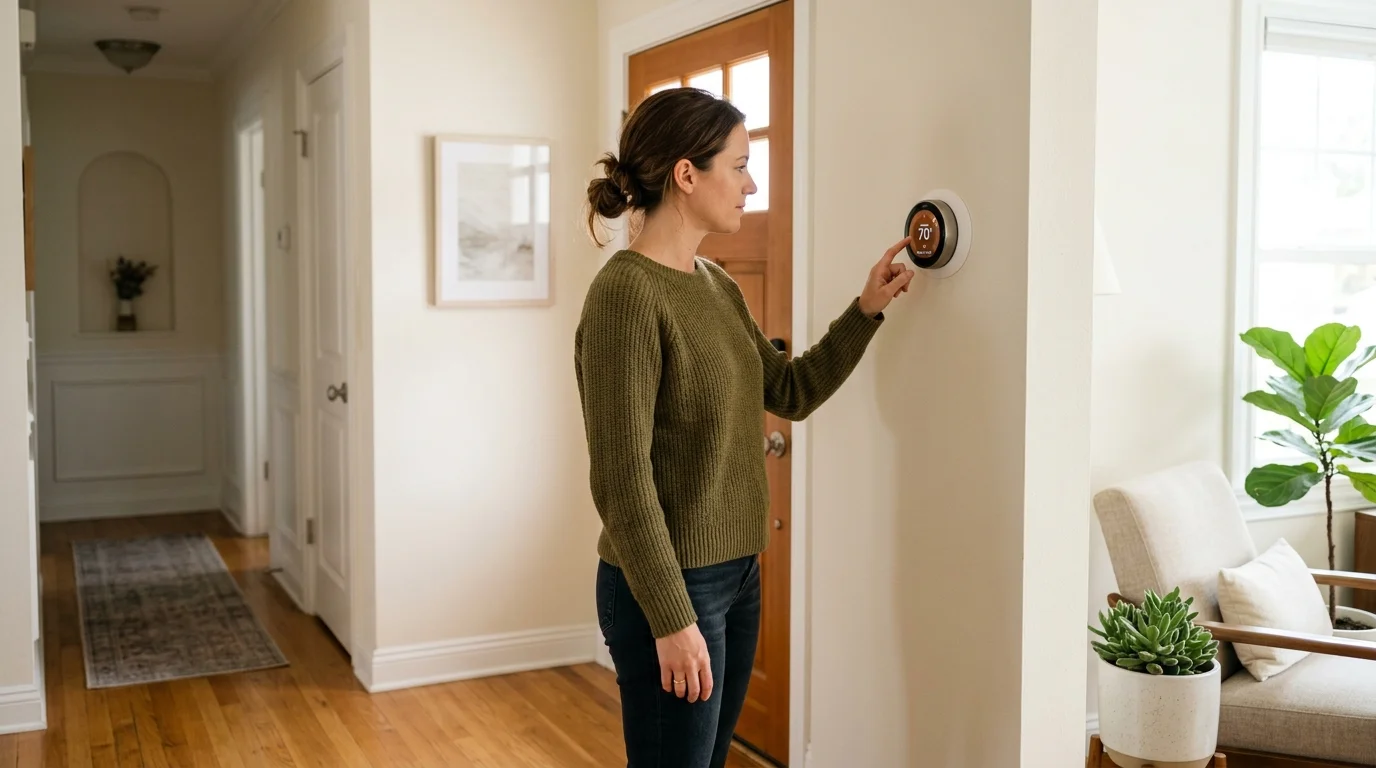
Look at the thermostat screen and note its current mode. Confirm that the displayed room temperature seems reasonable for the room. If the display is blank, record that detail instead of opening anything.
Walk through the home and find each accessible supply register and return grille. Check whether furniture, rugs, curtains, or stored items cover them. Don’t insert tools into a grille or remove parts that aren’t meant for routine homeowner access.
If the filter sits behind a normal access cover, follow the equipment manufacturer’s instructions. Record the filter’s size, direction, and visible condition. Don’t guess at a replacement interval. The right filter and schedule depend on the equipment and its instructions.
Outside, stay on the accessible side of the unit. Note visible debris, objects leaning against it, or anything blocking your view. Don’t remove a cabinet, fan guard, or electrical cover.
This first pass is an observation check. Our broader San Diego heat pump maintenance guide explains how routine upkeep differs from diagnosing a specific problem. If you want the equipment evaluated after the scene is safe, request a heat pump inspection so we can match you with a licensed local contractor.
Why the first heating cycle may seem unfamiliar
San Diego homeowners may go months without paying close attention to heating mode. The first fall test can therefore sound or feel unfamiliar, even when you know the cooling routine well.
Don’t diagnose the system from one sound or sensation. Instead, record the sequence. Note what the thermostat displayed, whether the indoor unit started, whether the outdoor unit operated, and what happened at the registers. If the system stopped, write down what appeared on the thermostat.
Avoid broad descriptions such as “it sounded bad.” Describe the actual observation. A note such as “repeating click near the indoor unit” gives a contractor more useful context. The same applies to smells. Describe what you noticed and where you noticed it. Don’t open the equipment to locate the source.
Air from a heat pump may not match the sensation you remember from another heating system. Judge the test by consistent observations, not by comparing one vent with an old furnace from memory. If you’re unsure what heating mode should look like during cooler local weather, read our guide to heat pumps on cold San Diego nights.
Stop the test immediately if you see smoke, sparking, a burning odor, exposed live wiring, or visible fire. Don’t restart equipment to reproduce a serious observation. Leave the area if you need to. Contact emergency services when there is fire or anyone faces immediate danger. Contact the utility when the danger looks electrical and you can do so from a safe location. HVAC matching is only after the scene is safe.
How to test the thermostat and airflow
Choose a time when you can stay near the system and observe it. Before changing anything, photograph the thermostat screen. That preserves the original mode, temperature, and any displayed message.
Set the thermostat to heating mode using its normal controls. Choose a setting above the displayed room temperature, then watch what happens. Don’t repeatedly switch modes or make several changes at once. A simple test produces a clearer record.
Write down these observations:
- The starting room temperature and selected setting
- The thermostat mode shown on the screen
- Any status message, symbol, or warning
- Whether you heard the indoor equipment start
- Whether the outdoor unit operated
- Which rooms received airflow
- Any room with noticeably different airflow
- Any sound or odor that began during the test
Check airflow with your hand near each accessible register. Don’t remove the grille or place anything inside it. Compare rooms using the same simple method. Record differences without trying to assign a cause.
San Diego County homes vary across coastal North County, inland North County, central San Diego, East County, and the South Bay. Your contractor needs the actual room layout and equipment configuration, not a countywide assumption. Note whether the weak airflow affects one register, one room, one floor, or the entire home.
Thermostat behavior can also resemble an equipment problem. If the display, mode, or controls don’t behave as expected, review thermostat problems that can look like heat pump trouble before changing wiring or removing the thermostat.
What outdoor-unit conditions deserve attention
Inspect the outdoor unit from the ground without opening it. Take one photo of the whole installation, then photograph any specific condition you want a contractor to review.
Look for loose objects resting against the cabinet. Record visible leaf litter, plant growth, stored materials, or construction debris near the unit. Note bent exterior panels, a shifted base, disconnected-looking parts, or stains that weren’t present before. Don’t straighten metal, move attached lines, or spray anything into the cabinet.
Location matters when describing what you find. A homeowner near the coast might photograph white residue without assuming what caused it. Someone beside bare soil in an inland area might document visible dust the same way. State what’s visible, where it appears, and when you first noticed it.
Listen from a safe standing position while the heating test runs. Record whether a sound is steady, repeating, or brief. Note whether it comes from the outdoor unit, indoor equipment, wall, or duct area. Don’t reach toward a moving fan or place an object through the guard.
Water nearby also needs a precise description. Photograph its location and note whether it appeared before, during, or after the test. Don’t label it a leak unless a contractor confirms the source.
If access requires climbing, moving heavy storage, or entering a restricted area, skip that part. Tell the contractor what prevented a safe visual check.
Which observations to record before requesting service
A useful service request separates symptoms from conclusions. “The heat pump is broken” offers little detail. “The thermostat called for heat, the indoor unit started, and one bedroom had no noticeable airflow” gives the contractor a clearer starting point.
Create a short record with:
- The date and approximate time of the test
- The thermostat’s starting display
- The setting you selected
- What the indoor equipment did
- What the outdoor unit did
- Which rooms received airflow
- The location and pattern of any sound
- The location and description of any odor
- Any message or code shown on the thermostat
- Photos of visible outdoor conditions
- The equipment model information, if visible without opening anything
Include what changed before the issue appeared. Mention a thermostat adjustment, recent construction nearby, moved furniture, or a closed register. Don’t remove equipment parts to collect extra details.
Your address also gives the contractor necessary local context. San Diego County covers distinct coastal, inland, central, eastern, and southern areas. Share the city or community rather than describing the property only as “San Diego.”
Don’t clear thermostat messages before photographing them. Don’t repeat a test solely to create a video if the first run showed smoke, sparking, burning odor, exposed wiring, or visible damage. Those conditions belong to emergency services or the utility first. A written timeline and clear photos are more useful than speculation once the scene is safe.
These notes don’t replace an inspection. They help a licensed contractor decide what needs direct testing when arriving at the property.
What a professional inspection should document
Ask for a written record of what the contractor inspected. A useful report should identify the equipment, the operating mode tested, the conditions observed, and any measurements taken. It should also distinguish confirmed defects from items that need further diagnosis.
The report can document thermostat commands, accessible filter condition, airflow observations, indoor and outdoor equipment condition, visible connections, and displayed fault information. Any electrical measurements or work inside the equipment belong to the qualified pro.
Ask the contractor to explain each recommended next step in plain language. The explanation should identify the observed condition and the proposed response. If maintenance is suggested, clarify how it differs from repair. Our maintenance tune-up service page explains how to request that type of visit.
Heat Pro SD is a referral service. We match homeowners with licensed independent local HVAC pros and perform no physical work. The number (858) 400-4374 routes to voicemail with a recording-consent notice. Before hiring, verify the contractor’s license through the official California Contractors State License Board lookup. Check the record yourself and confirm that the information matches the contractor presenting the proposal.
Don’t accept an inspection summary that relies only on vague labels. Request the actual observations, measurements, and equipment details behind the recommendation. Keep that report with your thermostat photos and fall heat pump checklist. It creates a cleaner record if the behavior changes later.
When to call us
If you see smoke, sparking, a burning odor, fire, or exposed live wiring, stop and contact emergency services or the utility. Do not call Heat Pro SD first for those conditions.
Call us after the scene is safe, when the first heating test produces uneven airflow, unusual operation, a thermostat warning, or visible equipment damage that is not an immediate fire or electrical emergency. A licensed HVAC contractor should handle equipment panels, wiring, internal testing, diagnosis, and repairs.
Call us at (858) 400-4374 and leave a voicemail. We’ll match you with a licensed independent local HVAC contractor.