What heat pump maintenance actually covers
Heat pump maintenance is a contractor visit that checks the parts ENERGY STAR lists on a typical check-up, plus the heat-pump-specific items your manufacturer names. ENERGY STAR’s maintenance checklist tells homeowners to have a contractor do pre-season check-ups and to handle filters themselves between visits. It does not publish a San Diego coastal radius or a countywide month count.
Ask the licensed technician to document:
- Outdoor and indoor coil condition and cleaning
- Filter type, size, and condition
- Refrigerant charge and leak check
- Electrical connections and capacitors
- Reversing valve and thermostat operation
- Condensate drain and pan
Heat Pro SD is a voicemail-only referral matcher. We are not the maintenance company, and we do not perform the visit.
Why maintenance still matters in a mild climate
San Diego’s climate is mild, which might suggest heat pump maintenance is less urgent here than in places where equipment runs hard year-round. The useful question is whether your system actually sits unused for a long off-season. Many San Diego heat pumps heat and cool in the same year. Marine-layer humidity and salt air near the coast are additional inspection topics, not a ranking of which cities fail first.
Deferred maintenance often shows up gradually. Coil buildup can reduce efficiency before the system looks broken. By the time a heat pump is visibly struggling, it may have been working harder than necessary. That is a reason to keep the contractor checklist, not a claim that every home runs a fixed number of months.
What to ask the technician to cover
A professional heat pump tune-up from a qualified technician typically includes the following. Treat each line as a question: did they do it, and what did they write down?
Outdoor coil inspection and cleaning. The outdoor coil transfers heat between refrigerant and outdoor air. Dirt, cottonwood fluff, and coastal salt deposits reduce heat transfer. Ask whether they cleaned the coil and whether they saw corrosion.
Indoor coil inspection. The indoor coil handles the other side of heat exchange. Buildup here is often slower because filtered air passes through, but it is still worth checking. A dirty indoor coil can also contribute to moisture problems.
Air filter check or replacement. Central system air handlers use a filter that restricts airflow as it loads with particles. Mini-split indoor heads often have washable filters. ENERGY STAR tells homeowners to inspect, clean, or change filters when they are visibly dirty or when the equipment indicates it. Follow the manufacturer schedule rather than a universal interval. A clogged filter forces the blower to work harder and reduces airflow across the coil.
Refrigerant charge check. The refrigerant in a sealed system should not diminish over time. If charge is low, there is a leak. A technician can measure charge and identify leaks before they become a compressor failure. Never add refrigerant to a leaking system without first finding and repairing the leak.
Electrical connections and component check. Loose electrical connections and failing capacitors are common failure modes. A technician will inspect wiring, check capacitor function, and identify components showing early signs of wear.
Thermostat calibration and controls check. Confirming the thermostat reads accurately and that heating and cooling modes switch correctly, including verifying reversing valve operation.
Drain pan and condensate line. Heat pumps in cooling mode produce condensate from the indoor coil. The drain pan and condensate line need to be clear. A clogged line can overflow the drain pan and damage ceilings, walls, or flooring. In San Diego’s older homes, where air handlers often sit in attics above living spaces, ask the technician to confirm the drain is moving water.
Frequency: follow ENERGY STAR and the manufacturer, not a mile map
ENERGY STAR recommends contractor check-ups around the cooling season in spring and the heating season in fall. Use that as the planning question: has heating mode been tested before the first cold snap, and has cooling been checked before the hot stretch?
Coastal salt, tree debris, and pets can mean the contractor wants a closer look at the outdoor coil or the filter. Ask them to justify any extra visit with what they saw at your house. Do not treat a two-mile coastal radius, a six-to-twelve-month coil schedule, or “most San Diego homes” as measured local rules on this page.
What homeowners can do between visits
Mini-split filter cleaning: If the indoor head uses a washable mesh filter, follow the unit’s instructions for removing, rinsing, drying, and reinstalling it. Do not guess at a monthly rule if the manufacturer says something else.
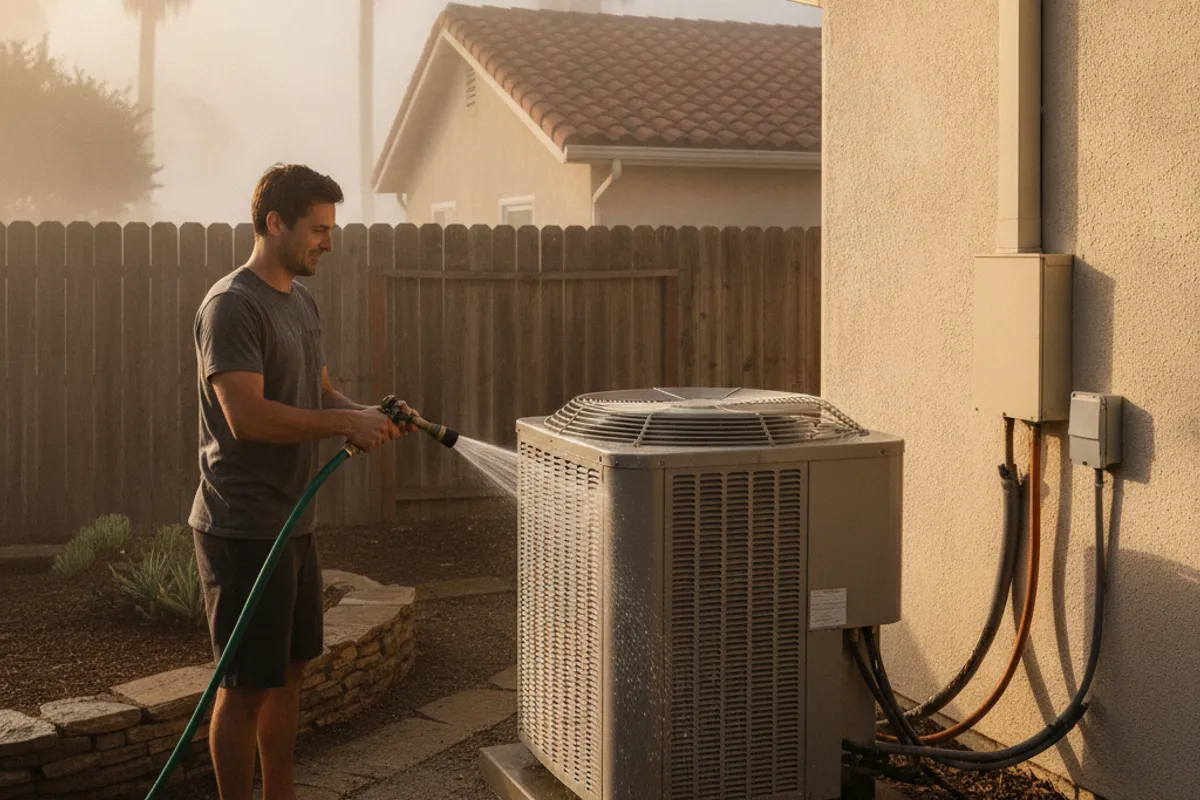
Outdoor unit clearance: Keep the area around the outdoor unit clear of plants, stored items, and debris so the coil can see air. Ask the contractor what clearance the model requires. Do not force a two-foot rule if the installation manual states a different number.
Condensate line check: For central systems, locate where the condensate drain exits the building (usually a PVC line draining outside near the air handler or into a floor drain). Confirm water is draining during heavy cooling use. A line that has stopped draining during peak cooling is a reason to call a technician, not a DIY chemical treatment.
Listen for changes: A heat pump that starts making new sounds, short-cycling more than usual, or failing to reach setpoint is signaling a problem. Calling a technician when you first notice the symptom is better than waiting until the system fails. Heat Pro SD can match that call. We do not dispatch a crew.
San Diego-specific: the coastal coil question
Homes near the Pacific should ask the technician to look for salt deposits and coil corrosion: visible oxidation on the fins, refrigerant leaks at the coil, and efficiency that declined between visits. When buying a new system for a coastal home, ask about coated or corrosion-resistant coils. When maintaining an existing system near the coast, ask the technician to inspect for corrosion each visit. That is an inspection question, not a published failure rate.
Heat Pro SD matches San Diego County homeowners with licensed independent HVAC contractors. We perform no physical work. Tell us the city and what the system is doing. You hire and pay the contractor directly. Start at the San Diego heat pump service area page or call (858) 400-4374 and leave a voicemail with your city and the symptoms. The line plays a recording-consent notice.
How often should a heat pump be serviced in San Diego?
Ask the manufacturer and the licensed contractor. ENERGY STAR frames contractor check-ups around the cooling and heating seasons. Extra visits should follow what they actually find at your outdoor coil and filter, not a countywide calendar.
Can I service a heat pump myself?
Homeowners can clean accessible filters, clear outdoor debris they can reach without removing guards, and notice whether the condensate line is draining. Refrigerant handling, electrical inspection, and coil work on the fins require a qualified technician and, for refrigerant work, EPA 608 certification.
What happens if I skip heat pump maintenance?
Efficiency can drop as coils and filters load, and small problems can become component failures. A neglected heat pump typically costs more to operate and fails earlier than a maintained one. Ask the technician to document the current condition rather than guessing how many years you lost.