A heat pump filter cleaning service makes sense when your unit uses washable filters, access is difficult, or debris returns after proper cleaning. If the filter is marked disposable, replacement is the right path. The equipment label and manufacturer’s manual decide, not appearance alone.
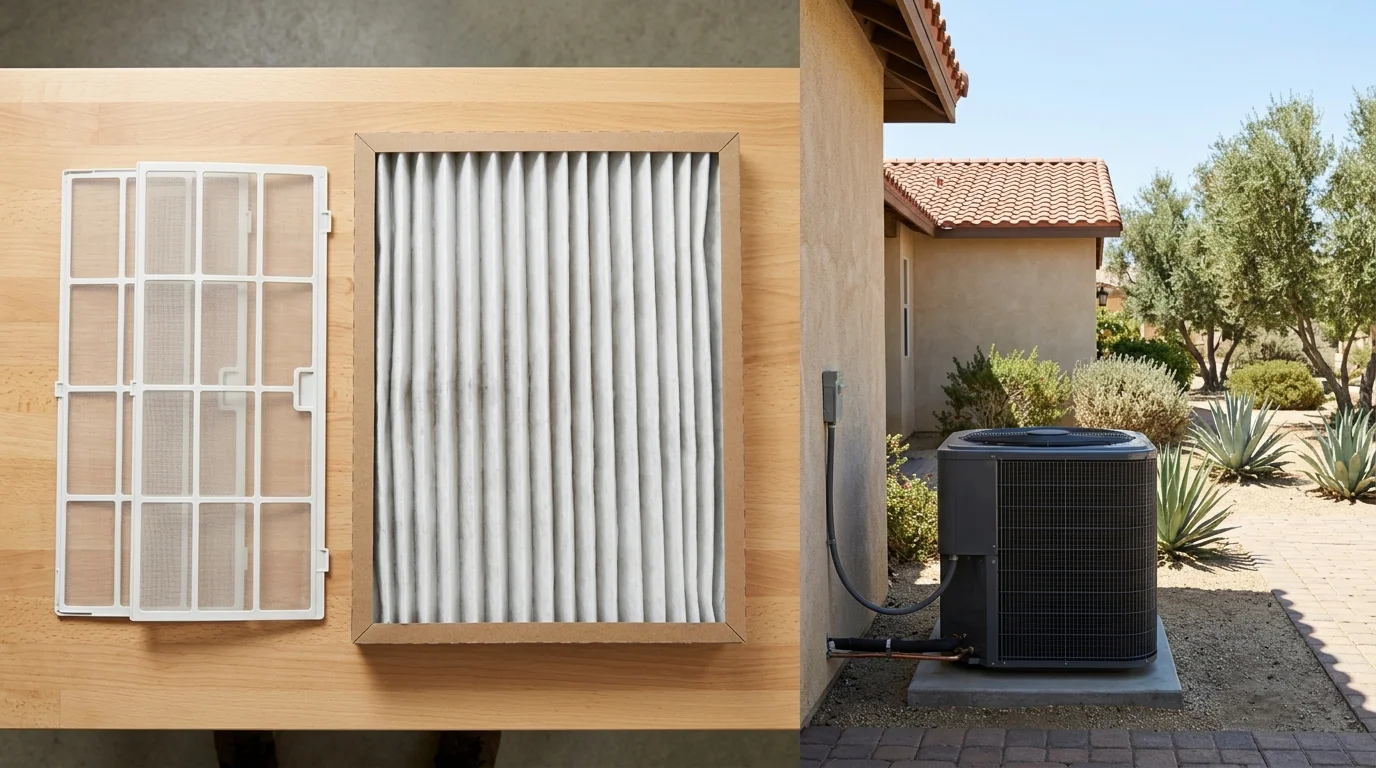
Which heat pump filters can be cleaned
Clean a filter only when its label or manufacturer’s manual identifies it as washable or reusable. Many ductless mini-split indoor heads use removable screen filters made for repeated cleaning. However, the exact instructions still depend on the model.
Start by finding the model number on the indoor equipment. Use that number to locate the correct manual. Follow its shutdown, removal, cleaning, drying, and reinstallation directions. Don’t wash an unidentified filter because it resembles a reusable screen.
Some filters include separate layers or inserts. One part may be washable while another isn’t. Don’t soak, scrub, vacuum, or treat those materials unless the manufacturer allows that method. A service technician should also follow the equipment instructions rather than applying one routine to every unit.
Professional cleaning has more value when the filter sits in a difficult location. It can also help when the screen is delicate, won’t release easily, or serves one head in a multi-zone system. Ask the technician to identify each filter before starting.
A reusable label doesn’t mean a damaged filter should remain installed. Bring cracked frames, torn material, missing tabs, or a poor fit to the technician’s attention. The contractor can compare the part with the manufacturer’s specifications and explain whether cleaning remains appropriate.
When a disposable filter needs replacement
A disposable filter should be replaced when its label or manual calls it disposable. Washing it changes the product from the condition its manufacturer specified. Even if it looks cleaner afterward, appearance doesn’t confirm that it remains suitable for the equipment.
Replacement is also the practical choice when disposable material is torn, separated, bent, or no longer fits correctly. Match the new filter to the size and type listed for the system. Don’t rely only on color, thickness, or the appearance of the old filter.
There isn’t one replacement schedule that applies to every San Diego home. The equipment instructions provide the starting point. Actual filter condition can also help guide the conversation with a service contractor. Our separate guide explains how to approach heat pump air filter replacement in San Diego without treating one interval as universal.
Take a photo of the old filter before discarding it. Capture the label, printed dimensions, airflow arrow, and how it sits inside the compartment. Those details can help prevent a mismatched purchase or incorrect installation.
If a new filter won’t sit flat, don’t force the cover closed. Ask a technician to confirm the filter specification and inspect the holder. A recurring fit problem may deserve more attention than another replacement alone.
Why ducted systems and mini splits differ
A ducted heat pump usually handles filtration at a return grille or an indoor equipment compartment. These systems commonly use replaceable filter media. A ductless mini split commonly places reusable screens inside each indoor head.
Those designs create different service needs. A ducted system may have one filter location or more than one. A multi-zone mini-split system may require attention at every indoor head. Cleaning one screen doesn’t address another head elsewhere in the home.
Don’t choose a method based on the neighborhood or home style. Equipment in Encinitas, central San Diego, El Cajon, and Chula Vista can have different filter designs. The model information remains the reliable guide across coastal North County, East County, and the South Bay.
Access also changes the value of paid service. A reachable mini-split screen may need only the process described in its manual. A filter behind a stuck panel or at a difficult height can justify professional help. Don’t remove extra equipment panels merely to reach something that the manual doesn’t identify as homeowner-accessible.
Mini splits may also need attention beyond their removable screens. The correct scope depends on what the technician observes and what the manufacturer permits. Our mini-split maintenance guide explains how to discuss the wider system without treating filter cleaning as a complete service.
Signs the filter isn’t the only airflow problem
A dirty filter can be obvious, but it shouldn’t become the answer to every airflow complaint. Pay attention to what happens after the correct filter is cleaned or replaced according to the manual. If the original symptom remains, ask for a diagnosis instead of another filter treatment.
Useful observations include weak airflow at several outlets, one room behaving differently, or airflow changing without a filter change. A new noise, equipment error, loose filter rack, or cover that won’t close also deserves documentation. Note when the issue occurs and which indoor zones are affected.
Visible residue outside the filter surface is another reason to pause. Photograph its location before it gets disturbed. Don’t ask a cleaner to identify an unknown substance from appearance alone. A qualified contractor can inspect the equipment and explain what was actually observed.
For a ducted system, ask whether the technician checked the filter’s fit and the surrounding compartment. For a mini split, ask whether every affected indoor head was examined. The goal is to separate a filter task from a broader airflow or equipment problem.
Don’t approve duct work, blower work, controls work, or equipment replacement solely because the filter looked dirty. Request a specific finding that connects the proposed work to the symptom. If the problem involves system operation rather than routine filter care, a diagnostic visit may be more appropriate.
What a filter cleaning service should inspect
A worthwhile heat pump filter cleaning service should begin by identifying the equipment and filter type. The technician should explain whether each filter is washable, disposable, damaged, or mismatched. That decision should trace to the label, part information, or manufacturer’s instructions.
For a reusable filter, ask what cleaning process the manufacturer specifies. The filter should be dry and correctly seated before the technician finishes, if the manual requires that condition. For a disposable filter, ask the technician to confirm the replacement specification rather than washing it.
The visit should also include a visual check around the accessible filter location. Ask the technician to point out debris, residue, damaged holders, gaps, or panels that don’t close correctly. Photos are useful when a condition isn’t easy to view from the floor.
Before the technician leaves, ask for a clear result. Was the filter cleaned, replaced, or left alone? Was it installed in the specified direction? Did the original airflow complaint remain afterward? Written answers make it easier to decide whether another service is justified.
A heat pump maintenance tune-up may make sense when the requested visit goes beyond one accessible filter. Confirm the exact scope before approving it. Professional heat pump filter cleaning shouldn’t become an undefined package of extra work.
For multi-zone equipment, ask whether the quoted service covers every indoor head or only one. For ducted equipment, ask how many filter locations the contractor found. These questions prevent both sides from assuming a different scope.
Questions to ask before approving additional work
A filter visit can uncover something that needs further evaluation. It can also produce suggestions that aren’t tied to a clear finding. Ask for evidence before turning a cleaning appointment into a larger repair.
Use direct questions:
- Is this filter washable or disposable?
- Which label or manual instruction supports that answer?
- What condition did you observe beyond ordinary filter debris?
- Can you show me the affected part or a photo?
- Does the proposed work address my original symptom?
- Is this cleaning, maintenance, diagnosis, or repair?
- What equipment will be opened or removed?
- What is included in the written quote?
- Who performs the work and provides any warranty?
A verifiable countywide rate for filter cleaning couldn’t be confirmed. The independent contractor sets the quote and defines what it includes. Ask for the total price and scope before authorizing additional work.
If the proposal expands into HVAC repair, ask for the contractor’s legal business name and license information. Verify the license through the official California Contractors State License Board lookup. Don’t rely on a logo, vehicle decal, or marketplace profile as the license check.
Heat Pro SD is a referral service, not the contractor performing the work. Any service terms or warranty come from the matched independent contractor. Keep the contractor’s written findings, quote, and equipment details together before making a decision.
When to call us
Call when filter access requires equipment disassembly, airflow remains poor, or the visit may involve system diagnosis or repair. Heat Pro SD performs no physical work and connects San Diego County homeowners with independent professionals. Call us at (858) 400-4374 and we’ll connect you with a licensed local HVAC contractor.