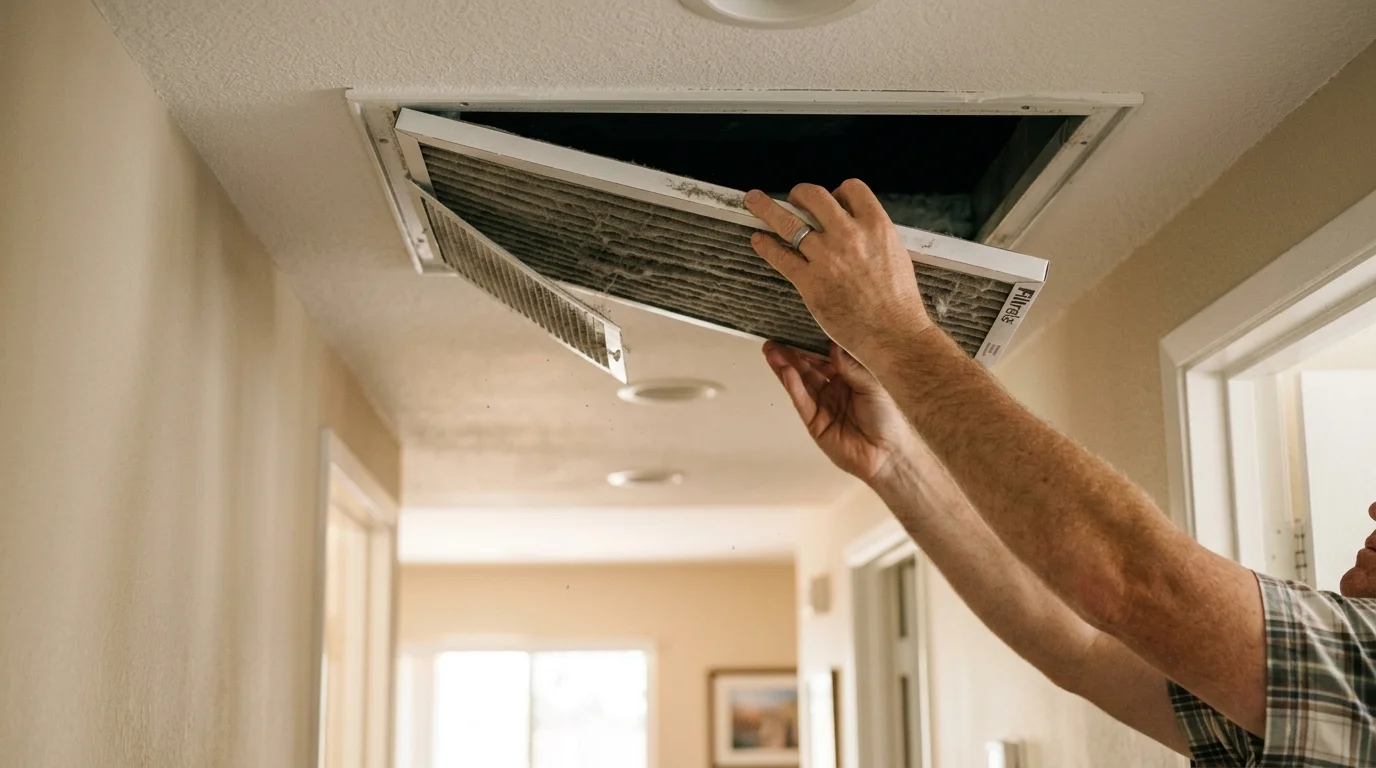
Your heat pump’s manual sets the replacement interval for its air filter. Check the filter sooner when it looks heavily loaded, airflow changes, or dust-producing conditions affect your San Diego home. If the manual is missing, use the equipment model number to request current instructions from the manufacturer or a licensed HVAC contractor.
Why a heat pump filter clogs faster than a furnace filter
A heat pump filter doesn’t automatically clog faster than every furnace filter. The real comparison depends on how each system operates in that specific home. Your equipment manual identifies the operating modes that send air through the filter.
Start with the manufacturer’s interval, then look at actual conditions. A filter serving several occupied rooms may look different from one serving a lightly used space. Pets, open windows, remodeling dust, nearby construction, and changes in household activity are all sensible reasons to inspect it before the normal reminder.
The filter’s location matters too. A hallway return near a busy living area can collect a different mix of debris than a return inside a quiet bedroom. Don’t copy a neighbor’s schedule, even if the homes share a floor plan. Equipment, filters, occupancy, and daily habits can differ.
Treat the manual as your baseline, not a reason to ignore visible changes. Write the installation date on the filter frame if the manufacturer permits it. You can also keep the date in your phone or thermostat notes. That record helps you compare one filter cycle with the next.
If filters repeatedly look loaded well before the stated interval, schedule a maintenance tune-up. A licensed contractor can inspect the system and explain whether filter choice, placement, duct conditions, or another issue needs attention.
What the MERV number changes, and what it costs you
The MERV number belongs to the filter’s specification. Don’t treat a higher number as an automatic upgrade. Use the rating range listed by the equipment manufacturer, or ask a licensed contractor to confirm a suitable option for your system.
Start by photographing the current filter before removing it. Capture the full label, dimensions, MERV number, brand, and any model information. If the label is unreadable, use the system model number when contacting the manufacturer. Don’t guess from the grille opening alone.
The purchase price depends on the exact size, construction, rating, brand, seller, and package quantity. Check current prices for the filter that matches your equipment. Compare identical specifications, since two boxes that look similar may not describe the same product.
Access can also change what professional replacement involves. A filter behind an easy return grille is different from one inside a cabinet that you can’t confidently identify or open. Ask the licensed contractor to separate filter material, labor, and any recommended system work on a written quote.
Be cautious when a replacement doesn’t slide into place as expected. Don’t bend the frame, stack filters, or force a close match into the opening. Recheck the label and manual. A contractor can identify the correct filter and explain the airflow direction shown on the equipment or filter markings.
How San Diego conditions shorten filter life
San Diego County doesn’t support one filter schedule for every home. A condo near downtown, a house along the Interstate 805 corridor, and a property near Highway 67 can have different surroundings and household routines. The manufacturer’s interval still comes first, but local events should trigger extra checks.
Look at what changed around the property. Open windows, interior renovations, brush clearing, nearby grading, and visible outdoor dust can justify an inspection. The same applies after a smoky period or a public air-quality advisory. You’re checking the filter, not declaring that every event requires immediate replacement.
Indoor changes matter as well. A new pet, more people using the home, or a room becoming a daily office can alter what you observe at the return. Record those changes beside the replacement date. That gives you a useful household history without relying on a generic San Diego calendar.
Location alone doesn’t reveal the answer. Homes west of Interstate 5 shouldn’t follow one schedule simply because they’re near the coast. Properties in El Cajon, Alpine, Chula Vista, or City Heights also need individual checks. Equipment instructions and visible filter condition are more useful than a ZIP code rule.
Pair filter checks with the other tasks in your San Diego heat pump maintenance plan. Keeping one record for filter changes, service visits, and unusual operating symptoms makes patterns easier to explain to a contractor.
Finding the filter on a ducted system versus a mini split
Don’t start pulling panels until you know which component the manual identifies. Search the equipment model number, then find the manufacturer’s filter instructions. The manual should show the filter type, location, orientation, and approved cleaning or replacement method.
On a ducted system, the instructions may point to a return-air grille, a filter rack, or a cabinet near the indoor equipment. Some homes have more than one return location. Check the full system documentation rather than stopping after finding the first grille.
Look for a label, removable frame, or filter access marking. Photograph the setup before taking anything out. Note which way the filter sits and copy any directional marking exactly when installing the replacement. If the access panel doesn’t open as described, stop and ask a licensed contractor.
A ductless mini split needs a separate check. Don’t assume it accepts the same disposable pleated filter used by a central system. The manufacturer’s manual will identify whether that indoor unit has a removable screen, a replaceable insert, or another approved component. Follow its cleaning or replacement directions.
Multi-zone homes may have several indoor units with separate filter locations. Keep a record for each room rather than one date for the whole property. Label the record with the room name and equipment model.
If the filter is missing, damaged, wet, or inaccessible, don’t invent a substitute. A licensed contractor can identify the correct part and check why the condition occurred.
A simple replacement schedule that fits real life
Build your schedule around the manufacturer’s interval. Put that date into a calendar you already use. Add the filter size, MERV number, equipment model, and purchase source to the reminder so you don’t have to rediscover them later.
Then add event-based checks. Inspect after work that produced visible indoor dust, a smoky period, or a major change in household use. An inspection doesn’t always mean replacement. Compare the filter with the manufacturer’s condition guidance and follow its directions.
Keep the routine simple:
- Save a photo of the new filter label.
- Record the installation date and filter location.
- Set the next reminder from the manufacturer’s interval.
- Note unusual dust, odor, sound, or airflow changes.
- Keep receipts and the exact product description.
For a home with several filters, name each location. “Upstairs hallway return” is more useful than “main filter.” For mini splits, use room names such as “garage office” or “rear bedroom.” This prevents one indoor unit from being skipped.
Don’t stretch the schedule because the filter looks clean from one angle. Follow the inspection method in the manual. Don’t shorten it based only on an online rule that ignores your equipment.
If you’d rather combine filter work with professional service, ask what’s included before booking. A written scope should identify the equipment being checked and any filter supplied. Our guide to heat pump maintenance in San Diego explains how filter care fits into the larger service routine.
Symptoms of a filter you left in too long
A heavily loaded filter is one reason to inspect the system, but it isn’t a complete diagnosis. Check for visible debris across the filter face and compare its condition with the manufacturer’s guidance. Replace it when those instructions call for replacement.
Changes in airflow also deserve attention. Note which vents or indoor units seem different, when the change began, and whether it happens during heating, cooling, or both. Don’t assume the filter is the only cause.
Dust marks around a return grille can be another prompt to look. Photograph the grille before cleaning it, then inspect the filter location described in the manual. Recurring marks, a loose filter fit, or debris beyond the filter should be shown to a licensed contractor.
Unusual odors or sounds shouldn’t be blamed on the filter without an inspection. Turn to the equipment manual for immediate operating instructions. If professional service is needed, describe the symptom instead of requesting only a filter change. That gives the contractor a clearer starting point.
A system that isn’t delivering the temperature you expect may have a filter issue or another problem. Our guide to a heat pump blowing warm air in San Diego covers the observations to gather before arranging service.
After replacement, keep the old installation date and your notes. If the same symptom remains, don’t keep swapping filters. Have a licensed HVAC contractor inspect the equipment.
When to call us
Call when the filter location is unclear, access doesn’t match the manual, or airflow and comfort problems continue after the correct replacement. Before hiring, confirm the contractor’s status through the CSLB license check.
Call us at (858) 400-4374 and we’ll connect you with a licensed local HVAC contractor.