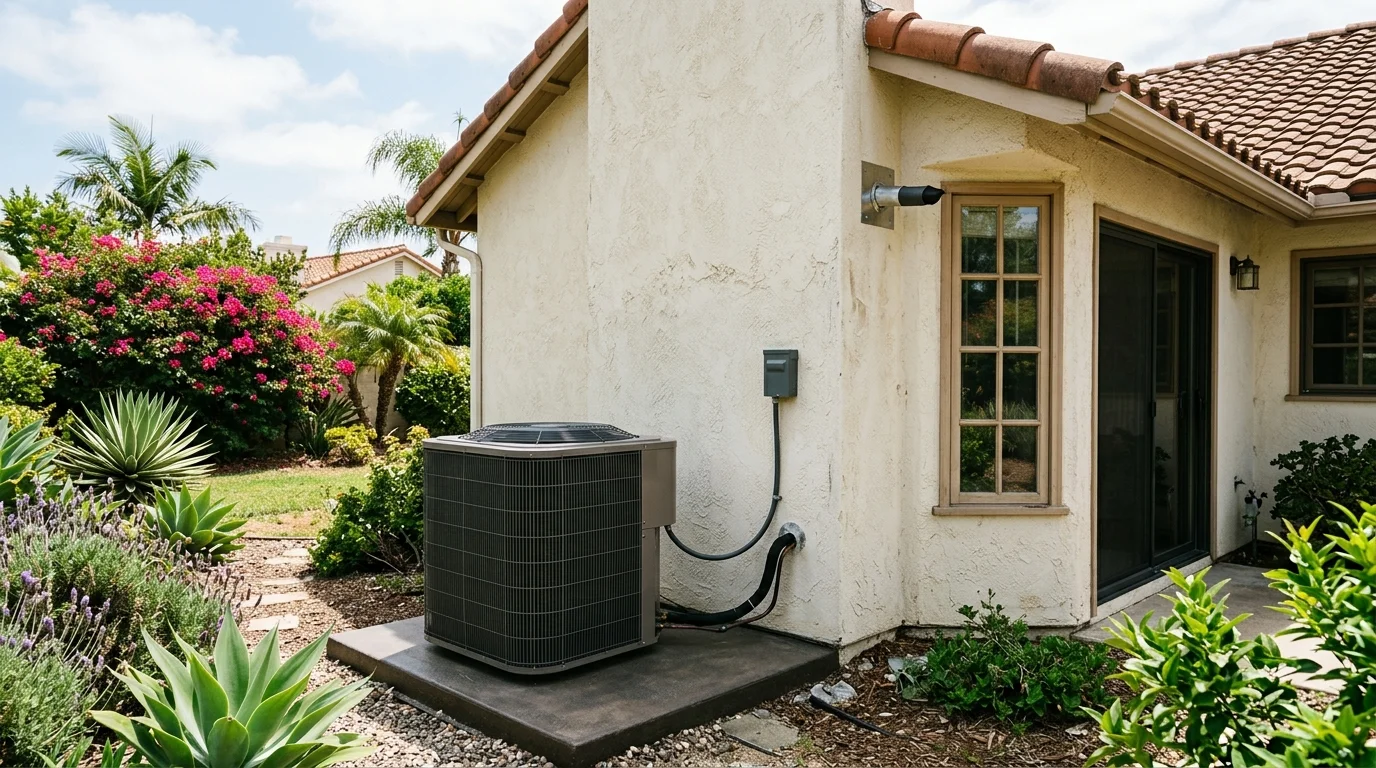
The cost to add a heat pump to a furnace isn’t one standard line item. It depends on whether the furnace stays, what replaces it, and which parts of the home need changes. An itemized quote should separate the equipment from gas, drainage, electrical, duct, permit, and inspection work.
The difference between a swap and a conversion
A swap replaces equipment with another system serving the same basic role. A conversion changes how the home heats, so it may affect several connected systems.
The first decision is whether the gas furnace stays. Some homeowners remove it and move to an all-electric heat pump. Others keep the furnace as part of a hybrid setup. Those projects have different scopes, even when both quotes include a heat pump.
If the furnace stays, ask how the new equipment will work with it. The written proposal should identify the indoor equipment, outdoor equipment, thermostat, controls, and operating sequence. It should also say which existing components remain.
If the furnace leaves, the proposal should cover more than equipment removal. Ask what happens to the gas connection, venting, electrical supply, condensate route, and furnace platform. Each item should appear in the scope, not hide under a broad installation line.
That distinction matters when comparing proposals. One contractor may quote a limited equipment change. Another may include related trade work and project closeout. Their totals won’t describe the same job unless their scopes match.
Our guide to heat pumps versus gas furnaces in San Diego can help with the system decision. Homeowners replacing existing heat pump equipment can also review heat pump replacement options. Those projects differ from a first conversion away from gas.
Before discussing price, ask each contractor to label the proposal clearly: full conversion, hybrid system, or equipment replacement. That one line makes the remaining details easier to compare.
What happens to the gas line and the flue
Removing a furnace doesn’t answer what happens to its fuel connection. The contractor’s scope should state whether the gas line will remain, be disconnected, be capped, or require separate trade work. Don’t accept “furnace removal” as the complete description.
The same rule applies to the flue. Ask the contractor to identify what the vent currently serves. A vent may be associated with the furnace, while other gas equipment may have separate connections. The proposal should describe only the components affected by the conversion.
The mechanical closet also deserves attention. San Diego homes place furnaces in garages, closets, attics, and other tight spaces. Access can shape the work even when the selected equipment fits on paper. Ask whether the platform, opening, wall finish, or access path needs changes.
A clear gas and flue section should answer these points:
- Which contractor handles the gas connection?
- What visible components will remain after removal?
- What work is included around the former vent opening?
- Does another appliance affect the proposed scope?
- Who confirms the completed work during closeout?
Don’t handle gas piping or vent changes based on a generic checklist. The licensed contractor needs to inspect the actual layout and define the work in writing.
Heat Pro SD matches homeowners with licensed independent local pros. You can confirm a contractor’s license through the California Contractors State License Board before signing.
Condensate: the new drain a furnace never needed
A heat pump serving a ducted home includes an indoor coil. When the system cools the house, moisture collected at that coil needs a planned route away from the equipment. The contractor should show that route before work begins.
Don’t assume the furnace area already has a usable drain. Some existing systems may have drainage components, while others may not suit the proposed equipment. The condition, destination, and accessibility of any existing route need an on-site review.
Ask the proposal to identify the drain path and every related component. It should also say whether the route is gravity-fed or uses additional equipment. If the line crosses finished space, a garage, an attic, or an exterior wall, ask where it will be visible.
This detail matters across San Diego County. A furnace in a Mira Mesa garage presents a different routing problem than one in a La Mesa attic. Coastal and inland homes can also have very different mechanical layouts. The street address alone doesn’t reveal the drain path.
Ask these questions during the site visit:
- Where will condensate leave the indoor equipment?
- Can the contractor use an existing route?
- Where will the drain terminate?
- How can the line be reached for maintenance?
- Is protection against an unnoticed backup included?
The answers should match the proposed model and the actual installation location. If one quote says little about drainage, ask for that omission to be corrected before comparing it with a more detailed bid.
Electrical work the conversion usually triggers
Electrical scope is a major variable in a furnace conversion. The contractor needs to compare the proposed equipment with the home’s existing service, panel, circuits, wiring, and available spaces. A visual glance at the panel door isn’t a complete assessment.
Ask who will perform the electrical review. The proposal should identify any new circuit, wiring route, disconnect, panel work, or coordination with another licensed trade. It should also state whether the thermostat and controls require new wiring.
Older homes can make this part less predictable. Central San Diego neighborhoods may have remodeled panels beside much older wiring. East County properties may place outdoor equipment far from the main panel. South Bay and North County homes may have additions that changed the original equipment layout. The contractor should quote the property in front of them, not a countywide template.
The equipment location matters too. Ask where the outdoor unit will sit and how the electrical route reaches it. A short-looking path may cross finished areas, exterior walls, or difficult access points. Those details belong in the written scope.
Don’t assume an electrical upgrade is required. Don’t assume the existing system is ready either. Ask the licensed contractor to document what was inspected and what the selected equipment requires.
When comparing proposals, look for separate descriptions of HVAC and electrical work. A single vague allowance makes it hard to know what happens if the site review uncovers another need. Clear responsibility matters more than a polished total.
Incentive terms can also change. Check the California Energy Commission and IRS energy credit page when reviewing the current terms for your project.
Reusing the existing ductwork, or not
A furnace conversion doesn’t automatically mean the ducts must go. It also doesn’t prove they should stay untouched. The licensed contractor should inspect the existing system and explain what can be reused.
Start with the layout. Ask whether the current supply and return paths match the proposed equipment plan. The contractor should also inspect accessible sections for damage, disconnected joints, restricted areas, and past alterations. Any recommended changes should be tied to something found at the home.
Room-by-room comfort concerns belong in this discussion. Tell the contractor which bedrooms run hot, which spaces feel weak, and whether an addition has its own equipment. A quote that ignores those conditions may preserve the same comfort problem after the conversion.
San Diego’s housing stock makes generic duct assumptions risky. A compact City Heights home can have short runs in limited space. A Rancho Bernardo house may have a larger attic layout. A coastal remodel might combine original ducts with later additions. Those aren’t interchangeable projects.
Ask the contractor to separate duct findings into three groups:
- Existing components that can remain
- Repairs included in the proposal
- Recommended changes priced separately
That structure helps you compare bids without paying twice for the same work. It also reveals whether a lower proposal skipped the duct inspection entirely.
If the existing layout can’t support the project you want, ask about alternatives. A ducted heat pump may still fit after targeted changes. Some homes may call for a different equipment layout. The answer should follow the site assessment, not a preset sales package.
The permit and inspection steps in San Diego County
Permit handling should be a named part of the proposal. Ask which city or county authority has jurisdiction over the property, who will submit the application, and who will coordinate required inspections. Don’t assume every San Diego County address follows the same office or process.
A City of San Diego property isn’t handled exactly like an address inside Chula Vista, Oceanside, or El Cajon. An unincorporated county address adds another jurisdiction question. The contractor should identify the correct authority from the project address and confirm the current process with that office.
Before signing, ask for written answers to these questions:
- Which authority handles the permit?
- Who applies for it?
- Which parts of the project appear in the application?
- Who schedules each required inspection?
- Who handles a requested correction?
- What proof of final approval will the homeowner receive?
Those answers help expose gaps between quotes. One proposal may include application and inspection coordination. Another may leave permit charges or related trade filings outside the stated total. Ask each contractor to mark every included and excluded item.
Don’t rely on a verbal promise that the paperwork is “handled.” The contract should name the responsible party. It should also explain how added work is approved if the authority requests a change.
Our guide to heat pump permits in San Diego explains how to prepare for that conversation. The current requirement for a specific property still comes from the city or county authority with jurisdiction.
Licensing matters here too. California treats unlicensed contracting as a misdemeanor unless an exemption applies. For covered work, check the contractor directly through the CSLB before signing. Heat Pro SD is a referral service and performs no physical work.
When to call us
A furnace conversion needs a licensed heat pump pro when gas, venting, drainage, electrical, ducts, and permits overlap. Call us at (858) 400-4374 and we’ll connect you with a licensed local HVAC contractor.