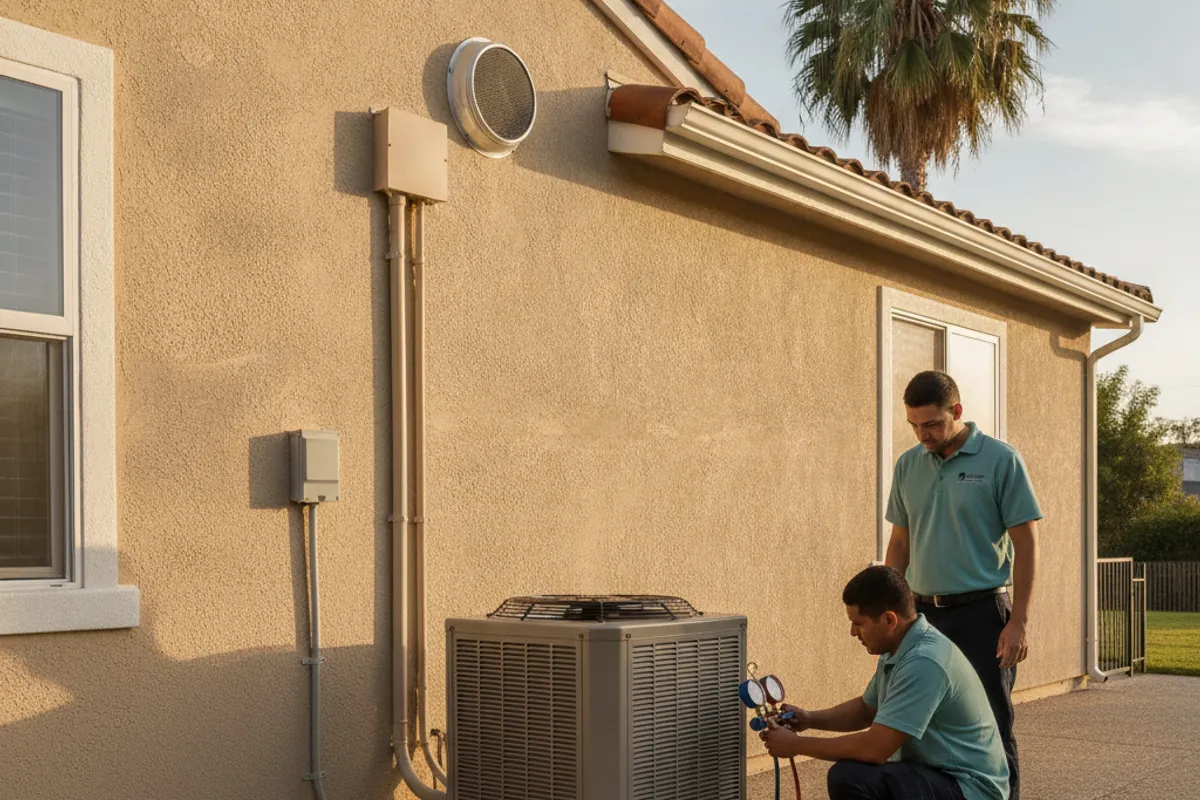
Two ways to heat and cool a San Diego home
Many San Diego homes that got central HVAC in the 1980s and 1990s were set up with a split system: a gas furnace for heating and a central air conditioner for cooling. That configuration works, but it means two separate systems, two fuel sources, and eventually two sets of replacement decisions.
A heat pump is a single system that handles both heating and cooling. It moves heat rather than generating it by burning fuel. ENERGY STAR explains that electric air-source heat pumps use the difference between outdoor and indoor temperatures to heat and cool, and that because they move heat rather than converting it from fuel, they can deliver up to three times more heat energy than the electrical energy they consume. Read that on ENERGY STAR’s air-source heat pump page. That is a mechanism claim, not a San Diego bill cut and not a COP or AFUE table.
The question for most homeowners is whether the switch makes sense given their current equipment, ducts, electrical service, and quotes.
How each system works
A gas furnace burns natural gas to produce heat. It keeps producing heat when outdoor air is very cold, which is why it became the default in colder climates. In San Diego, ask the contractor how often your house actually needs that cold-weather behavior, using the load calculation for the address rather than a published winter-low figure.
An air conditioner removes heat from inside the home and dumps it outside. It does not heat. Combined with a furnace, it gives you a full system, but it requires separate equipment, separate maintenance, and in some cases a separate fuel line.
A heat pump does what an air conditioner does in cooling mode, then reverses the process in heating mode to pull heat from the outside air and move it indoors. ENERGY STAR describes a ducted heat pump as similar to a central air conditioner that also works in reverse for winter heating.
Upfront cost comparison
Heat Pro SD does not publish installed bands for a furnace-plus-AC pair or for a heat pump. Compare itemized quotes that name:
- Equipment models on each option
- Whether the heat pump replaces both the furnace and the AC, or is added as dual fuel
- Duct work, electrical work, gas-line changes, and permit responsibility
- Startup and commissioning records
ENERGY STAR notes that a dual-fuel setup (heat pump with an existing furnace) is one path when the furnace is relatively new. Ask the contractor whether they are quoting full replacement or dual fuel, and why.
The useful comparison is the written scopes, not a countywide price table. Our heat pump cost guide explains how to read those quotes.
Operating cost comparison
San Diego’s climate is mild relative to a heavy-heating climate, which changes how much of the year each system runs. Natural gas prices from SoCalGas and electricity prices from SDG&E both move. Neither is a reason to invent an annual dollar difference on this page.
Ask each bidder to show the assumptions behind any operating-cost worksheet: rate plan, thermostat settings, equipment ratings, and hours. Compare those inputs with your actual bills. ENERGY STAR’s “up to three times more heat energy” line is about heat moved per unit of electricity, not a promise that your bill drops by a set percentage.
Cooling runtime matters in San Diego because the same heat pump also cools. Ask for the cooling ratings on the heat pump versus the AC being replaced, using the published ratings for those models, not a season-length figure from this page.
Comfort differences
Variable-speed heat pumps can run longer at lower output instead of blasting on at full power, then shutting off. That can mean steadier temperatures and better dehumidification during marine-layer months, when indoor humidity can climb even when the air feels mild. Ask the contractor how the proposed model handles humidity, using that model’s data.
Gas furnaces can raise indoor temperature quickly. Whether that matters in your house depends on how the rooms actually feel on a cold morning, not on an example indoor temperature pair. Have the contractor walk the rooms and include that in the load calculation.
The gas line question
If your home has an existing gas line and furnace, switching fully to a heat pump means that gas line may serve only remaining gas appliances, such as a water heater or range. Some homeowners keep gas for cooking and switch to a heat pump for space conditioning. Others plan a longer all-electric path. Those are household choices. They are not an incentive promise.
TECH Clean California publishes single-family incentive status at techcleanca.com/incentives/single-family-incentives. As of November 14, 2025, that page reported TECH single-family heat pump HVAC incentives as nearly reserved statewide. As of January 7, 2026, HEEHRA single-family rebates for Southern California were reported fully reserved. As of February 24, 2026, HEEHRA single-family rebates were reported fully reserved statewide. Do not treat those dated lines as a rebate that applies to your project. Confirm federal credit rules with the IRS and a tax advisor. SDG&E program status was not verified here.
Which makes more sense for San Diego?
For many San Diego homes replacing existing central HVAC, a heat pump is the option to quote because it is one system for heating and cooling, it matches ENERGY STAR’s year-round use guidance, and it can dehumidify on mild days if the equipment can run at part load. That is not a winner-for-every-house ruling.
A gas furnace plus AC may still make sense if the load calculation shows a heating need the proposed heat pump cannot meet without a documented backup, if you are keeping a relatively new furnace and adding a heat pump as dual fuel, or if the electrical service cannot support the proposed heat pump without work you are not ready to fund. A licensed electrician has to answer the panel question.
Visit the San Diego heat pump service area page when you want a licensed HVAC contractor matched to the property.
Talking to a contractor
When getting quotes, ask for a Manual J load calculation, not an equipment swap based on what was there before. Ask for the published ratings on any heat pump being quoted. Ask how the system handles humidity, not just temperature. Ask whether the installer is pulling the permits the building department requires and performing a documented startup.
Heat Pro SD matches homeowners with licensed independent HVAC contractors serving San Diego County. We perform no physical work. Call (858) 400-4374 and leave a voicemail. The line plays a recording-consent notice.
Is a heat pump better than a gas furnace in San Diego?
It can be, for a house whose load calculation, ducts, and electrical service support it. The climate is mild enough that many heat pumps heat without needing a furnace’s cold-weather behavior, and one system can replace a furnace plus AC. Get both options in writing.
Can a heat pump replace both my furnace and AC?
Often yes. A heat pump handles both heating and cooling, so it can replace a gas furnace and a central AC in a single system when the ducts, electrical service, and permits support that design. You may keep the ductwork. The contractor still has to confirm it.
Do heat pumps work in San Diego winters?
ENERGY STAR states that many certified air-source heat pumps are tested for low-temperature performance, including cold-climate certification testing down to 5°F, and that systems continue working below that with backup as designed. Ask the contractor for the published heating capacity of the proposed model at the outdoor design condition for your address. Do not use a round outdoor temperature from this page as the spec.