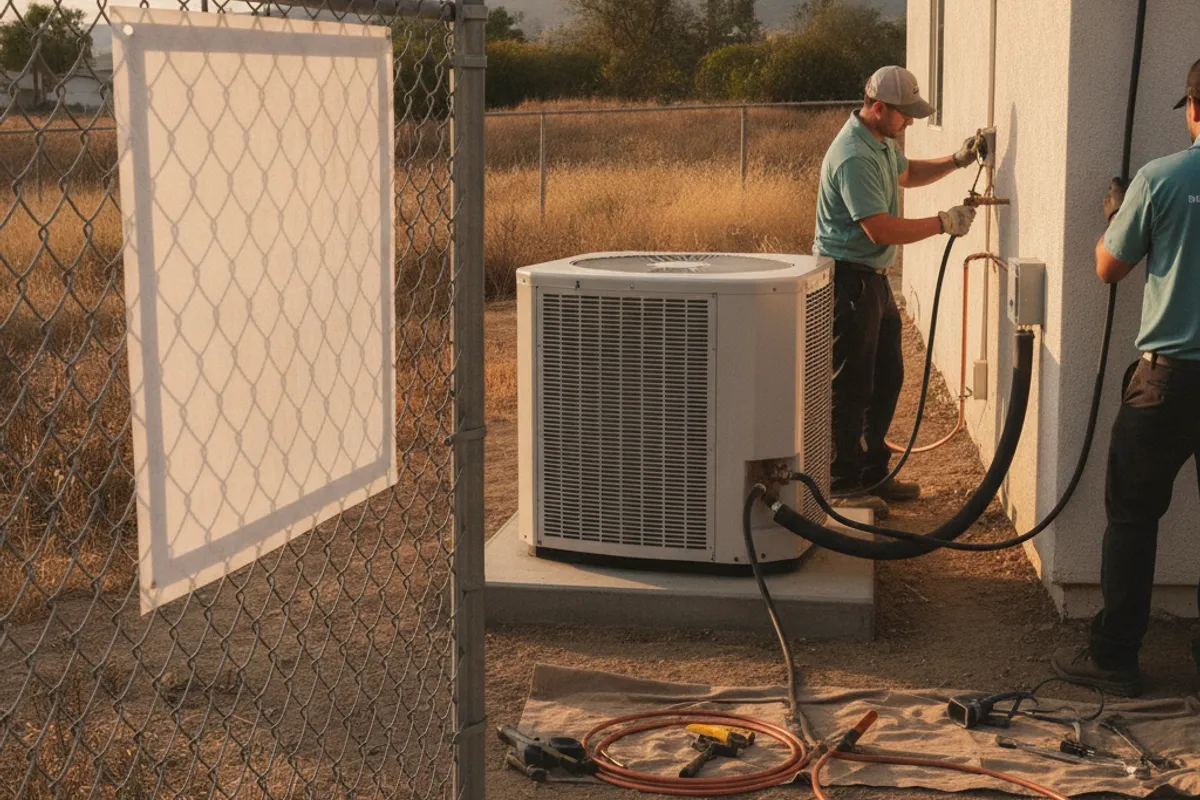
Confirm permits with the department that actually controls the address
A heat pump installation in San Diego County often needs a mechanical permit, and electrical work can need a separate electrical permit. That is not something this page can certify for every parcel. Cities and the unincorporated county use different portals, forms, and inspection queues.
Ask the licensed HVAC contractor which building department controls your property, whether a permit applies to the proposed scope, and who will pull it. Then confirm that answer with that city or county building department. Do not rely on a remembered hostname. Heat Pro SD matches licensed independent HVAC contractors. We perform no physical work and we do not pull permits.
Who pulls the permit: your contractor, if they are doing the work
For most residential heat pump installations, the contractor pulls the permits, not the homeowner. A C-20 HVAC contractor typically applies for the mechanical permit under their license. Electrical circuits or panel work belong to the appropriately licensed electrical contractor, often a C-10, unless the HVAC contractor’s license and the department’s rules cover that exact scope. Ask them to put the license class and the permit type in writing.
You should not be asked to pull permits yourself for work a contractor is performing. If a contractor suggests you pull the permit as a homeowner, that may be a reason to verify their license on the California Contractors State License Board lookup before you sign.
Permit fees should appear as a line on a legitimate quote, or the quote should say they are excluded. If you see a quote without permit language, ask explicitly. A contractor who says they skip permits on a simple like-for-like replacement is giving you a reason to look elsewhere, unless the building department has told you in writing that the work is exempt.
What the mechanical permit usually covers
When a mechanical permit is required, it typically authorizes the heat pump equipment: the outdoor unit, the indoor air handler or mini-split heads, and the refrigerant line connections. The inspection that follows often confirms:
- Equipment is installed at the clearances required for that job
- Refrigerant line connections and leak testing match the permitted scope
- The equipment installed matches what was on the application
- Any energy-code items the department listed for that permit, which can include duct leakage testing on central ducted systems
California Title 24 and HERS (Home Energy Rating System) verification come up on many HVAC replacements. Whether your job needs a HERS rater is a question for the contractor and the department, not a universal “every job” statement on this page. A HERS rater is a separate third-party verifier when one is required. Ask your contractor whether they have included that process in the timeline.
What the electrical permit covers (when required)
If the installation needs a new dedicated circuit from the panel to the outdoor unit, or any panel modifications, ask whether a separate electrical permit is required. That work must be done by the correctly licensed electrical professional for the scope.
The electrical inspection, when it applies, typically looks at:
- Wire gauge and circuit breaker sizing for the heat pump’s listed electrical data
- A disconnect within sight of the outdoor unit
- Any GFCI or other protection the code official requires at that location
- Grounding
For a replacement where the existing dedicated circuit is adequate and no new circuits or panel work is proposed, the electrical permit may not be required. Your HVAC contractor and electrician should assess this during the quote, then you confirm with the department.
Where permits are pulled in San Diego County
San Diego County has multiple jurisdictions. Permits are pulled from the building department that controls the parcel, which may be a city or the county for unincorporated areas.
Ask the contractor to name that department for your address. Then look up that department’s current mechanical or HVAC permit page yourself. Incorporated cities such as the City of San Diego, Chula Vista, El Cajon, Escondido, National City, Santee, Poway, and San Marcos each run their own process. Unincorporated communities such as Ramona, Spring Valley, Alpine, and Lakeside typically go through the county’s planning and development services, but you still confirm the parcel rather than assuming.
Your contractor should know which jurisdiction your property falls under. You still verify it.
What inspection looks like
After the installation is complete, the contractor typically schedules inspection through the same department. An inspector visits and reviews the work against the permit scope. In most cases, the HVAC system needs to be accessible and operable during inspection.
If the inspection passes, the permit is signed off and recorded. That record can appear in later permit searches during a real estate transaction.
If the inspection fails, the contractor must address the deficiency and schedule a re-inspection. A good contractor builds inspection into the project timeline.
Why skipping permits is expensive
Homeowners sometimes hear that permits add time and cost and wonder whether they are worth it. Ask the contractor and the department rather than skipping on a rumor.
Manufacturer warranty. Many heat pump manufacturers require a permitted installation as a condition of the warranty. A system installed without a required permit may not be covered if it fails during the warranty period. Confirm that in the warranty document for the model being installed.
Resale and records. Ask a real-estate professional or the title/escrow team how unpermitted mechanical work is handled for your transaction. A buyer’s inspector may look for recently added HVAC equipment and check permit records. Retroactive permits can involve re-inspection. Heat Pro SD does not give legal advice.
Insurance claims. If a heat pump installation causes property damage, the homeowner’s insurer may ask whether the work was permitted. Ask your insurer how they treat unpermitted mechanical work.
A third-party check. When a permit is required, the inspection is one more set of eyes on the installation. It is not Heat Pro SD’s inspection. We do not inspect jobs.
Heat Pro SD connects homeowners with licensed independent HVAC contractors serving San Diego County. Visit the San Diego heat pump service area page or call (858) 400-4374 and leave a voicemail. The line plays a recording-consent notice.
Do I need a permit to replace a heat pump in San Diego?
Ask the licensed contractor, then confirm with the city or county building department for the property. A mechanical permit is common. Electrical permits are common when new circuits or panel work are part of the job. This page does not certify every address.
Who is responsible for pulling the heat pump permit?
Usually the contractor doing the work. A C-20 HVAC contractor typically pulls the mechanical permit under their license number. You should not be asked to pull the permit yourself for a contractor’s work unless the department has a documented owner-builder path you have chosen in writing.
What is a HERS verification and do I need one?
HERS verification is a California energy-code process that a third-party rater performs on many HVAC replacements, including duct leakage where required. Ask your contractor whether Title 24 and HERS apply to your permit, and confirm that with the department. Do not assume every job is identical.