When you need AC repair in Alpine, CA, first confirm what equipment you have. A heat pump cools the home like an air conditioner, but its controls and diagnosis can differ. Heat Pro SD can connect Alpine homeowners with licensed independent HVAC contractors who handle the inspection and repair.
How to confirm the system is a heat pump
Start at the thermostat. A heat pump thermostat usually includes cooling and heating modes without identifying a separate furnace. Some controls also show auxiliary or emergency heat. Those labels are useful clues, but thermostat wording varies by model.
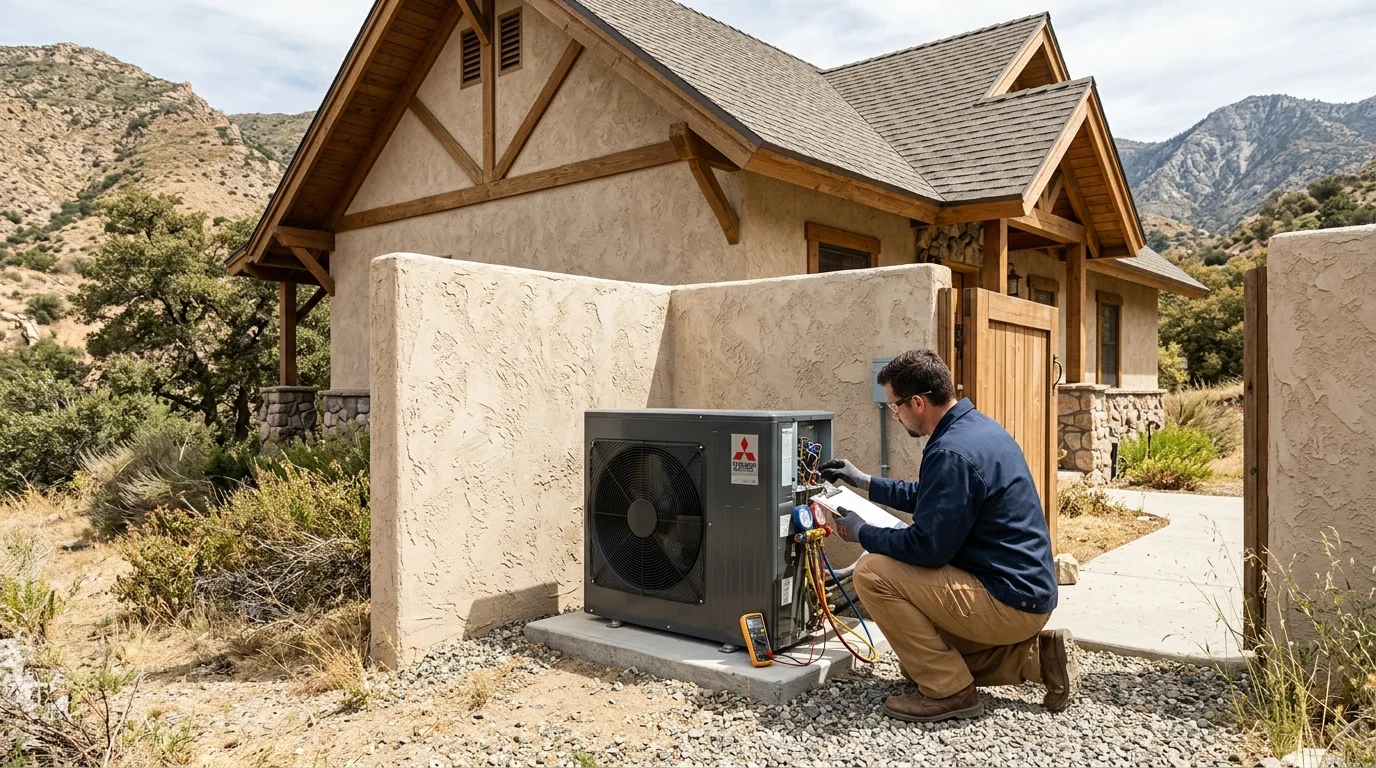
Next, check the labels you can read without removing panels. The outdoor unit’s data plate may identify the equipment as a heat pump. The model number can also help. Search that exact number on the manufacturer’s official website or installation manual. Don’t rely only on a resale listing or an unfamiliar parts page.
You can also review past service records. An invoice may call the equipment a heat pump, air-source heat pump, package heat pump, or split heat pump. A previous invoice that says “AC” isn’t conclusive. People often use that term for any system providing cool air.
Equipment arrangement offers another clue. A split system commonly has an outdoor unit and an indoor air handler. A packaged system places more components in one outdoor cabinet. Either arrangement could still require heat pump-specific diagnosis.
If the system type remains unclear, send the model information to the contractor before the visit. That helps the pro prepare for the correct equipment. Our heat pump repair service connects San Diego County homeowners, including those in Alpine, with licensed independent contractors.
Checks to make before opening any equipment
Keep the first checks simple and outside closed equipment panels. Set the thermostat to cooling mode. Confirm that the displayed room temperature sits above the cooling setpoint. Then give the system time to respond according to its manufacturer’s instructions.
Check whether the thermostat display is blank, showing an alert, or requesting new batteries. Photograph any message before changing a setting. An error may disappear after a reset, leaving the contractor with less information.
Look at the accessible return-air filter if the equipment instructions identify it as homeowner-accessible. Record whether it appears heavily loaded. Don’t remove covers or reach into the air handler to find a hidden filter. A contractor can check filters and internal airflow restrictions during diagnosis.
Walk through the home and note which vents have airflow. Record whether the problem affects every room or one area. Keep doors and windows in their normal operating positions during this check. That gives the contractor a clearer description of the actual complaint.
Outside, observe the unit from a normal standing position. Note whether it’s running, quiet, cycling, or making a new sound. Don’t open its cabinet or touch internal parts. This page can’t confirm model-specific safety or reset instructions. Use the manufacturer’s manual and follow directions from a licensed contractor.
These observations aren’t a diagnosis. They’re a clean starting point for an Alpine heat pump repair call.
Cooling failures a thermostat can appear to cause
A thermostat can make a working HVAC system appear completely inactive. It can also run the indoor fan without requesting cooling. Start by checking the mode, setpoint, fan setting, schedule, and any message shown on the screen.
The fan setting matters. “On” or a circulation setting may move room-temperature air when active cooling isn’t running. That can feel like the heat pump is blowing warm air. Set the fan according to the thermostat manufacturer’s cooling instructions, then document what changes.
Schedules can create similar confusion. A programmed temperature may replace a manual setting at the next scheduled period. Vacation, away, eco, or utility-related modes can also change the displayed target. Don’t delete the schedule before recording it. A photo gives the contractor something specific to evaluate.
Heat pumps also require compatible thermostat configuration. A control set up for different equipment may send the wrong calls or display misleading modes. That configuration belongs in the diagnosis, especially after a thermostat replacement, electrical interruption, or recent HVAC work.
Avoid assuming that the thermostat is the failed part. Low airflow, control faults, outdoor-unit problems, and other system conditions can produce similar symptoms. Our guide to thermostat problems that resemble heat pump failures explains that overlap.
If air is moving but doesn’t feel cool, read the checks for a heat pump blowing warm air. Give the contractor both symptoms: what the thermostat shows and what the equipment does.
Signs the system should remain off
Leave the system off when its condition appears unsafe or conflicts with its manufacturer’s instructions. That includes any situation where you can’t inspect an accessible area without removing a panel, reaching near wiring, or touching moving equipment. This page can’t confirm a model-specific safety limit.
Don’t keep changing settings to force a response. Repeated restarts can also erase the sequence that produced an error. Instead, photograph the thermostat, note the time, and write down what happened immediately beforehand.
Keep the system off if its breaker won’t remain set, but don’t repeatedly reset it. Tell the contractor exactly what you observed. The same applies when you notice smoke, visible scorching, exposed wiring, or a strong electrical odor. Don’t open the cabinet to locate the source.
Water near electrical equipment also deserves a cautious response. Don’t enter a wet equipment area or touch nearby controls. Follow the equipment manufacturer’s shutoff directions and get instructions from a licensed HVAC contractor.
Sounds and odors can be difficult to describe. A short recording made from a normal, safe distance may help. Note whether the condition began at startup, during operation, or after shutdown.
When requesting service, don’t reduce the report to “the AC stopped.” Describe the stop signal and say that the equipment remains off. The contractor can then decide what inspection steps are appropriate.
When repair and replacement both deserve consideration
A failed cooling cycle doesn’t automatically mean the heat pump needs replacement. It also doesn’t mean another repair is always the right choice. The useful comparison begins after a contractor identifies the failed component and checks the rest of the system.
Ask whether the proposed work corrects the cause or only restores one symptom. Request the part’s availability, the repair scope, and any contractor-provided warranty terms in writing. This site can’t confirm a standard warranty because those terms depend on the contractor, manufacturer, equipment, and proposed work.
Replacement deserves consideration when the written diagnosis identifies broader equipment problems, unavailable parts, repeated failures, or a mismatch that repair won’t correct. Those findings need evidence from the property. Don’t accept a lifespan claim or a sales rule as the entire diagnosis.
Compare two defined paths. One should explain the repair, its limits, and the expected condition afterward. The other should identify the proposed replacement equipment and the changes included in its scope. Our guide to deciding whether to repair or replace a heat pump provides a useful comparison framework. You can also review the heat pump replacement process before discussing a new system.
No replacement price, rebate amount, tax credit, or savings percentage is confirmed on this page. If an Alpine estimate mentions an incentive, verify its current status that day through the California Energy Commission or the program administrator. Funding and eligibility can change.
What the written diagnosis should explain
A useful diagnosis names the failed part or condition. It should also connect that finding to the cooling complaint. “Not cooling” describes the symptom. It doesn’t explain why the heat pump stopped delivering cool air.
Ask the contractor to document what was inspected and what the equipment did during testing. The report should distinguish a confirmed failure from a suspected one. If more testing is required, that should be clear before you authorize additional work.
The repair proposal should identify included labor, parts, and related adjustments. It should state what isn’t included. If the contractor recommends refrigerant work, electrical work, airflow correction, or control replacement, ask why that work addresses the measured condition.
Request the contractor’s own warranty terms in writing. Heat Pro SD doesn’t issue the warranty because it doesn’t perform the repair. The licensed independent contractor remains responsible for its proposal, work, and warranty terms.
For a replacement recommendation, ask for the proposed model numbers and system arrangement. New equipment sold must clear applicable federal efficiency minimums, but this page doesn’t state a numerical SEER2 or HSPF2 threshold. A licensed installer should quote compliant equipment. SEER and SEER2 also aren’t directly comparable because SEER2 uses a harder test.
Before authorizing regulated work, verify the contractor through the official CSLB license check. Match the license information to the business named on the proposal. Keep the diagnosis, proposal, model information, and warranty terms together so you can compare the documents without relying on a verbal summary.
When to call us
Call when your Alpine heat pump won’t cool, keeps stopping, or needs a licensed diagnosis. Heat Pro SD refers homeowners to licensed independent local HVAC contractors and performs no physical work itself. Call us at (858) 400-4374 and we’ll connect you with a licensed local HVAC contractor.