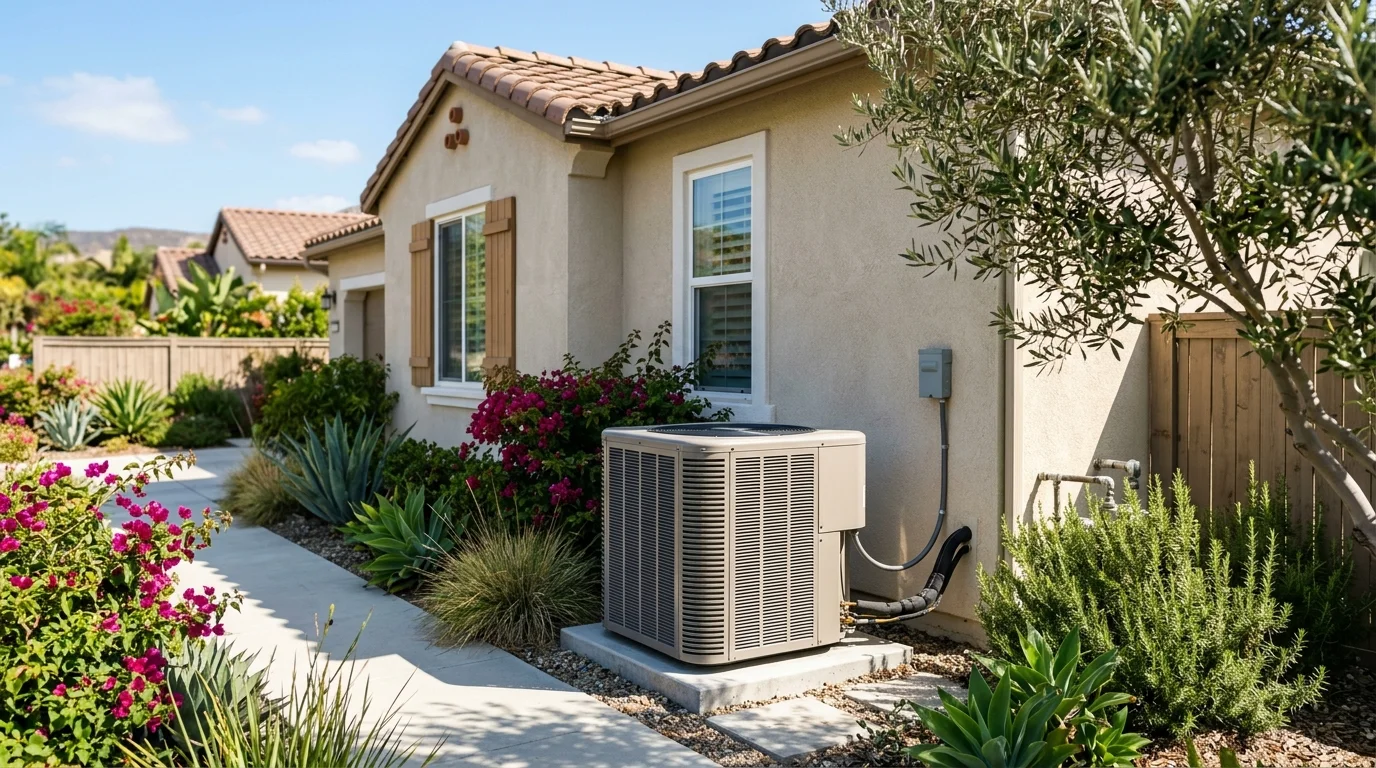
A heat pump may cost more or less than a gas furnace to run. There isn’t one honest countywide monthly figure. Use your own SDG&E bills, rate plan, heating pattern, and the equipment in a written proposal. Keep incentives out of the monthly operating math. Heat Pro SD does not quote operating costs as a service.
Why nobody can quote you a monthly figure honestly
A monthly figure depends on information that a generic calculator doesn’t have. Your home’s heating demand matters. So do your thermostat settings, rate plan, equipment choice, and the condition of any existing ducts.
Location also changes the comparison within San Diego County. A household near Encinitas can have a different heating pattern from one in El Cajon. Even neighboring homes can produce different bills because their occupants use heat differently.
The equipment quote needs context too. A heat pump’s published rating doesn’t reveal how often your household will run it. A furnace’s fuel type alone doesn’t reveal how much gas your home uses for heating. Our guide to a heat pump versus a gas furnace in San Diego covers the broader comfort and equipment decision.
Be cautious when someone gives you one monthly amount before seeing your bills. Ask what rate, usage pattern, equipment model, and home conditions support it. If those inputs aren’t written down, you can’t test the result.
A useful comparison is a range based on stated assumptions. It should show what changes when the weather, thermostat schedule, or utility rate changes. That won’t guarantee a future bill. It will show whether the estimate fits your home instead of an imaginary statewide average.
Reading your own gas and electric bills first
Start with complete gas and electric bills from periods when you used heating. Don’t begin with the balance due alone. Find the billed usage, the billing dates, and the name of each rate plan.
Then compare those bills with periods when space heating wasn’t active. This helps separate normal household energy use from the extra use that appeared during heating periods. Don’t treat every difference as space heating without checking. List which appliances and systems use gas, electricity, or both.
Create a simple worksheet with these entries:
- Billing period
- Gas use shown in therms
- Electricity use shown in kilowatt-hours
- Total charge associated with each service
- Rate-plan name
- Thermostat schedule
- Any unusual household changes
Notes matter. Record long trips, added occupants, portable heaters, or changes to thermostat settings. These details can explain a bill that doesn’t match the surrounding periods.
Keep each original bill with the worksheet. Utility summaries can be helpful, but the full bill gives you the rate-plan name and calculation details. Those are needed when you check current rates.
This exercise creates your baseline. It doesn’t predict a heat pump’s consumption by itself. It shows what your household currently buys and when it buys it. A licensed HVAC contractor can then compare that record with the proposed system and your home’s heating needs.
What a therm and a kilowatt hour are actually buying you
A therm is the unit shown for gas use. A kilowatt-hour is the unit shown for electricity use. Their prices can’t be compared directly because the proposed systems use different energy sources and equipment.
For your existing setup, calculate an effective gas cost from the relevant bill. Divide the gas charges you’re comparing by the therms billed. Do the same for electricity by dividing the relevant electric charges by the billed kilowatt-hours. Keep the bill’s fixed or unrelated charges separate when the bill identifies them.
Next, ask the licensed contractor for the proposed heat pump’s model information and the assumptions behind its expected energy use. The worksheet should identify the home conditions, thermostat schedule, and rate plan used in the calculation. If the proposal only lists an efficiency label, ask how that label was translated into expected use for your house.
You can learn how seasonal equipment labels differ, qualitatively, in our guide to SEER2 and HSPF2 efficiency ratings. Do not import dollar or kilowatt-hour examples from that article. Use the model listed in your written proposal.
The comparison can then follow two clear expressions:
Existing heating cost: heating-related therms multiplied by your effective gas rate.
Proposed heating cost: estimated heating kilowatt-hours multiplied by your applicable electric rate.
Keep the units visible. That prevents a therm price from being compared with a kilowatt-hour price as if they bought the same thing.
Time of use pricing and when the heat pump runs
An electric rate may depend on when electricity is used. Check your exact plan before assigning one price to every projected kilowatt-hour. If the price changes by time period, the timing of heat pump operation belongs in your calculation.
Begin with your household routine. Note when people wake, leave, return, and sleep. Then record the thermostat settings used during those periods. You’re building a schedule, not trying to predict every equipment cycle.
Ask the contractor how the proposed thermostat and controls would follow that schedule. If you’re considering new controls, our thermostat and controls service explains the type of project a matched pro can assess.
Build separate worksheet rows for each rate period shown on your current plan. Put projected heating use into the periods when you expect the system to run. If the contractor can’t support that split, calculate more than one scenario. One can place more use in a higher-priced period. Another can place more use in a lower-priced period.
Don’t assume a rate period helps you unless your heating schedule overlaps it. Don’t assume a thermostat change will fit your household either. The useful comparison reflects how you’ll actually live in the home.
Recheck this part whenever you change rate plans or household schedules. An old worksheet can remain mathematically correct while becoming irrelevant to your current bill.
Where to find your current rates rather than trusting an estimate
Use the rate information attached to your SDG&E account and current bill. Match the exact plan name before copying any rate. If you can’t identify the plan, ask SDG&E which published rate page applies to that account.
Read the full rate explanation. Note whether the price changes with timing, usage, or another condition stated by the utility. Record the date you checked it. A screenshot or saved copy makes later comparisons easier.
Don’t rely on a search snippet, an old article, or a neighbor’s bill. Their rate plan may differ from yours. Current utility material is the proper source.
Keep incentives outside the monthly operating-cost calculation. They affect the purchase decision, while the bill comparison tracks energy use. Program status can change, so verify it when you’re ready to act. Check the California Energy Commission and the IRS residential energy credit page directly.
Our page about SDG&E heat pump rebates can help you organize the questions. Confirm current terms with the program administrator before relying on anything in a budget.
If no current figure can be confirmed, label that worksheet cell “not confirmed.” Note who sets the rate and return to the official source before making the comparison.
Building a before and after comparison you can trust
Your finished worksheet should show the baseline, proposed system, rate source, and assumptions in one place. Keep gas and electricity separate until the final comparison.
For the “before” side, begin with actual bills. Identify the periods that best represent your normal heating routine. Separate space-heating use from other household use only when your records support that distinction. If they don’t, mark the uncertainty.
For the “after” side, use the exact equipment in the contractor’s proposal. Ask for model numbers, efficiency information, projected heating electricity use, and the assumptions supporting that projection. A central heat pump installation assessment may also need to account for the existing duct system and controls.
Run several versions instead of forcing one answer. Change the heating-use assumption, applicable electric rate, and thermostat schedule separately. This shows which input moves the result. It also makes optimistic assumptions easier to spot.
If gas will remain connected to other appliances, don’t mark the entire gas bill as disappearing. Keep any remaining use and account charges in the comparison. The same principle applies to electricity already used by the household. Compare the change tied to heating, not the whole utility bill.
Ask the licensed pro for an itemized written quote. Equipment, controls, electrical work, and duct-related work should be identifiable when they apply to the project. Don’t treat an operating-cost estimate as an installation quote, or an installation quote as a promised utility bill.
Before hiring, confirm the contractor’s status through the CSLB license check. Heat Pro SD matches homeowners with licensed, independent local pros. The matched contractor performs the physical work and provides the project terms.
Date the worksheet and save every source. When a utility rate, proposal, or household routine changes, update that input. You’ll keep a living comparison tied to your home, not a monthly number borrowed from somewhere else.
When to call us
Call when you need a licensed independent pro to assess the home and prepare a written equipment proposal. That contractor can review bills, heating needs, ducts, and controls. Heat Pro SD does not produce an operating-cost quote. The Heat Pro SD line is voicemail with a recording-consent notice. Leave a message at (858) 400-4374.