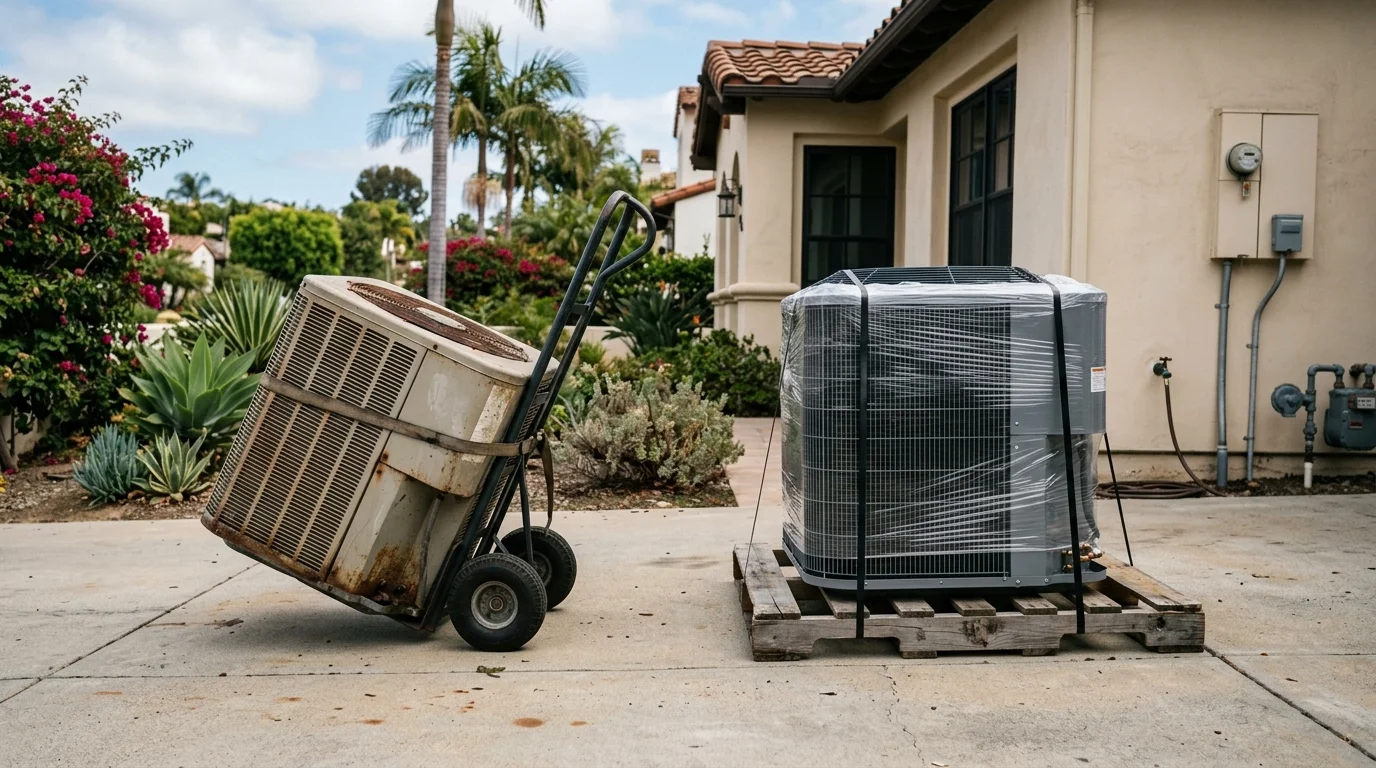
A heat pump replacement is a different scope from a first-time install. The quote changes when old components can stay, access is difficult, or connecting parts need replacement. There is no single market price that applies across San Diego County. This page is about what belongs in the replacement proposal, not a published local range.
What carries over from the old system and what does not
A replacement isn’t automatically a simple outdoor-unit swap. The existing system includes indoor equipment, controls, electrical connections, refrigerant tubing, drainage, ductwork, and mounting materials. Each part needs a clear decision in the written quote.
Some components may suit the proposed replacement. Others may not meet its specifications or current installation requirements. The contractor should identify both groups before presenting a final scope.
Start with the indoor and outdoor equipment. Ask whether the quote replaces both units or only one. The written model information should show what the contractor proposes. If any existing equipment remains, ask for documentation showing that it can work with the replacement.
Ductwork deserves separate attention. Existing ducts aren’t automatically part of the equipment price. Ask whether the contractor inspected accessible sections and found repairs or changes to recommend. Our guide to heat pump sizing in San Diego explains why the proposed system shouldn’t simply copy the old unit’s label.
Controls also need a line item. Confirm whether the current thermostat stays, receives new settings, or gets replaced. Ask the same question about condensate drainage and electrical connections.
A useful replacement quote labels every reused component. It also explains why that component can remain. Anything marked “existing” should be clear before work begins. That detail makes competing proposals easier to compare and reduces surprises after the old equipment is removed.
Refrigerant changes that force a full line set replacement
The line set connects the indoor and outdoor equipment. Its routing may be short and visible, or concealed inside finished walls. That difference can change the replacement scope substantially.
There isn’t one blanket answer about whether an existing line set can stay. The licensed contractor should compare its size, condition, route, and installation details with the proposed equipment’s manufacturer documentation. Ask for that conclusion in writing.
A refrigerant change may affect the decision. If the proposed system doesn’t permit reuse of the existing tubing, the quote should include a replacement route. It should also explain which finished areas need access. Don’t accept “new lines as needed” without a defined scope.
The route matters around San Diego homes. A line may pass through an attic, garage, exterior wall, narrow side yard, or finished living area. Ask where the new route would run and how wall openings would be finished. If a covering or protective channel is proposed, it should appear in the quote.
Don’t rely on a verbal promise that the old line will probably work. Request the proposed model information and the supporting installation requirements. If two contractors reach different conclusions, ask each one to explain the difference.
Refrigerant standards can change, and the transition dates move. Ask the contractor which current requirements apply to the quoted equipment and confirm any statewide program information through the California Energy Commission.
Reusing the pad, the disconnect and the whip
The outdoor unit usually comes with several supporting items. The pad provides its base. The disconnect is the nearby electrical shutoff. The whip is the flexible electrical connection between them. A quote should address each item separately.
A contractor may propose keeping one item while replacing another. That decision should follow the proposed equipment’s requirements and the condition found on site. Ask for a written explanation instead of assuming those parts are included.
For the pad, request its proposed status: reused, adjusted, or replaced. Ask whether the new unit fits the available location. The answer matters when walls, fences, gates, or walking paths limit the usable space.
For the disconnect and whip, ask whether the contractor inspected them. The quote should state what remains and what changes. If electrical work appears as an allowance, ask what condition would trigger it and how approval would be handled.
These details help reveal whether two bids cover the same job. One contractor may include supporting components. Another may carry them as later additions. The lower opening total doesn’t tell you which proposal has the clearer scope.
Heat Pro SD connects homeowners with licensed, independent local pros for heat pump replacement. Before signing, verify the contractor’s license using the official CSLB license check. Confirm that the name and license information match the written proposal.
Removal and disposal of the old equipment
Old-equipment removal can disappear inside a short quote. Bring it into the open before comparing proposals.
The written scope should say whether the contractor will disconnect, remove, transport, and dispose of the outgoing indoor and outdoor units. It should also identify any equipment that will remain at the property. If removal is assigned to someone else, the proposal should say so.
Ask how the contractor will protect the route between the equipment and the vehicle. A condenser beside a driveway presents a different access plan than equipment behind a narrow gate or above ground level. Stairs, roof access, landscaping, and interior flooring may affect the work included.
Don’t assume cleanup covers every removed component. Ask about old mounting materials, line covers, brackets, pads, thermostats, and replaced electrical parts. The quote should distinguish disposal from any repair to surfaces left behind.
Disposal isn’t charged the same way on every San Diego County replacement. The contractor performing the work sets the quoted amount and scope. Request that amount in writing before approving the proposal.
The quote should also explain what happens if concealed conditions appear after removal. Ask how the contractor documents a needed change and obtains your approval. That process matters because the old equipment may hide surfaces that weren’t visible during the first visit.
Where a replacement is quicker, and where it is slower
A replacement may involve less site preparation when the proposed equipment fits the existing location and approved components can remain. It can become more involved when access, compatibility, or property rules add work. The address alone doesn’t settle that question.
Picture a driveway-level unit in El Cajon with a clear path to the street. Now compare it with rooftop equipment or a condenser behind a narrow City Heights side yard. The proposals should describe different handling plans if the actual access differs.
Condos create another layer. An Encinitas or Chula Vista property may have an association, shared areas, or rules affecting equipment placement. Ask the owner or association which current documents apply. The contractor should quote the job based on confirmed site conditions, not assumptions about the building.
Interior equipment can also shape the schedule and scope. An accessible garage location differs from a tight attic or finished closet. Ask how the contractor plans to reach the unit, remove it, and install the replacement. Any needed opening or finish work should be assigned in writing.
Permit handling may also affect the proposal. Don’t assume every San Diego County address follows the same process. Ask the contractor which authority covers the property and what the quote includes. The responsible authority, not a generic online estimate, supplies the current requirements.
A clearer scope won’t promise speed. It will show the sequence, access needs, exclusions, and decision points. That gives you a more useful comparison than a broad statement that replacement is easier than a first-time installation.
Questions that separate a replacement quote from a new-install quote
Start by asking whether the proposal is written specifically for replacement work. A first-time installation may need an entirely new path for equipment and connections. A replacement quote must also explain what happens to every relevant part of the old system.
Use the same questions with each contractor:
- Which indoor and outdoor components will be replaced?
- Which existing components will remain, and why?
- Does the proposed equipment permit reuse of the current line set?
- If the line set changes, where will the new route run?
- Will the pad, disconnect, and whip remain or be replaced?
- Does the scope include removing and disposing of old equipment?
- Which duct, drainage, control, or electrical work is included?
- Who handles any wall, roof, or surface repairs?
- Which permit authority applies to this property?
- How will changes receive written approval?
- Which model information and manufacturer documents support the proposal?
- Which labor, equipment, and supporting materials appear as separate items?
Ask about exclusions too. A blank space isn’t the same as an included item. If the contractor hasn’t inspected an attic, panel, roof, or concealed route, the quote should disclose that limitation.
Our broader guide to heat pump cost in San Diego can help you organize the cost drivers. It doesn’t replace an itemized property-specific proposal from the licensed contractor.
Incentives may also affect what a homeowner ultimately pays, and program terms change through the year. Check the IRS energy credit page and the California Energy Commission before relying on any incentive. Record the date you checked and ask which equipment documentation you’ll need.
When to call us
Call when you need a licensed independent HVAC pro to inspect the existing system and prepare a replacement-specific quote. Heat Pro SD refers homeowners to licensed independent local contractors and performs no physical work. The Heat Pro SD line is voicemail with a recording-consent notice. Leave a message at (858) 400-4374.