A failed AC can force a bigger decision than expected. You may need to choose between replacing one component, coordinating both replacements, or changing the system to a heat pump. The right answer depends on compatibility, condition, ducts, electrical capacity, and your plans for the house.
Why one failed component can affect the whole decision
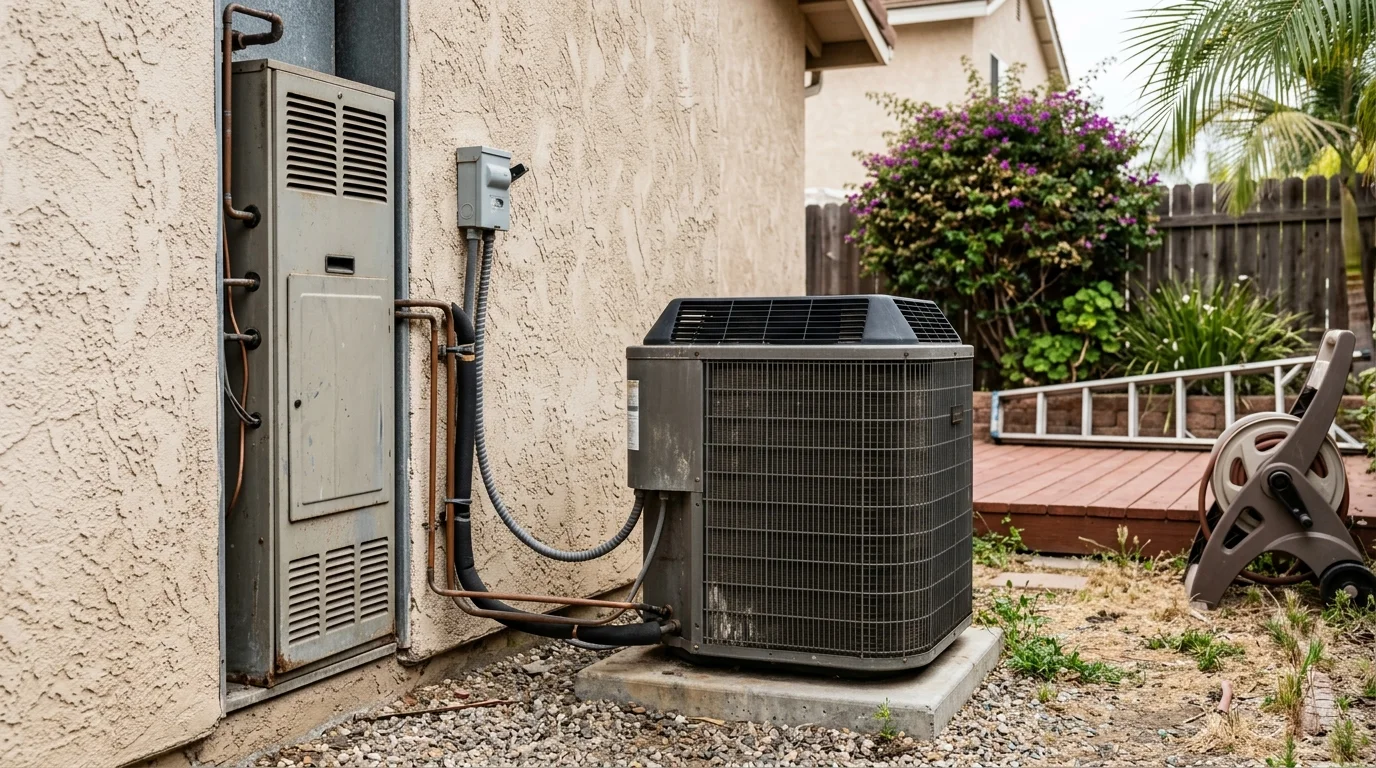
A central furnace and air conditioner aren’t completely separate appliances. The outdoor AC connects to an indoor coil. The furnace blower moves conditioned air through the same ducts. Controls also need to make the components work together.
That connection doesn’t automatically mean both units must go. It means the contractor should inspect the full system before recommending a scope. A failed outdoor unit may leave a usable furnace in place. It may also expose compatibility problems that make a coordinated replacement more sensible.
Start with a written diagnosis. Ask which component failed and what testing supports that conclusion. Then ask what must change for the proposed replacement to operate with the equipment staying behind. The answer should identify the indoor coil, blower, controls, and outdoor equipment by model.
This is also the moment to compare an AC replacement with a heat pump. A heat pump provides cooling and can provide heating. Depending on the proposed design, the furnace may remain as part of a hybrid arrangement, or the project may replace gas heating with an electric indoor system.
Our guide to replacing an AC with a heat pump in San Diego explains that broader choice. If you’re considering removing gas heat, review the separate questions involved in a gas furnace to heat pump conversion.
Don’t decide from the failed component alone. Decide from the proposed system, the evidence behind it, and the work included in writing.
What can stay when only the AC is replaced
Keeping the furnace can make sense when a licensed contractor confirms that it works with the proposed cooling equipment. That conclusion should come from an inspection, not its appearance or age alone.
Ask the contractor to identify everything that will remain. That list may include the furnace cabinet, blower, ducts, thermostat, electrical circuit, drain path, and other existing components. Each item should have a reason for staying. “Still works” doesn’t explain whether it fits the new design.
Compatibility deserves special attention. The written proposal should name the indoor and outdoor equipment being paired. It should also explain whether the existing blower can deliver the airflow required by the proposed system. If controls need changes, those changes belong in the scope.
The indoor coil is another important line item. Replacing the outdoor condenser doesn’t necessarily answer what happens indoors. Ask whether the coil stays, gets replaced, or becomes part of a different indoor assembly. The proposal should make that choice clear.
San Diego County conditions also vary by property. A compact house in City Heights may present different space constraints than a larger home in El Cajon. A condo in Chula Vista may introduce shared-property or association questions. Those details should shape the inspection and quote.
Ask what happens if retained equipment causes a problem later. Don’t rely on a verbal warranty statement. Warranty terms weren’t confirmed for this general guide because they vary by equipment and contractor. Get the manufacturer coverage, labor coverage, exclusions, and registration duties in writing before signing.
When a matched indoor and outdoor system matters
Indoor and outdoor equipment should be evaluated as a working combination. The outdoor unit, indoor coil, blower, and controls all affect the final design. Changing one piece without checking the others can leave important questions unanswered.
A contractor proposing coordinated replacement should provide the exact equipment combination. Ask for model numbers, capacity assumptions, and the controls included. If efficiency ratings appear, confirm that they apply to the proposed combination rather than one component viewed alone.
This matters when switching from an AC to a heat pump. The outdoor equipment changes roles, but the indoor side still needs a deliberate plan. One proposal might retain a compatible furnace. Another might replace it with an electric air handler. A third might propose a hybrid dual-fuel design.
Don’t treat those as interchangeable bids. Each creates a different system and work scope. Compare the heating plan, cooling plan, indoor equipment, controls, electrical work, and equipment retained.
A coordinated replacement can also simplify decision-making when both components already need attention. It gives the contractor one opportunity to specify the indoor and outdoor equipment together. Still, that convenience isn’t proof that every component needs replacement. Ask what inspection finding supports each recommended change.
If a heat pump is the selected direction, review the proposed heat pump replacement scope. Heat Pro SD can match you with a licensed independent local pro, but we don’t select equipment or perform the installation. The matched contractor should inspect the property, explain the proposed pairing, and put the complete scope in writing.
How ductwork and electrical capacity change the scope
Equipment selection is only part of the decision. Ductwork and electrical capacity can change what each proposal includes, even when two contractors recommend similar indoor and outdoor units.
Ask for the ducts to be evaluated before accepting assumptions about airflow. The contractor should note visible damage, disconnected sections, access limits, and rooms with recurring comfort problems. If duct changes are proposed, the quote should separate repairs, replacement sections, sealing, registers, and access work.
Describe how the house behaves during heating and cooling. Mention rooms that stay uncomfortable, noisy registers, weak airflow, and additions served by the current system. Those observations help the contractor investigate the existing distribution system. They don’t replace measurements.
Electrical questions become especially important when a proposal changes how the home heats. Ask which existing circuits can remain and which new circuits are proposed. The quote should identify panel work separately from the HVAC equipment. If another licensed trade needs to participate, ask who coordinates that work and whose price includes it.
Don’t assume one answer fits every San Diego County property. Homes near the coast, central neighborhoods, inland communities, and the South Bay can have different layouts and past alterations. The address, equipment location, panel, and duct route all deserve direct inspection.
Permit requirements for every San Diego County jurisdiction couldn’t be confirmed in this general guide. Ask the contractor which requirements apply at your address and which local authority will review the work. Make responsibility for permits and inspections explicit in the written proposal.
When staged replacement remains reasonable
Replacing the AC now and the furnace later can remain a reasonable option. It works best when the contractor confirms that the retained equipment fits the current plan and explains what may change during the second stage.
Ask for two written scopes when possible. One should cover the immediate replacement. The other should show the coordinated option. That comparison reveals which components would be purchased or altered twice and which work can carry forward.
Staging may fit when the furnace has no diagnosed problem, the proposed AC is compatible, and the homeowner wants to limit the current project. It may also make sense when a remodeling plan could change ducts, equipment locations, or room loads later. These are reasons to investigate staging, not proof that it’s the better choice.
The second-stage plan should be specific. Ask whether future furnace replacement would require changing the indoor coil, controls, drain setup, electrical work, or other newly installed components. If the answer depends on equipment that hasn’t been selected, the contractor should say so plainly.
Also compare staged replacement with repair. A diagnosis may show that the immediate problem doesn’t require replacing either full system. Our guide to deciding whether to repair or replace a heat pump offers a useful framework for separating the failed part from the larger ownership decision.
Staging isn’t automatically wasteful, and coordinated replacement isn’t automatically excessive. The stronger proposal is the one that documents compatibility, separates assumptions, and shows what stays useful during the next phase.
What each written quote should separate
A good comparison begins with comparable scopes. A single total doesn’t show why one proposal replaces both systems while another retains the furnace.
Ask each contractor to separate these items:
- Outdoor equipment and its exact model
- Indoor coil, furnace, or air handler
- Thermostat and control changes
- Duct inspection findings and proposed duct work
- Electrical work and any separate trade involvement
- Drain, line, pad, or equipment-location changes
- Permit and inspection responsibility
- Equipment being removed and equipment staying
- Manufacturer and contractor warranty terms
- Assumptions, exclusions, and optional work
Ask which line items are required for the proposed system and which are recommendations. If a contractor says the furnace must be replaced, request the inspection finding or compatibility issue behind that conclusion. If the furnace can stay, request the exact indoor and outdoor pairing.
Don’t compare equipment names alone. Compare what happens to the blower, coil, controls, ducts, electrical system, and heating method. Confirm whether each bid describes AC-only replacement, a heat pump with the furnace retained, or full conversion to electric heating.
License status should also be checked directly. Heat Pro SD matches homeowners with licensed independent pros, and the contractor performs the work. You can verify a contractor through the California Contractors State License Board license check.
Before signing, mark every blank or unclear line. Get additions and exclusions in writing. Current prices weren’t verified for this guide, so no general figure can replace property-specific quotes. The useful comparison is the scope behind each total, not an unsupported market average.
When to call us
Call when a failed AC, an aging furnace, or a proposed heat pump leaves you comparing different replacement scopes. A licensed HVAC contractor should inspect the connected equipment and explain what can remain.
Call us at (858) 400-4374 and we’ll connect you with a licensed local HVAC contractor.