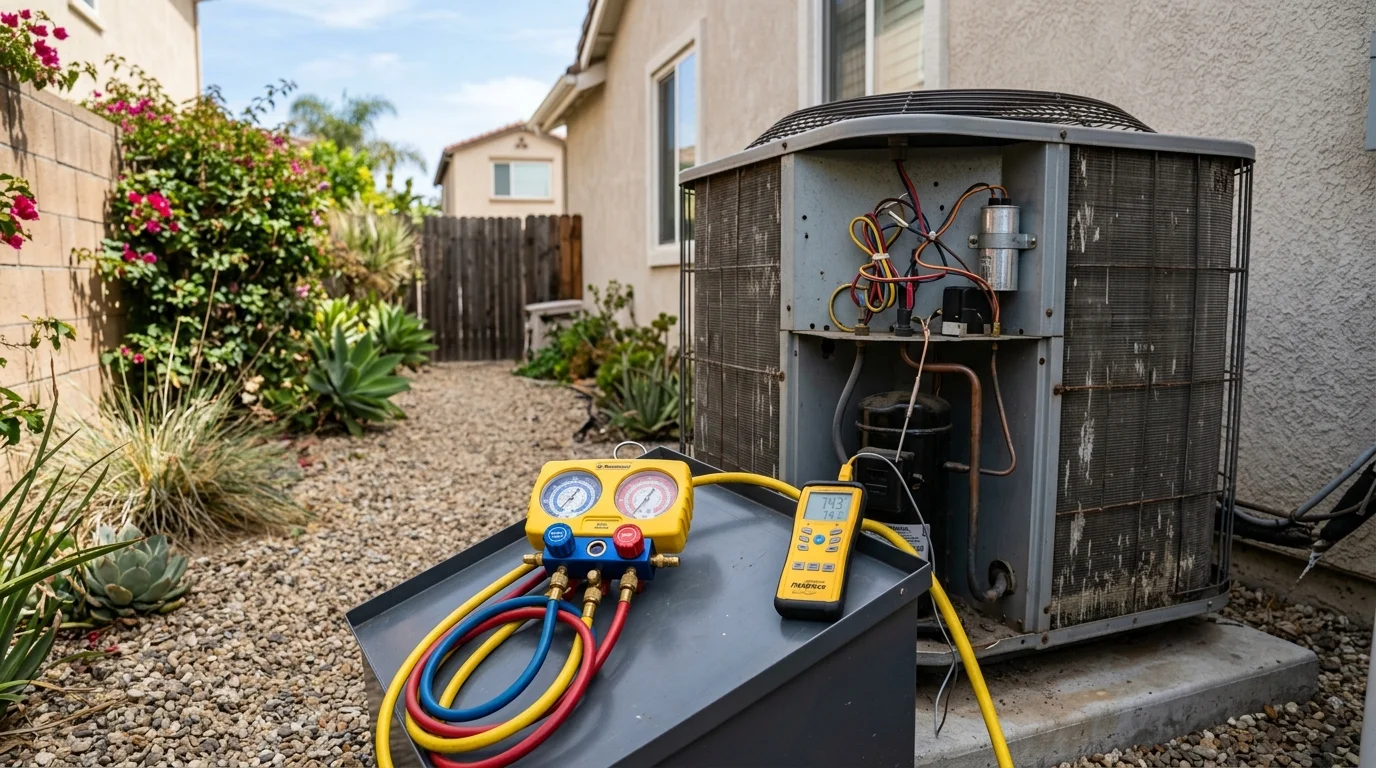
Heat pump tune up cost in San Diego depends on the system, access, cleaning scope, and diagnostic work included. There’s no standard local price for it, so ask the licensed contractor for an itemized written quote before the visit.
What separates a real tune-up from a quick look
A useful tune-up has a defined scope. A quick look may only cover the thermostat, filter, and visible equipment. That can leave you unsure about what was tested, cleaned, or recorded.
Ask for the visit scope in writing. It should identify the indoor equipment, outdoor equipment, controls, drains, and any accessible connections the technician plans to inspect. It should also separate routine maintenance from diagnostic work and repairs.
That distinction matters when comparing quotes. One contractor may include coil cleaning and operating measurements. Another may price those tasks separately. A lower quote isn’t necessarily the better value when the scopes don’t match.
Tell the contractor what the system has been doing. Mention uneven rooms, unusual cycling, drainage concerns, or a recent thermostat change. Those details help the pro decide whether you’re requesting routine maintenance or troubleshooting. A tune-up shouldn’t quietly turn into an open-ended repair visit.
You can review our maintenance tune-up service page before requesting a match. For broader upkeep questions, our San Diego heat pump maintenance guide explains how homeowners can prepare for a professional visit.
Before approving work, confirm who will perform it. Heat Pro SD connects homeowners with licensed, independent local pros. The matched contractor performs the inspection, maintenance, and any approved repairs. You can also check a contractor through the CSLB license search.
The measurements a technician should be taking
A written quote should say whether operating measurements are included. Without that detail, the word “tune-up” can mean very different things. Ask the contractor which readings will appear on the final service record.
Common items to discuss include:
- Air temperatures at appropriate points in the system
- Airflow observations at accessible registers and equipment
- Electrical readings for accessible operating components
- Refrigerant-side readings when the system and visit scope call for them
- Thermostat settings and operating response
- Drainage observations where a condensate system is present
The contractor should interpret those readings for your specific equipment. A single number without equipment context doesn’t tell a homeowner much. Ask whether the result falls within the manufacturer’s service information for that system. If the pro recommends a repair, request the finding and proposed correction in writing.
Access can change the work involved. An outdoor unit beside a clear North Park driveway presents a different setup from equipment behind storage, above a narrow side passage, or inside a secured condo area. Indoor equipment in an attic, closet, garage, or ceiling cassette also requires different preparation. Describe those conditions before the quote is finalized.
Don’t assume every reading belongs in every tune-up. Equipment design and the reported problem may change the diagnostic path. The useful comparison is whether each contractor explains the scope, records the findings, and separates maintenance from repair recommendations.
If a technician says more testing is needed, ask what prompted it. That keeps the next step tied to an observed condition instead of a vague add-on.
Why a mini split tune-up is priced differently
A ductless mini split quote should identify every indoor head included. One outdoor unit may serve several rooms, but each wall cassette, ceiling cassette, or other indoor unit creates another access point and cleaning decision.
This is where broad tune-up descriptions become confusing. A quote might cover the outdoor unit and one indoor head. Another might cover every connected zone. Ask for the equipment count and location to be written into the scope, without relying on phrases such as “whole system.”
Access matters here too. A wall unit above an open floor is different from a cassette above furniture or a unit mounted over a stairwell. Tell the contractor about those conditions while requesting the quote. Photos can help the pro understand the setup before discussing scope.
Cleaning depth also changes the visit. Ask whether the quote covers accessible filters and exterior surfaces, a deeper indoor-unit cleaning, drain work, or only an inspection. If the contractor recommends more cleaning after opening the unit, request a separate written price before approving it.
Multi-zone homes in Chula Vista, City Heights, and converted San Diego garages may use different indoor-unit arrangements. The neighborhood alone doesn’t determine the work. The number of components, their condition, and their accessibility shape the quote.
Compare mini split proposals line by line. Confirm which heads are included, what will be cleaned, what will be measured, and how unexpected findings will be handled. That produces a fairer comparison than comparing the final totals alone.
Coastal homes and the extra coil work they need
Coastal location can affect the conversation about outdoor-coil cleaning. Homes near Oceanside, Encinitas, La Jolla, Point Loma, and Imperial Beach may have equipment exposed to ocean air, windblown material, or residue. However, a coastal ZIP code alone doesn’t prove that extra work is needed.
Ask the contractor to inspect the actual condition and explain any added cleaning recommendation. Visible buildup, restricted access, landscaping, and the equipment’s placement matter more than a broad coastal label. An ocean-facing balcony installation may present a different scope from a protected courtyard farther inland.
The quote should describe the proposed coil work. Ask what surfaces are accessible, what cleaning method is planned, and whether nearby walls or plants limit access. If an outdoor unit sits beneath a deck or inside a tight side yard, mention that before the visit.
Don’t accept an unexplained “coastal charge.” Request a written description of the added labor or cleaning task. If the technician recommends more work after seeing the unit, ask to see the condition and approve the revised scope first.
Inland properties have their own variables. Equipment in El Cajon, Santee, Poway, or Escondido may sit near dry landscaping, bare soil, or windblown debris. Again, the equipment’s observed condition should guide the work.
Our guide to coastal and inland San Diego heat pumps offers more local context. For tune-up pricing, the key is simple: ask the pro to connect each added task to something visible or measured at your system.
Add-ons that are worth it and add-ons that are not
An add-on earns consideration when it responds to a documented condition. That could be an access issue, visible buildup, a drainage concern, a control problem, or a measurement that needs further diagnosis. Ask the technician to show the finding and explain the proposed work.
Some add-ons may be maintenance tasks that weren’t included in the base quote. Others may be repairs. Keep those categories separate. A written estimate should make clear what restores operation, what addresses a specific finding, and what is optional.
Filter replacement can also create confusion. Ask whether a filter is included, whether the contractor will supply it, and which equipment it serves. Don’t assume one filter covers every indoor unit or return location.
Be cautious when an add-on is described only with broad promises. Claims about lower bills, better performance, or future protection need supporting details. Ask what component is affected, what condition was observed, and how the contractor will document completion.
Also ask about manufacturer instructions for your exact equipment. A general upgrade may not apply to every heat pump. The licensed contractor should confirm compatibility before any part or control is changed.
You don’t need to approve an unexpected item during the initial conversation. Request the recommendation in writing and compare it with the original scope. If the added work changes the visit from maintenance to repair, ask for a separate repair estimate.
The useful add-on is the one you can understand. It has an identified problem, a defined task, and a written price from the contractor. If those pieces are missing, ask for clarification before deciding.
What the invoice should list when the visit is done
The final invoice should help you understand what happened. It shouldn’t rely on a single line that says “tune-up completed.” Ask for enough detail to compare the finished work with the approved quote.
Useful invoice details include:
- The equipment and indoor units covered by the visit
- The maintenance and cleaning tasks completed
- The operating measurements recorded
- Conditions the technician observed
- Parts or materials supplied
- Repairs approved separately
- Recommendations that weren’t performed
- The contractor’s business and license information
Check the invoice before the technician leaves the property. Make sure every approved add-on appears separately. If a repair wasn’t completed, the document should present it as a recommendation rather than finished work.
Keep the invoice with the equipment information available to you. It gives the next licensed contractor a clearer starting point. It can also help you compare whether a recurring concern changed between visits.
If the contractor refers to a warranty, ask for the applicable written terms. Heat Pro SD doesn’t provide contractor warranties and doesn’t perform the work. Warranty coverage, if offered, comes from the matched independent contractor or another identified provider.
The invoice should also avoid unsupported promises. If it contains a claim you don’t understand, ask what inspection, reading, or manufacturer guidance supports it. Clear documentation is especially useful when the system serves several zones or belongs to a condo with shared access rules.
A good invoice closes the loop. It connects the original scope, the technician’s findings, your approvals, and the completed work. That record matters more than a vague service label when you’re comparing future maintenance quotes.
When to call us
Call when you need a licensed local pro to inspect, maintain, or diagnose your heat pump. Call us at (858) 400-4374 and we’ll connect you with a licensed local HVAC contractor.