Heat pump short cycling means the system repeatedly starts and stops before the room settles near its set temperature. It can involve the thermostat, airflow, equipment controls, or another condition that needs testing. A single symptom doesn’t identify a failed part.
What short cycling looks and sounds like
Short cycling is a repeated pattern, not one isolated shutdown. You may hear the equipment start, run briefly, stop, and restart. The pattern might continue while the thermostat still appears to be requesting heating or cooling.
Don’t judge the problem by sound alone. Record what you can see without opening any equipment. Note whether the thermostat display changes when the system stops. Check whether air stops moving at the indoor registers. From a normal viewing distance, observe whether the outdoor unit also stops.
Equipment designs and control sequences differ. That means there isn’t one universal cycle length that proves something is wrong. A system changing operation once isn’t enough to diagnose short cycling. The useful clue is a pattern that repeats under similar conditions.
Write down when the pattern started. Include any recent thermostat changes, filter work, power interruptions, or home renovations. Note whether the room reaches the selected temperature. Also record whether the heat pump keeps restarting without making the space comfortable.
Keep this symptom separate from a system that runs continuously. Persistent operation follows a different diagnostic path. With short cycling, the main evidence is the repeated stop-and-start sequence.
A short phone video may help capture the sound and thermostat display. Avoid recording private information visible on smart devices. The goal is a clear timeline that a technician can reproduce.
How thermostat settings can affect cycling
Begin with the settings visible on the thermostat. Confirm whether it shows heating, cooling, or an automatic changeover mode. Also note the selected temperature, fan setting, schedule, and any active hold.
A schedule can make the set temperature change unexpectedly. Smart thermostat features may also alter the displayed target. Record those settings before changing anything. This gives the technician a better picture of what the control was requesting.
Make only one ordinary setting change at a time. Then observe what happens. Several changes made together can hide the condition that triggered the pattern. Don’t perform a factory reset, since that may erase settings and operating information.
If the thermostat uses replaceable batteries, follow its manufacturer instructions. Don’t remove a thermostat from its wiring to inspect behind it. Wiring and control tests belong with a qualified technician.
Location can also matter. Note whether sunlight reaches the thermostat or nearby indoor conditions seem different from the rest of the room. Don’t move the thermostat or assume its location is the cause. Treat the observation as one clue.
Our guide to thermostat problems that resemble heat pump trouble explains other control-related symptoms. A licensed contractor can also evaluate thermostats and heat pump controls when settings alone don’t explain the cycling.
Why restricted airflow deserves inspection
Airflow belongs near the top of the observation list. Start with the filter only if it’s in a normal homeowner-accessible location. Note its condition, size marking, and installation direction. Follow the equipment or filter manufacturer’s instructions before replacing it.
Next, walk through the occupied rooms. Look for return grilles blocked by furniture, boxes, curtains, or rugs. Check visible supply registers without reaching into the ductwork. Record which rooms feel different while the equipment runs.
Don’t close more registers as an experiment. Don’t remove grilles, open the air handler, or reach inside equipment. A visible issue can be documented without turning an observation into repair work.
San Diego homes don’t share one duct layout. A City Heights bungalow may have different return paths than a Chula Vista townhouse. An Oceanside condo may place equipment in a closet, while an inland house may use an attic installation. Those differences affect what a homeowner can inspect without opening anything.
A dirty-looking filter or blocked grille may deserve attention, but it isn’t a complete diagnosis. The technician still needs to determine whether airflow is part of the cycling pattern. Share when the filter was last changed if you know. If you don’t know, say that plainly.
If the system keeps restarting after accessible obstructions are cleared, arrange heat pump repair. The contractor can inspect components and measurements that aren’t available from the living space.
What outdoor conditions to record
San Diego County can place the same equipment in very different surroundings. Record the neighborhood, time, weather, and operating mode when cycling occurs. A cool coastal morning near Encinitas isn’t the same observation as afternoon heat in El Cajon.
Note whether the condition appears during marine-layer weather, direct sun, rain, or strong wind. Use a weather app for the outdoor reading instead of estimating it. The important detail is whether the pattern returns under similar conditions.
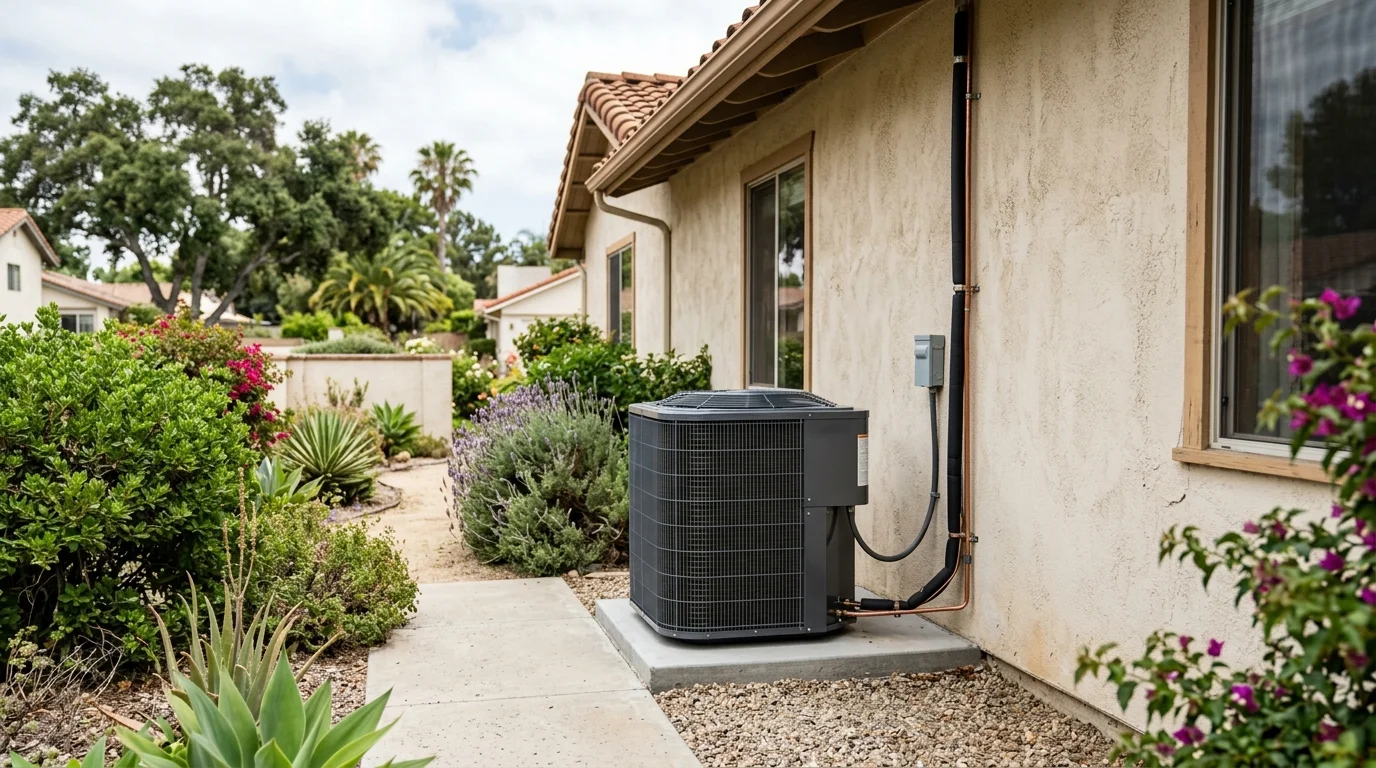
Observe the outdoor unit from a normal distance. Record whether it starts and stops with the indoor airflow. Note visible leaves, stored items, or vegetation near the unit. Don’t remove panels, touch piping, or place anything inside the cabinet.
Also record what changed around the home. Construction dust, landscaping work, a new fence, or stored patio items may be useful context. Don’t conclude that one of them caused the problem. Give the technician the timing and let testing establish the connection.
Indoor conditions matter too. Note open doors, strong afternoon sun, cooking, and which rooms feel uncomfortable. In a multi-level home, record the floor where you notice the change. In a zoned system, identify the zone requesting conditioning.
A simple log across several events is more useful than a guess. Include the thermostat setting, indoor display reading, outdoor conditions, start time, stop time, and what each visible component appeared to do.
What not to reset or open yourself
Keep homeowner checks outside closed electrical and refrigerant components. Don’t remove equipment panels, open electrical boxes, handle wiring, or loosen any refrigerant connection. Those areas require the correct training and test equipment.
Don’t repeatedly reset a breaker to keep the heat pump running. Record that it tripped, which operating mode was active, and what happened beforehand. Then leave electrical diagnosis to the contractor.
Avoid factory-resetting the thermostat. The reset may remove schedules, equipment settings, or other information needed for diagnosis. Photograph the current screens instead. If the thermostat displays a code, copy it exactly without interpreting it.
Don’t press internal switches or move unfamiliar controls. Don’t bypass a shutoff or try to force a component to run. Avoid online instructions that assume your heat pump uses the same wiring or controls as another model.
You can gather useful information without touching internal equipment. Check ordinary thermostat settings, inspect a normal-access filter, look at unobstructed grilles, and document the visible operating pattern. Stop when access requires tools or panel removal.
If you have the manuals, keep them available for the technician. Record the model information only when it’s visible from outside the cabinet. Don’t reach behind equipment or move the outdoor unit to find a label.
What a technician should test
Give the technician a short, factual description first. Say that the heat pump turns on and off frequently. Explain which visible components stop, whether the thermostat continues calling, and whether the room reaches its selected temperature.
The diagnostic visit should move beyond guessing from the symptom. Ask the technician to check the thermostat configuration and the control signals reaching the equipment. The contractor can then determine whether the system is receiving repeated commands or stopping for another reason.
Airflow should be measured rather than judged only by how a register feels. The technician can inspect the filter path, indoor coil area, blower operation, returns, supplies, and accessible duct connections. Closed equipment should remain closed until the contractor performs that inspection.
Electrical and refrigerant conditions also require proper instruments. Ask the technician which readings were taken and what those readings show. A good explanation should connect the measured condition to the repeated cycling instead of naming a part from sound alone.
System sizing may deserve review when the pattern has existed since installation or followed major changes to the home. However, short cycling by itself doesn’t prove the equipment is oversized. Our guide to heat pump sizing in San Diego explains what a proper review should consider.
Before authorizing regulated work, verify the contractor through the California Contractors State License Board. Heat Pro SD connects homeowners with licensed independent local pros. The matched contractor performs the inspection, diagnosis, and repair.
When to call us
If repeated cycling continues after basic setting and accessible filter checks, a licensed heat pump professional should diagnose it. Call us at (858) 400-4374 and we’ll connect you with a licensed local HVAC contractor.