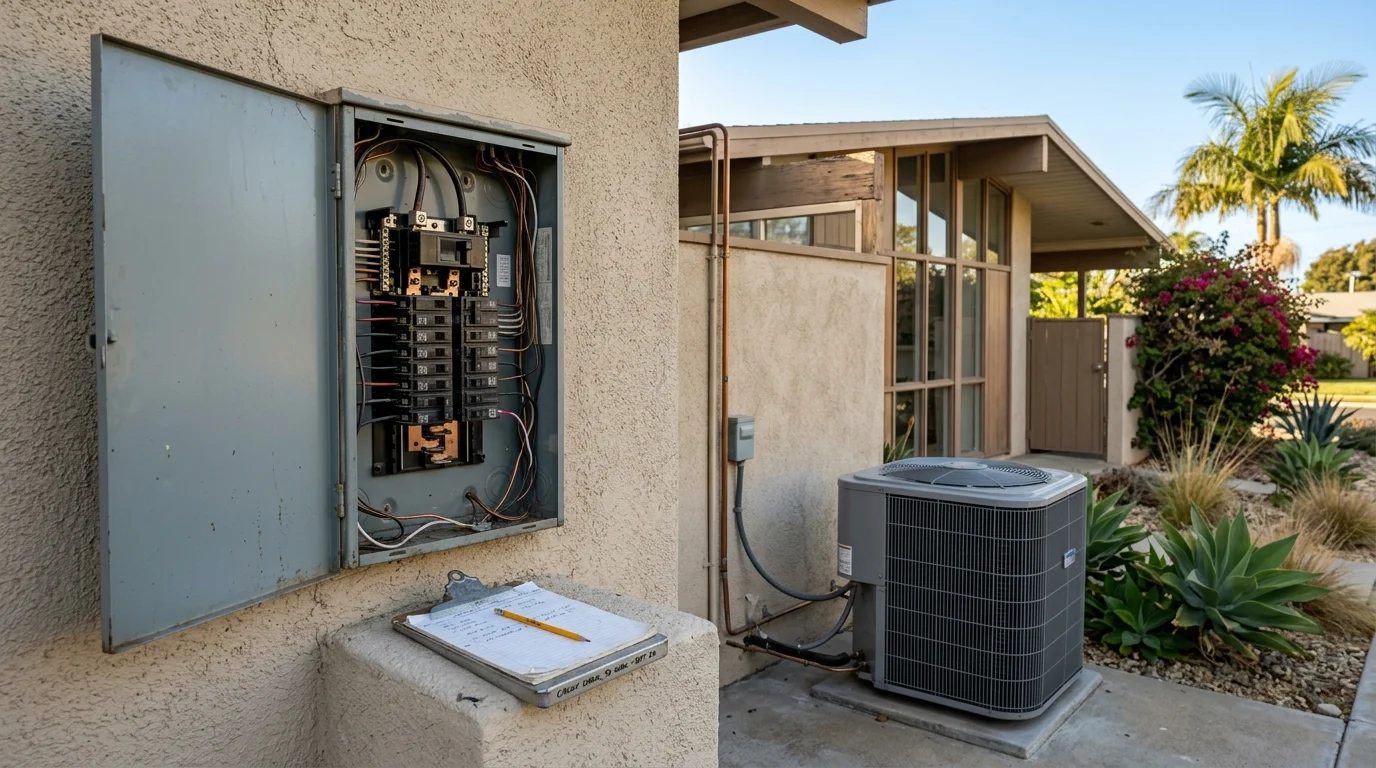
Yes, a heat pump may run on a 100 amp service. The service rating alone can’t settle the question. A licensed pro must compare your home’s electrical demand with the exact equipment requirements.
Why panel capacity comes up on almost every heat pump quote
A heat pump proposal can add electrical demand to a home. That makes the existing service part of the equipment decision, not a separate afterthought.
The 100 amp label gives the contractor a starting point. It doesn’t show how much demand the rest of the home places on that service. It also doesn’t identify the requirements of a proposed heat pump.
The contractor should review both sides of the plan. One side is the existing house. That review may include the range, dryer, water heater, vehicle charging equipment, spa equipment, air conditioning, and other connected loads. The other side is the proposed heat pump system and its related electrical components.
Don’t accept a definite answer based only on a listing photo. Ask the contractor to inspect the service equipment and document the proposed system. The exact make and model matter because equipment requirements aren’t interchangeable.
This review belongs early in a central heat pump installation. Otherwise, an electrical issue may surface after you have compared equipment or signed a contract.
A 100 amp service isn’t an automatic rejection. It also isn’t automatic approval. The useful answer is specific: whether the proposed system works with the calculated demand at your address.
How a load calculation actually works
Ask for a written electrical load calculation tied to the proposed equipment. It should identify the existing loads considered and the new loads being added. It should also show the service rating used for the decision.
This isn’t the same as adding every breaker handle. A breaker panel can contain circuits that operate differently and serve different equipment. The contractor or electrical professional should explain the method used, not offer a guess from the panel cover.
Request the electrical information for the exact indoor and outdoor equipment. Ask where each value came from. The contractor should be able to point to the manufacturer’s documentation and connect it to the proposed electrical work.
Heat pump size also affects the proposal. Bigger equipment shouldn’t be treated as the default answer to comfort problems. Oversizing or undersizing questions should be addressed through the home assessment and the manufacturer’s requirements. Our guide to heat pump sizing in San Diego explains what to discuss before selecting a system.
If the calculation is close to the service limit, ask what assumptions changed the result. A planned vehicle charger, electric water heater, cooking appliance, or accessory heat component may affect the proposal. Tell the contractor about equipment you expect to add later.
Keep the calculation with your quote. It gives you something concrete to compare when another contractor recommends different equipment or a different electrical scope.
Where 100 amp panels are common in San Diego housing stock
No reliable countywide count confirms which San Diego neighborhoods have the most 100 amp services. A ZIP code, subdivision name, or estimated home age can’t confirm the rating at a specific property. The service equipment must be checked at the house.
That applies across San Diego County. A home in Scripps Ranch shouldn’t be judged by a neighbor’s panel. The same goes for properties in Chula Vista, El Cajon, Encinitas, or central San Diego. Renovations and earlier equipment changes can leave similar-looking homes with different electrical setups.
Start with the panel and service equipment, then ask for a property-specific review. Don’t rely on an old real estate listing, a previous owner’s description, or the number of breaker spaces. If labels are unclear, have the appropriate licensed professional identify the equipment.
Older properties deserve a broader conversation. Past additions, converted garages, accessory spaces, and replaced appliances may not be obvious during a quick estimate. Our guide to choosing a heat pump for an older San Diego home covers other conditions worth reviewing.
If a contractor says 100 amps is common in your neighborhood, bring the discussion back to your address. Ask what they inspected, what they calculated, and what the proposed heat pump requires.
Options that avoid a full panel upgrade
A full service upgrade isn’t the only topic worth discussing. Available alternatives depend on the home, the proposed equipment, and the written load calculation. Ask the contractor to explain which options apply to your project.
Start with equipment selection. A different system design may carry different electrical requirements. That doesn’t mean choosing equipment solely to avoid electrical work. Comfort needs, the home assessment, and manufacturer instructions still belong in the decision.
Ask whether a ductless or zoned approach deserves consideration. It may suit some floor plans, additions, or rooms that don’t share existing ducts. The contractor must still evaluate the electrical demand of the exact equipment proposed.
Load-management equipment may also come up. Don’t accept a product name as proof that it solves the problem. Ask who designed the approach, which loads it controls, and how the calculation changes. Get those details in writing.
A subpanel can provide breaker space, but don’t assume it increases the capacity of the home’s electrical service. Ask the electrical professional to separate two questions: whether the panel has room for the required circuits and whether the service supports the calculated demand.
Existing equipment changes may affect the plan as well. Tell the contractor what will remain, what will be removed, and what may be added later. The final proposal should reflect the actual project, not an incomplete snapshot of the house.
What a panel upgrade adds to a project
When an upgrade is recommended, ask for a separate written electrical scope. It should identify the equipment being replaced, the work included, and any work excluded from the quote.
The project may involve more than changing the visible breaker panel. Ask whether the recommendation affects the service equipment, meter area, grounding components, exterior wall, or nearby finishes. The licensed professional should describe the proposed work at your property.
Utility coordination and local approvals may also enter the plan. Don’t assume the HVAC and electrical portions follow the same schedule or appear under one contract. Ask which company handles each step and who communicates with the utility and permitting authority.
Get an itemized quote instead of a single combined figure. The document should separate the heat pump equipment, HVAC labor, electrical scope, and possible repair work. Ask how changes will be approved if concealed conditions appear after work begins.
No dependable blanket price fits every San Diego panel project. The existing service arrangement, equipment location, access, finish repairs, and proposed heat pump can change the scope. A site-specific written quote is the useful comparison.
If current energy programs affect your equipment decision, check the California Energy Commission before signing. Program terms can change. Ask the contractor to identify the program and equipment requirement in writing.
Questions to ask before you sign an installation contract
A strong proposal should answer more than whether the heat pump turns on. Use these questions to compare contractors and uncover assumptions before work begins:
- What exact heat pump equipment is included?
- What electrical requirements came from the manufacturer?
- Who completed the electrical load calculation?
- Which existing household loads were included?
- Does the proposal assume any equipment will be removed?
- Is a panel or service upgrade required for this exact design?
- What alternatives were considered?
- Is a subpanel being proposed for space, capacity, or another reason?
- Who performs the electrical work?
- Which permits or utility steps apply to this address?
- Are wall, stucco, paint, or finish repairs included?
- How will added work be documented and approved?
- What should be reconsidered if I add electric equipment later?
Ask for plain explanations. If two contractors reach different conclusions, compare their equipment selections and written calculations. One proposal may include loads or project details that the other missed.
Confirm the contractor’s license through the official California Contractors State License Board lookup. Match the record to the company named in your contract. Heat Pro SD is a referral service and performs no physical work.
Don’t sign around an unresolved electrical allowance. The contract should identify what happens if the existing service doesn’t support the selected system. Clear responsibility matters when HVAC and electrical work involve different companies.
When to call us
Call when your heat pump proposal raises questions about a 100 amp service, panel work, or equipment selection. Call us at (858) 400-4374 and we’ll connect you with a licensed local HVAC contractor.