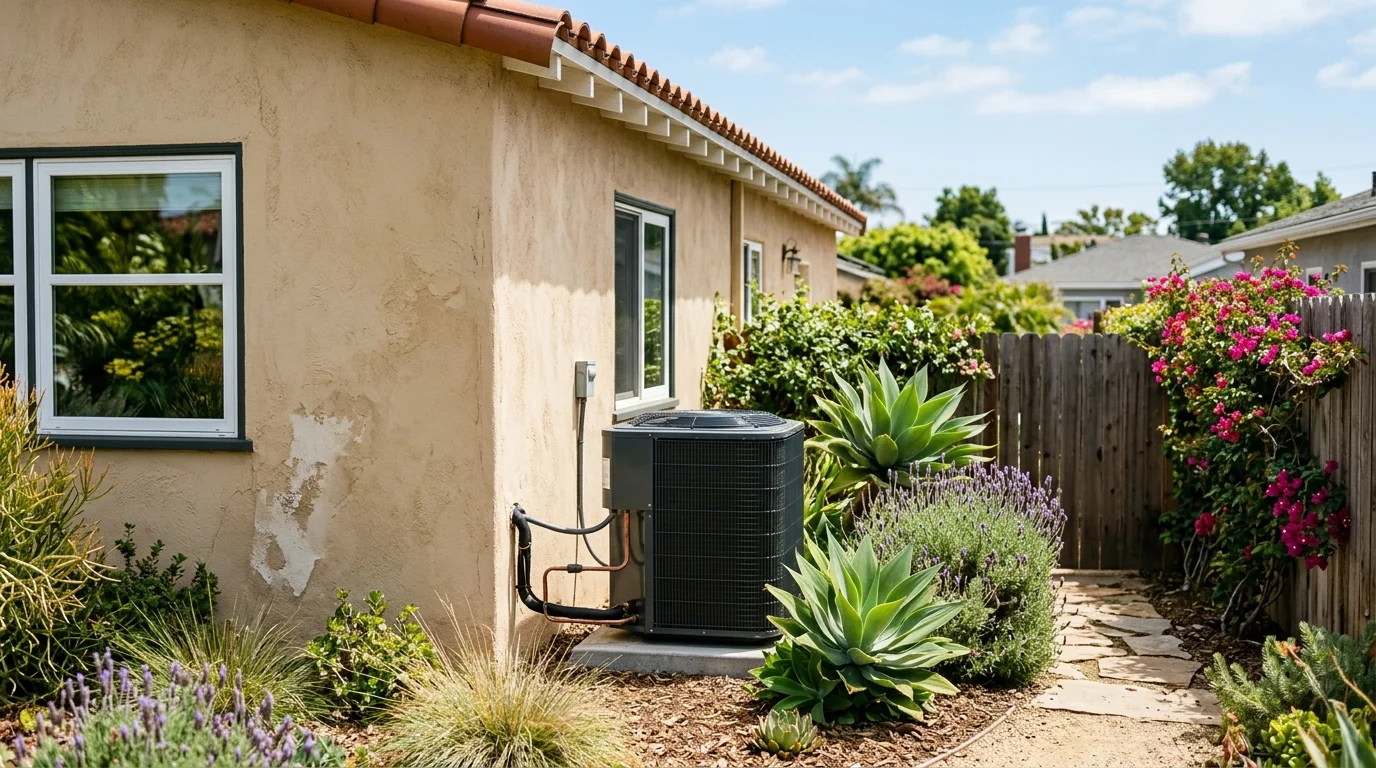
A heat pump can make indoor air feel drier during heating. Heating mode usually does not remove moisture the way cooling mode can. If the house feels dry, start by tracking relative humidity and thermostat mode before adding a humidifier.
What a heat pump actually does to indoor humidity
Indoor humidity describes moisture in the air. Temperature changes how that moisture feels, even when the actual amount hasn’t changed much.
In heating mode, a heat pump warms indoor air. Warmer air can hold more moisture. That change can lower the relative humidity reading without the system actively pulling water from the house. Your skin, eyes, or throat may still notice the difference.
A heat pump works differently in cooling mode. Warm indoor air passes across a cold coil. Moisture can collect on that coil and drain away. That process removes both heat and moisture from the home.
This distinction matters before adding a humidifier. A dry feeling on a cool morning may come from warmed air. A sticky feeling during cooling weather may point toward airflow, controls, or another system issue. Ask the contractor to compare readings rather than assuming a single cause.
Use a portable hygrometer to track conditions in the rooms that feel uncomfortable. Take readings while the system is running and while it’s off. Also note the outdoor conditions, thermostat mode, fan setting, and occupied rooms.
Don’t judge the whole house from one windowsill. Sunlight, showers, cooking, open doors, and nearby supply vents can affect a single reading. A licensed HVAC contractor can compare readings across the home and inspect how the system operates.
Heating mode versus cooling mode, and why they differ
Heating and cooling move heat in opposite directions. Their effects on indoor moisture aren’t identical.
During heating, the indoor coil releases heat into the moving air. The system isn’t normally designed to collect and drain indoor moisture in this mode. Yet the warmer air may register as relatively drier.
Cooling creates another pattern. The indoor coil becomes cold enough for moisture to collect under suitable conditions. The system then carries that water to a drain. Cooling can therefore reduce indoor moisture while lowering the temperature.
The thermostat’s fan setting also matters. In the “on” position, the blower may keep moving air after active cooling stops. That operation can affect how moisture around the indoor coil returns to the air. The available settings depend on the thermostat and equipment.
Start with the manufacturer’s instructions before changing controls. Some systems use variable-speed blowers, communicating thermostats, or custom comfort settings. A setting that works for one system may be wrong for another.
If the controls are confusing, a contractor can inspect the equipment and explain each setting. Our page on thermostats and controls covers the types of control work a matched local pro can assess.
Track heating and cooling separately. Combining both modes in one set of notes hides the pattern you need to find.
Coastal San Diego humidity versus inland and backcountry
San Diego County doesn’t have one indoor moisture pattern. A home near coastal air can behave differently from one farther inland. Conditions can also change between morning, afternoon, and evening.
Rancho Santa Fe sits between distinctly coastal communities and hotter inland areas. Compare what happens at your property instead of relying on a countywide assumption. A home toward Del Mar may experience different outdoor moisture than one toward Escondido or Ramona.
Building design adds another layer. A tightly closed home may hold indoor moisture longer. A frequently opened home may track outdoor conditions more closely. A property with separate guest quarters or several HVAC zones can show different readings in each space.
These differences are why a humidifier shouldn’t be selected by ZIP code alone. The contractor needs to understand the rooms involved, the duct system, the controls, and how the home is occupied.
Our guide to coastal and inland heat pump differences explains why location changes equipment decisions. For humidity, the same local approach applies. Measure the actual rooms during the conditions that cause discomfort.
Keep a short log of indoor readings, outdoor conditions, thermostat mode, and noticeable symptoms. That record gives a licensed pro something specific to investigate. It’s more useful than saying the house always feels dry.
When dry air is the heat pump and when it is the house
Timing often reveals the source. If discomfort appears only while the heat runs, temperature and airflow deserve attention. If it continues with the system off, the house may be contributing.
Look for patterns around outdoor air entering the home. Open windows, fireplace use, exhaust fans, and door traffic can change indoor conditions. Air leakage around the building can also affect how quickly indoor moisture changes.
Room differences offer another clue. If the entire home feels similar, focus on whole-house conditions and central equipment. If one bedroom feels dry, inspect that room’s supply airflow, return path, window exposure, and thermostat relationship.
A portable humidifier can create a local change without explaining the cause. It also won’t correct equipment controls, duct issues, or uneven airflow. Follow its manufacturer’s cleaning and placement instructions if you use one.
A licensed contractor can inspect the filter, indoor coil, blower operation, ducts, thermostat setup, and equipment condition. The contractor can also compare your observations with live system readings.
Bring the equipment model information and any recent service paperwork. Manufacturer documentation sets the applicable operating and maintenance instructions. If replacement or major changes are discussed, confirm the contractor’s license through the California Contractors State License Board.
The goal isn’t simply to add moisture. It’s to identify why comfort changed and choose a fix that suits the house.
Oversizing, short cycling and the humidity you keep
System size and controls affect comfort. A heat pump that reaches the thermostat setting quickly may start and stop often. Contractors sometimes call that short cycling. Ask whether the observed cycle length, thermostat placement, airflow, and load calculation explain the pattern. Do not treat a short run time as proof the equipment is oversized.
During cooling, brief cycles may not provide the moisture control expected from a properly operating system. The house can feel cool while still feeling clammy. In heating mode, frequent bursts of warm air can create noticeable swings between rooms.
Short cycling doesn’t prove the equipment is oversized. Thermostat placement, airflow restrictions, dirty components, control settings, equipment faults, and changing room loads can create similar behavior. Diagnosis needs more than a quick glance at the outdoor unit.
Write down what happens during each cycle. Note the thermostat mode, whether the fan stops, and which rooms change first. Don’t open equipment panels or alter installer settings to test a theory.
Correct sizing depends on the home, not just its floor area. Windows, insulation, air leakage, ducts, room layout, and exposure all influence the required system. A contractor should assess those conditions before recommending new equipment.
Read our San Diego heat pump sizing guide before discussing replacement. It explains why equipment selection needs a home-specific review. For an existing system, ask the contractor to separate sizing concerns from repairable airflow or control problems.
Fixes that work, from fan settings to a whole-house solution
Begin with the simplest confirmed cause. Check that the thermostat is in the intended mode. Review the fan setting and replace or clean the filter according to the equipment instructions. Then compare humidity readings across several rooms.
If one area is affected, the answer may involve airflow or zoning. A contractor can inspect supply registers, return paths, dampers, ducts, and thermostat placement. Adding moisture to the entire house may be unnecessary when the problem belongs to one room.
If the whole home stays uncomfortable, ask for a broader assessment. The contractor can evaluate the heat pump, duct system, ventilation, controls, and building conditions. That review helps determine whether adjustment, repair, or dedicated humidity equipment makes sense.
A whole-house humidifier must fit the existing HVAC layout. The proposal may need to address water supply, drainage, electrical needs, controls, duct space, access, and equipment compatibility. Ask the licensed pro to explain maintenance needs and provide an itemized written quote.
Don’t accept a recommendation based only on a dry feeling. Request the readings and observations behind it. Also ask how the proposed control prevents excess moisture and how you’ll monitor conditions after installation.
For a home with multiple zones or detached living space, clarify which areas any humidity equipment would serve. One central accessory may not control every building or zone. The contractor should define that scope in writing.
When to call us
Call when dry air persists, rooms behave differently, or the system cycles unexpectedly. Heat Pro SD can match you with a licensed independent pro who can inspect the equipment. The line is voicemail with a recording-consent notice. Leave a message at (858) 400-4374.