A mini split can cool one room normally while another drips, smells musty, or stops responding. This page is a symptom triage guide, not a ranked list of the most common San Diego failures. Start by documenting the symptom and checking only the items your manual assigns to homeowners.
Water dripping from the indoor head
Water below an indoor head can damage paint, drywall, flooring, or furniture. Move belongings away, protect the surface, and take photos of the head and stain. Note whether the dripping starts immediately or only after extended cooling.
First, confirm that the mini split is the source. Moisture can also come from a nearby window, wall opening, or plumbing line. Look at the wall above and beside the unit without removing its cabinet.
Your manual may explain how to remove and clean the washable filter. Follow those directions exactly. A dirty filter is useful information for the technician, but don’t treat it as a confirmed diagnosis. Several conditions can produce similar symptoms.
A technician may inspect the drain pan, drain routing, indoor coil, fittings, and insulation around the line set. The pro may also look for a blockage or a drain connection that has shifted. Let the contractor identify the cause before approving a repair.
Rancho Peñasquitos homes include different layouts along Black Mountain Road, Carmel Mountain Road, and streets closer to Los Peñasquitos Canyon Preserve. Indoor heads may sit above beds, desks, stair landings, or finished flooring. Access affects how the contractor protects the room and reaches the unit.
Ask for an itemized written quote. It should identify the suspected cause, proposed work, parts, and any additional testing. Don’t accept a vague description that only says the system needs service.
The musty smell that comes back every summer
A musty odor may appear when cooling starts after a quiet period. It may fade, then return during the next long cooling cycle. Write down which indoor head smells and whether the odor appears in fan, cooling, or another operating mode.
Start with the filter procedure in the manufacturer’s manual. Wash or replace only the filter type specified for that model. Allow a washable filter to dry as directed before reinstalling it. Avoid spraying fragrance, household cleaner, or disinfectant inside the head unless the manufacturer specifically approves that product and method.
Check the room too. A closet, damp fabric, window covering, or nearby return path can make the indoor head seem responsible. Smell near the unit while it’s off, then compare that with the odor after startup.
If the smell clearly follows operation, a technician may inspect the coil area, blower wheel, drain pan, and drain path. That inspection can separate a surface cleaning issue from a drainage or mechanical problem. Ask what was found before authorizing cleaning or parts replacement.
The timing matters in Rancho Peñasquitos. Note whether the odor appears after the system sits unused, during hot afternoons, or after open-window weather. Those observations give the contractor a clearer starting point without turning your guess into a diagnosis.
Keep the model number and manual nearby. The cleaning steps, accessible parts, and warnings vary by manufacturer. If the manual is missing, search the manufacturer’s official site using the complete model number from the equipment label.
One head works and the others do not
A multi-zone system can produce a confusing pattern. One room feels comfortable while another head stays quiet, flashes a light, or blows air that doesn’t match the selected setting. Record what every head is doing before changing controls.
Check the basic settings first. Confirm each controller has power, the selected mode is intentional, and the temperature setting isn’t causing the head to remain idle. If the manual describes mode conflicts between connected heads, compare its instructions with the settings you see.
Don’t repeatedly switch modes or cycle power while troubleshooting. A changing setup makes the original fault harder to document. If you perform a reset described in the manual, record the result and any code that returns.
Connected heads may share outdoor equipment, yet each indoor unit also has its own controls and components. A technician may check communication wiring, sensors, power, control boards, and the relationship between the indoor and outdoor units. The symptom alone doesn’t confirm which part needs attention.
Our guide to multi-zone mini splits in San Diego explains how zoning choices affect room-by-room operation. It can help you describe the system accurately when requesting service.
Before the visit, list every room, controller setting, indicator light, and unusual sound. Include whether the problem follows one head or affects several heads together. That short record is more useful than telling the contractor that the whole system “sometimes acts weird.”
Ice on the line set outside
Ice on the outdoor piping or connections deserves a measured response. Take a photo from a safe position, note which indoor heads were running, and record the selected mode. Don’t chip, scrape, or heat the ice.
Turn the system off if the manufacturer’s instructions direct you to do so for visible icing. Keep people and pets away from dripping water around the outdoor area. Don’t open panels or touch wiring, piping connections, or internal components.
Check only the homeowner-accessible items listed in the manual. That may include the indoor filter and visible space around the outdoor unit. Don’t push tools through the outdoor grille or move connected piping.
Icing can accompany different airflow, control, sensor, coil, fan, or refrigerant-circuit problems. A photo can’t identify the cause. A licensed HVAC contractor should test the system and explain which finding supports the recommended repair.
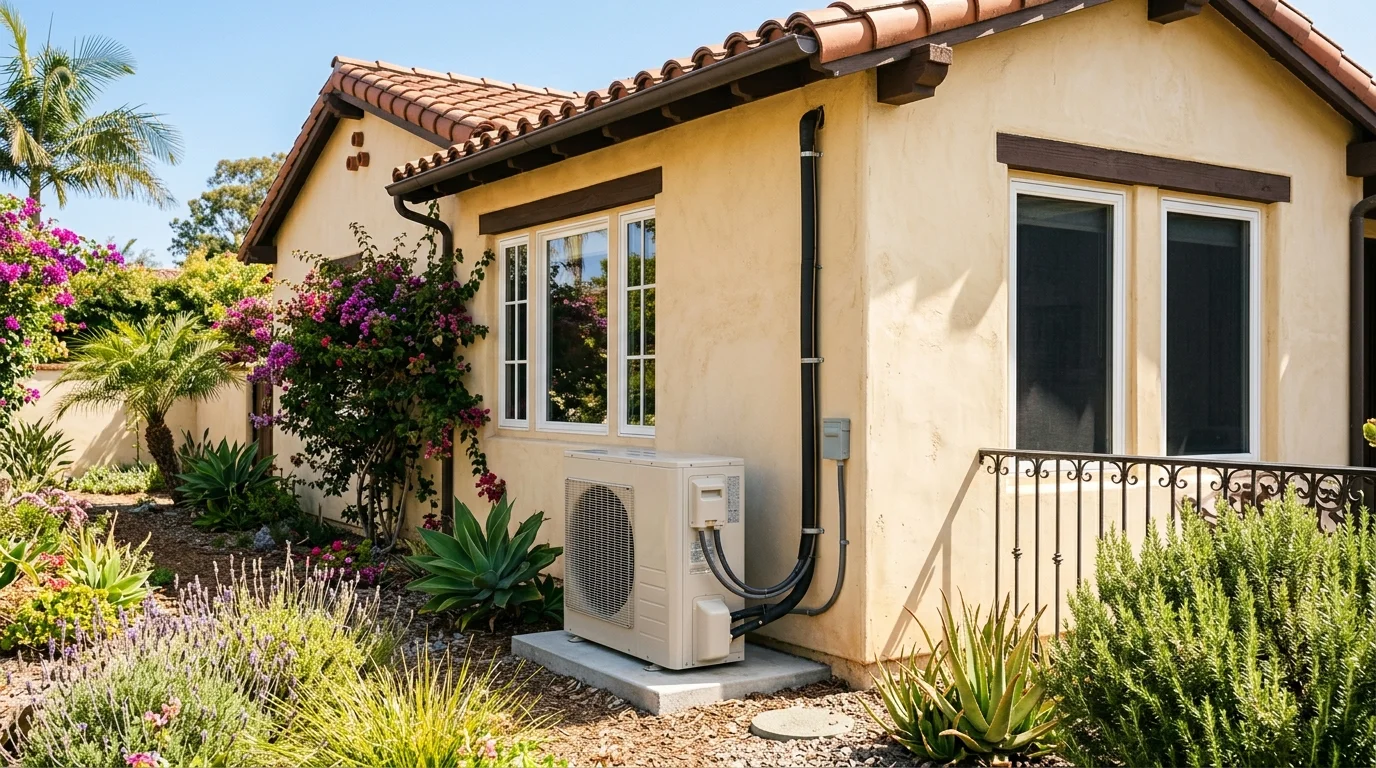
Outdoor units in Rancho Peñasquitos may sit beside a garage, on a side yard, near landscaping, or behind a screen. Tell the contractor about access restrictions before the appointment. Mention gates, narrow paths, pets, or an outdoor unit reached from a slope.
Request a written quote after diagnosis. Ask the pro to separate diagnostic work, parts, labor, and any proposed follow-up testing. The cost depends on the cause, the access and the parts, so no single local figure fits every iced mini split. System design, access, damaged components, and the final diagnosis all shape the quote.
Error codes, and why the manual is worth keeping
An error code is a starting point, not a complete repair plan. Photograph the display before pressing buttons. Copy the full code, including letters, numbers, blinking patterns, and any indicator lights on other heads.
Find the exact model number on the equipment label. Then use the manufacturer’s official manual for that model. A code with the same characters may not mean the same thing across different brands or product lines.
Record what happened before the code appeared. Useful details include the selected mode, which heads were running, whether power had recently changed, and whether the system made an unusual sound. Note whether the code clears or returns, but don’t keep resetting the equipment to hide the pattern.
Some manuals give homeowner checks for a code. Stay within those written steps. If the instructions call for internal electrical, refrigerant, or component testing, stop and contact a licensed contractor.
Avoid buying a replacement part from an online code description alone. The code may point to a circuit or operating condition rather than naming the failed part. A technician can compare the code with measurements and the system’s actual behavior.
Save the manual, model numbers, service notes, and written diagnosis together. That record helps when several indoor heads share an outdoor unit. It also gives another contractor something concrete to review if you request a second opinion.
Which of these you can fix and which need a technician
Homeowner checks should stay simple and manual-approved. You can document symptoms, protect surfaces from dripping water, confirm controller settings, and clean an accessible filter when the manufacturer provides instructions. You can also check whether furniture or curtains block the indoor head.
Stop when the work requires opening a cabinet, touching wiring, disconnecting piping, handling the refrigerant circuit, clearing an inaccessible drain, or testing internal components. Visible ice, recurring water, burning smells, repeated shutdowns, and persistent error codes call for professional diagnosis.
For a system that has stopped heating or cooling, use our heat pump repair service to connect with a licensed independent local pro. Heat Pro SD makes the connection and performs no repair work itself.
If the contractor recommends major repairs or replacement, ask for the diagnosis in writing. The quote should name the equipment involved, parts, labor, access work, and assumptions. Ask whether the recommendation affects one head, the outdoor unit, or the entire multi-zone setup.
You can verify a contractor through the official California Contractors State License Board lookup. Match the business name and license details to the written proposal before approving work.
Recurring trouble may also raise questions about system layout or equipment condition. Review the options for ductless mini-split installation before deciding between repair and replacement. A licensed contractor can inspect the home and explain which choice fits the diagnosed problem.
When to call us
Recurring leaks, ice, persistent odors, repeated error codes, and inactive zones need a licensed HVAC contractor’s diagnosis. The Heat Pro SD line is voicemail with a recording-consent notice. Leave a message at (858) 400-4374 and we will match you with a licensed independent HVAC contractor.