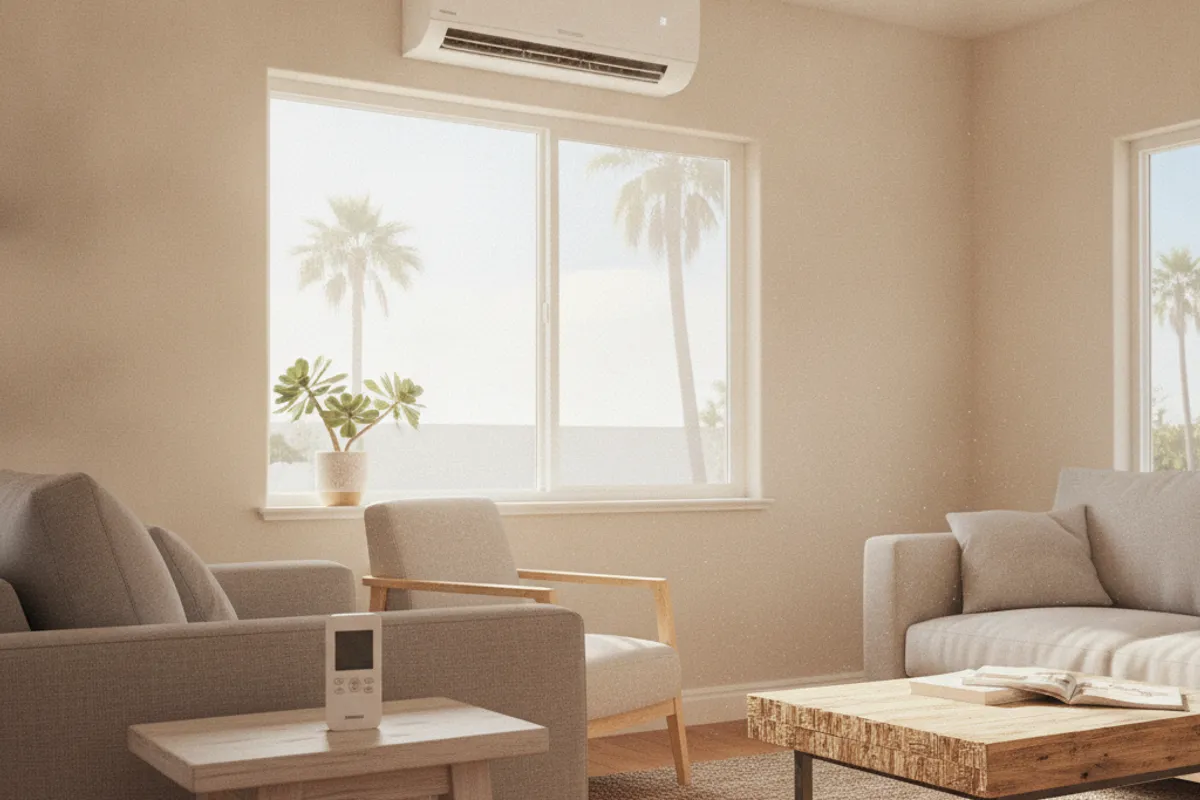
What a multi-zone mini-split system is
A multi-zone mini-split connects one outdoor unit to two or more indoor heads. Each head can be controlled on its own. The system can heat and cool rooms without a full duct network.
That is different from a single-zone mini-split, which pairs one outdoor unit with one indoor head. It is also different from a central ducted heat pump, which uses one indoor air handler and ducts.
San Diego homes that often raise this option include houses without usable ducts, additions and ADUs, and layouts where rooms are used on different schedules. None of those house types automatically need a multi-zone system. The load, the walls, the electrical service, and the outdoor-unit location decide it.
Heat Pro SD does not install multi-zone systems. We match homeowners with licensed independent HVAC pros.
How many indoor heads, and how they connect
The outdoor unit has a published combination of connected indoor capacity and simultaneous operation. Manufacturers do not want every head assumed to run at full output at once, but they also set hard limits. Ask the contractor to show the outdoor model’s combination table for the exact indoor units being quoted.
Useful planning questions:
- Which rooms need independent control, and which can share a head
- Whether a hallway or stair can be left without a head
- Where the outdoor unit can sit, including clearance and HOA rules
- How long the line sets will run, and which walls they pass through
- Whether the electrical panel can serve the outdoor unit as specified
Do not size the outdoor unit from square footage of the whole house. Each indoor head should follow a room-level load, then the outdoor unit must be a listed match.
Residential branch-box and multi-port outdoor units have a finite number of ports. If the design needs more indoor units than that outdoor model allows, the contractor should say so and propose a second outdoor unit or a different equipment family. Do not treat a commercial VRF catalog as a residential default.
Indoor head types, without a price adder
The common residential head is a high-wall unit. It sits high on a wall and is usually the simplest to service.
Other indoor types exist for specific rooms:
Ceiling cassette. Recessed in the ceiling and throws air from a ceiling panel. Needs enough ceiling cavity and a clear service path.
Floor console. Sits low on a wall. Useful when high windows leave no high-wall location.
Concealed ducted indoor unit. A compact air handler in a ceiling or closet, with short ducts to registers. It hides the indoor cabinet. It still needs refrigerant lines, condensate routing, and access for service.
Ask the proposal to name the indoor model in each room. A “wall head” line item that later becomes a cassette is a different job.
Line sets, condensate, and the outdoor unit
Each indoor head needs a refrigerant path, power or control wiring as the manufacturer specifies, and a condensate route. Concealed routes through finished rooms are a scope item, not an afterthought.
Ask where each line set will run, how wall penetrations will be finished, and where condensate will terminate. A pump, if required, should be named. So should any work in a shared condo chase or HOA-controlled exterior.
The outdoor unit has to serve the connected indoor load and still fit the yard, roof, or side yard. Clearance, airflow, and neighbor noise rules come from the model manual and the local authority, not from a countywide rule of thumb.
Older San Diego houses without ducts
Central neighborhoods such as North Park, South Park, Normal Heights, Golden Hill, and Kensington include many pre-ductwork houses. Adding a full duct system can mean opening walls and ceilings. A multi-zone mini-split is one way to condition several rooms without that demolition. It is not free of construction. Line sets, condensate, electrical, and outdoor placement still have to be designed.
Detached casitas and ADUs may need their own system, independent from the main house. That can be a single-zone or a small multi-zone. The permit path follows the jurisdiction, not this article.
Marine-layer weeks can make humidity and cool indoor air a comfort issue even when the inland valleys are hotter. Zone control lets unused rooms stay off. That is a use pattern, not a dehumidification guarantee.
Brands and service, without a winner list
Names that appear on San Diego proposals include Mitsubishi Electric, Daikin, Fujitsu, and others. Listing them is not a ranking. Ask who currently services that product line, then check the manufacturer’s contractor directory and the CSLB license check. Heat Pro SD cannot guarantee parts stock or factory authorization.
Do not choose a brand because an article says it lasts a set number of years. Ask for the warranty document for the exact outdoor and indoor combination.
A proposal checklist
Have every bidder answer these in writing:
- Outdoor model and each indoor model
- Which rooms each head serves
- Line-set routes, lengths, and wall or ceiling work
- Condensate route and any pump
- Electrical requirements and who pulls that permit
- Mechanical permit responsibility
- Combination-table confirmation that the indoor set is listed with that outdoor unit
- Startup and zoning-control documentation you will keep
There is no published San Diego installed price band on this page. Compare itemized scopes. See ductless mini-split installation.
Heat Pro SD matches homeowners with licensed independent HVAC pros and performs no physical work. The Heat Pro SD line is voicemail with a recording-consent notice. Leave a message at (858) 400-4374.
How many zones do I need for my San Diego home?
Plan one controllable indoor unit for each area that needs its own setpoint, then confirm the outdoor unit can legally connect that combination. A compact two-bedroom house is not automatically a three-zone house. Unused rooms can stay without a head if the load calculation still works.
Can a multi-zone mini-split replace central AC in my home?
It can condition the occupied rooms if the design covers those rooms and the calculated loads. You give up central return and supply grilles. You take on indoor heads, line sets, and outdoor placement. Ducted and ductless are different families. Compare them on a written load and layout, not on a slogan.
How long does a multi-zone mini-split installation take?
Ask the contractor for a sequence based on head count, line-set routes, and access. This page does not publish a typical number of days.
Ready to compare a multi-zone layout with other options? See our heat pump services or leave a voicemail at (858) 400-4374.