When a Rancho Peñasquitos heat pump stops cooling, check the thermostat, filter, vents, and visible outdoor unit conditions. If those observations don’t reveal a simple control or airflow issue, a licensed HVAC contractor should diagnose the system before discussing parts. Heat Pro SD can connect you with a licensed independent local pro.
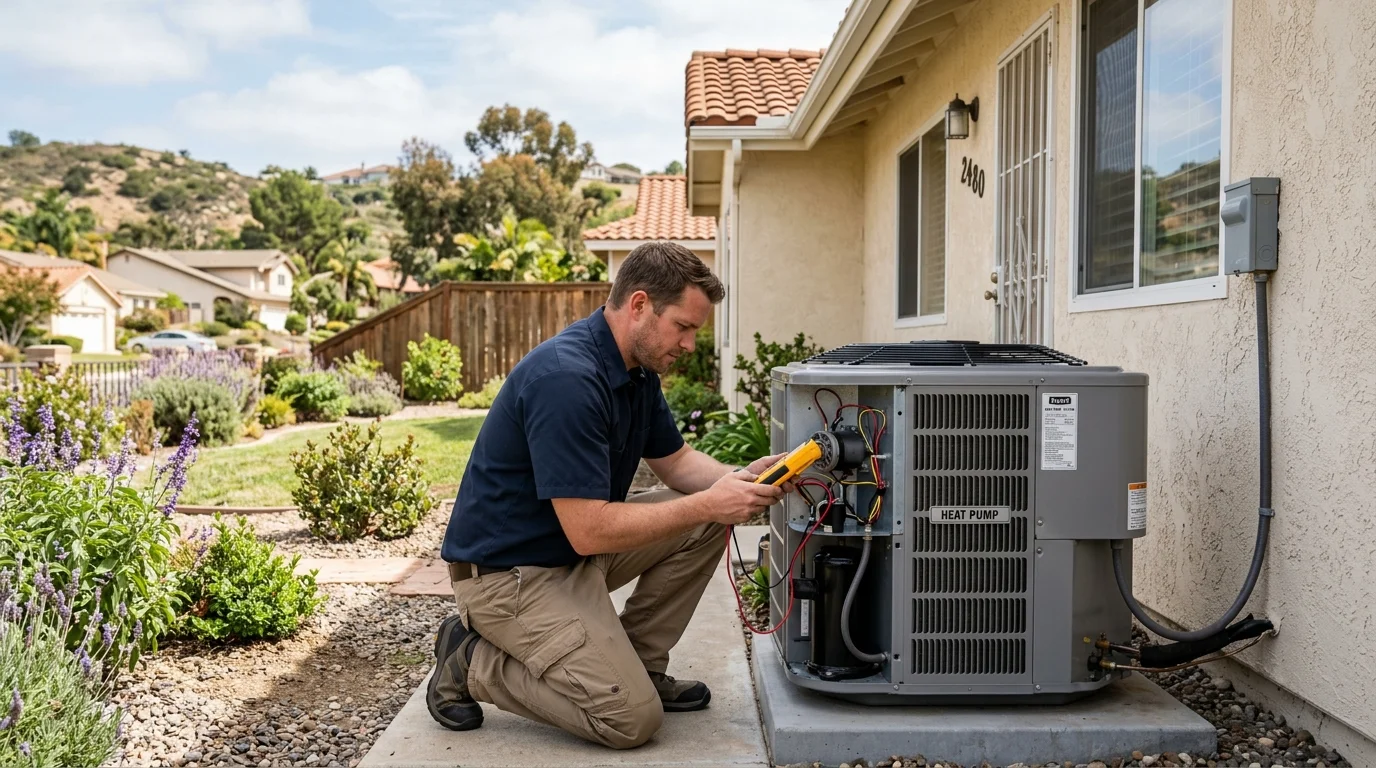
How to confirm the cooling system is a heat pump
Start with the equipment, not the thermostat’s appearance. Many thermostats show both heating and cooling modes. That screen alone doesn’t confirm whether the property has a heat pump, conventional air conditioner, or another system.
Look for an installation invoice, maintenance record, equipment manual, or model information. Take clear photos of the indoor and outdoor equipment labels. Don’t remove a cover to reach a hidden label. A contractor can use the visible model information to identify the equipment type and configuration.
Also note what happens during heating season. A heat pump normally uses its outdoor equipment for both heating and cooling. Some properties pair a heat pump with another heat source. Others use separate ductless indoor units connected to one outdoor unit. Those differences affect which controls and components need testing.
If the paperwork isn’t available, don’t guess. Tell the contractor that the equipment type hasn’t been confirmed. Share the photos, thermostat model, and any previous service records instead.
The written diagnosis should identify the outdoor unit, indoor equipment, and thermostat. It should also explain whether they operate as one matched system. That gives everyone a clear starting point for heat pump repair in Rancho Peñasquitos.
What to check without opening the equipment
Begin with observations that don’t require tools or equipment access. Confirm that the thermostat is set to cooling. Record the displayed room temperature, target temperature, fan setting, and any message or error code.
Next, check the accessible filter. Note whether it looks loaded with dust, sits crooked, or has an airflow arrow. Don’t force a filter that doesn’t fit. Write down its printed size so the contractor can confirm the correct replacement.
Walk through the property and compare the supply vents. Record whether airflow feels weak everywhere or only in certain rooms. Check whether accessible vents are open and whether furniture blocks a return grille. These details help separate a broad airflow complaint from a room-specific one.
From a normal viewing position, observe the outdoor unit. Note whether it starts, stays silent, cycles repeatedly, or makes a new sound. Look for visible ice, standing water, heavy debris, or an error display. Don’t open a panel or touch wiring, refrigerant lines, or internal parts.
Record when the cooling problem began. Include recent thermostat changes, filter replacement, electrical interruptions, or other work near the equipment. A short timeline can be more useful than describing the system as simply broken.
These checks don’t identify a failed component. They give a licensed contractor a cleaner set of symptoms to test.
How thermostat and airflow symptoms differ
Thermostat symptoms usually appear at the control point. The screen may be blank, show an unfamiliar message, ignore a temperature change, or follow an unwanted schedule. The equipment may also react differently when the mode or target setting changes.
Record exactly what the display shows. Include the mode, target, room reading, fan setting, and time. If the thermostat uses an app, note whether the app and wall display agree. Don’t erase alerts before the contractor can review them.
Airflow symptoms appear at the vents and returns. The system may sound active while little air reaches every room. Airflow may also feel normal in most rooms but weak in one area. Those two patterns aren’t the same complaint, and they shouldn’t be described as one.
Warm air deserves another distinction. Note whether the air feels room-temperature, slightly cool, or consistently warm. Also record whether the outdoor unit appears to be running. Our guide to a heat pump blowing warm air explains how to organize those observations.
A thermostat message doesn’t prove that the thermostat failed. Weak airflow doesn’t identify a specific duct or equipment problem either. The contractor should test the control sequence, indoor airflow, and connected equipment before naming the cause.
Clear symptom notes reduce guesswork. They also help you compare the contractor’s explanation with what happened inside the home.
Which Rancho Peñasquitos property details matter
The neighborhood name helps locate the job, but the property itself shapes the diagnosis. Tell the contractor whether the home is detached, attached, or part of a condo community. Don’t assume a nearby property has the same equipment or access conditions.
Describe where each component sits. The indoor equipment might be in a closet, garage, attic, or another enclosed area. The outdoor unit might be beside the home, behind a gate, on a roof, or within a restricted common area. Give the actual arrangement without labeling it typical for Rancho Peñasquitos.
Mention additions, converted rooms, remodeled areas, and closed-off spaces. Tell the contractor which rooms become uncomfortable and when the change appears. A problem limited to one room presents differently from weak cooling throughout the property.
Access details also matter. Report locked gates, parking limits, pets, attic access, and HOA-controlled spaces before the visit. If a condo association controls exterior equipment, find out which approvals or access steps apply to that property.
The verified information supplied for this page doesn’t identify a single permit office, HOA rule, or equipment pattern covering every Rancho Peñasquitos address. If replacement enters the discussion, ask the contractor to identify the permitting authority for the exact address. The contractor should also explain which approvals belong in the proposed scope.
Heat Pro SD serves San Diego County and connects homeowners with licensed independent pros. We don’t perform the physical inspection or repair.
When repair and replacement both deserve comparison
A repair diagnosis and a replacement proposal answer different questions. Repair focuses on the current cooling failure. Replacement considers the connected equipment, installation scope, controls, airflow, and property requirements.
Ask for a repair explanation first. It should name the suspected fault, describe the testing behind that conclusion, and list the proposed work. It should also separate confirmed findings from items that still require investigation.
Replacement deserves a comparison when the contractor presents it as an alternative to repair. Ask why the repair may not resolve the broader concern. Then request equipment model information, installation scope, electrical requirements, airflow work, controls, and permit responsibility.
New equipment sold must clear a federal efficiency minimum, but this page doesn’t state an unverified SEER2 or HSPF2 figure. Ask the contractor to identify the applicable standard and show where the proposed equipment meets it. SEER and SEER2 also aren’t directly comparable because SEER2 uses a harder test.
Don’t build the decision around an unconfirmed rebate or tax credit. Federal credit availability changed at the end of 2025, and program terms can change. Check the IRS energy credit page for current federal information. California program updates belong on the California Energy Commission website.
Our heat pump replacement service can connect you with a licensed local pro when a new system needs consideration. You can also use this repair-or-replace guide to organize the comparison without relying on an invented lifespan or price.
What the written diagnosis should explain
A useful diagnosis connects the complaint to test results. It shouldn’t jump from “not cooling” to a parts list without explaining the path between them.
The document should identify the indoor equipment, outdoor equipment, thermostat, and relevant model information. It should describe the symptoms the contractor confirmed. Those symptoms may include thermostat behavior, airflow differences, visible conditions, noises, or error codes.
Next, look for the tests and findings behind the recommendation. If the contractor identifies a failed component, the diagnosis should explain what showed that failure. If airflow is involved, it should state where the restriction or imbalance was found. If the cause remains uncertain, the document should say what additional testing is needed.
The proposed repair scope should name the work, included materials, exclusions, and quoted total. Any warranty language should come from the contractor and appear in writing. Heat Pro SD doesn’t provide the contractor’s warranty.
If replacement is proposed, request a separate scope. It should identify the equipment, controls, related electrical or airflow work, permit responsibility, disposal, and exclusions. That keeps a repair quote from becoming mixed with a larger project.
Confirm the contractor’s license status through the California Contractors State License Board lookup. Match the listed business and license details to the written proposal before signing.
A clear diagnosis lets you compare actual findings. It also gives another licensed contractor enough context to offer a meaningful second opinion.
When to call us
When accessible thermostat and airflow checks don’t explain the cooling loss, contact a licensed heat pump installation and repair pro. Call us at (858) 400-4374 and we’ll connect you with a licensed local HVAC contractor.