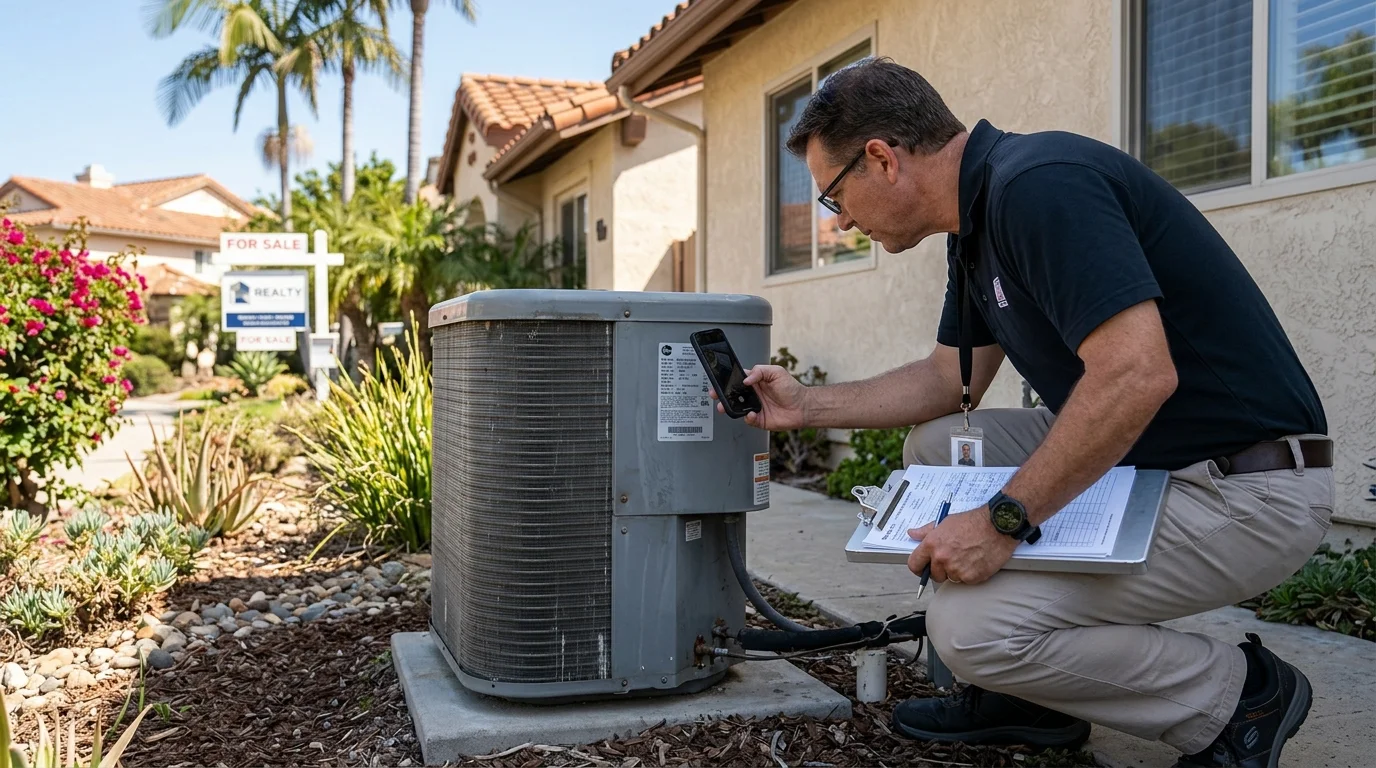
Before buying a San Diego home, arrange a dedicated HVAC inspection with a licensed contractor. Ask for written findings on operation, equipment labels, controls, visible ductwork, and any conditions needing further review. That report gives you better information before your purchase contingency expires.
What a general home inspection does not cover
Start by reading the general inspector’s agreement and sample report. Scope varies, so don’t assume every heating and cooling test is included. Ask what the inspector will operate, photograph, and exclude before the appointment.
A general report may identify visible equipment and basic operating concerns. It may also recommend evaluation by an HVAC contractor. That recommendation isn’t the same as a dedicated diagnosis. The exact difference depends on the services described in each written agreement.
For the HVAC appointment, request a separate report from a licensed contractor. The report should identify what was accessible, what was tested, and what wasn’t confirmed. It should also separate observed conditions from repair or replacement recommendations.
San Diego properties can present very different access conditions. The outdoor unit might sit beside a coastal Encinitas home, on a narrow City Heights lot, or behind an East County addition. Indoor equipment may be in a closet, garage, attic, or another enclosed area. Tell the contractor where each component is located before the visit.
Keep both reports together. If the general report notes weak airflow, unusual operation, staining, or damaged equipment, send that page to the HVAC contractor. Ask for each concern to be addressed in writing.
Heat Pro SD can connect buyers with a licensed local pro for a dedicated heat pump inspection. The matched contractor determines the inspection scope and performs the physical work.
What a dedicated HVAC inspection looks at
Give the contractor a written list of the systems included in the sale. Note the thermostat, indoor equipment, outdoor equipment, visible ducts, and any separate mini-splits. A guest room addition or converted garage may have equipment that isn’t controlled by the main thermostat.
Ask the contractor to document each operating mode the equipment supports. The report should say which modes were tested and whether any test was limited. If the system can’t be operated under the conditions present that day, ask the contractor to explain that limitation plainly.
The requested scope can include:
- Thermostat operation and displayed settings
- Indoor and outdoor equipment condition
- Visible wiring, disconnects, drain lines, and connections
- Filter location, fit, and visible condition
- Airflow concerns at accessible supply and return openings
- Accessible duct connections and insulation
- Equipment sounds or movement observed during operation
- Signs of previous repairs or altered components
This isn’t a promise that every component can be assessed. Closed walls, locked areas, stored belongings, and restricted attic access can limit the inspection. The written report should identify those gaps instead of guessing.
Ask for photographs tied to each finding. A phrase such as “needs service” gives you little negotiating detail. A useful entry identifies the component, describes the observed condition, and states what the contractor recommends next.
Before hiring anyone, check the contractor through the official CSLB license check. Confirm the current license status yourself and keep that record with your purchase documents.
Reading the data plate: age, capacity and refrigerant
The data plate is the equipment’s identification card. Ask the contractor to photograph it clearly on every indoor and outdoor unit. The image should make the manufacturer, model, serial information, electrical details, capacity markings, and listed refrigerant readable.
Don’t guess the manufacture date from a serial number. Ask the contractor or manufacturer to decode it in writing. Serial formats vary, and a seller’s recollection may not match the equipment label. If the date can’t be confirmed, the report should say so.
Age alone shouldn’t decide the negotiation. Pair the confirmed manufacture date with current operation, maintenance records, visible condition, and the contractor’s findings. Our guide to heat pump lifespan in San Diego explains why a calendar estimate needs property-specific context.
Capacity markings also need professional interpretation. Ask whether the connected indoor and outdoor components are identified as a matched system. If the contractor finds different manufacturers, unclear labels, or altered components, request a written explanation of what can and can’t be confirmed.
The refrigerant listed on the plate helps identify what the equipment says it uses. Don’t rely on color, fittings, or a verbal guess. Ask how the listed refrigerant affects the recommended service path, then request documentation for any proposed work.
A missing, painted-over, or unreadable label matters because it limits verification. Ask the seller for installation records, past invoices, warranty paperwork, and equipment manuals. If those records aren’t available, keep that uncertainty visible in your decision.
Ductwork, and the part of the system nobody sees
Ducts deserve their own inspection request. Much of the system may be hidden above ceilings, below floors, or inside walls. A report should distinguish accessible sections from areas nobody could view.
Tell the contractor about comfort concerns you noticed during showings. Name the room and the condition without diagnosing it. A warm bedroom, noisy return, or weak register can guide the inspection toward the right area.
Ask the contractor to examine accessible duct connections, insulation, supports, return paths, and visible damage. Request photographs of any loose, crushed, disconnected, stained, or altered section. The contractor should explain whether further access or testing is recommended.
This becomes especially useful when a San Diego property has additions or converted spaces. A house in North Park, Chula Vista, La Mesa, or Oceanside may have a layout changed by prior owners. Don’t assume every finished room is served by the central system. Ask the contractor to map which equipment serves each area.
For a property with an older layout, review our guide to choosing a heat pump for a San Diego older home. It covers the questions to raise when existing ducts, electrical service, and room configuration shape future options.
If hidden ducts can’t be inspected, don’t let the report imply otherwise. Ask for exact access limitations. You can then discuss additional evaluation with the contractor, seller, and your real estate representative before making a contingency decision.
What findings are worth negotiating over
Focus negotiations on documented conditions, access limitations, and written recommendations. A vague concern is hard to evaluate. A photograph, equipment identifier, operating result, and contractor explanation give your real estate representative something specific to discuss.
Pay close attention when the report says equipment didn’t operate as expected, a component couldn’t be identified, or an area couldn’t be accessed. Those statements don’t automatically dictate your next move. They show where more information is needed.
Ask the licensed contractor to separate immediate repair recommendations from maintenance items and longer-term options. If replacement is recommended, request the reason in writing. Then ask for an itemized quote that identifies equipment, labor, related electrical or duct work, and any work excluded from the proposal.
Heat Pro SD couldn’t confirm a universal San Diego repair price for these findings. The property, equipment, access, and requested scope drive each quote. Compare written proposals from licensed contractors instead of relying on an unsourced market figure.
Don’t negotiate from equipment age alone. Confirm the date first, then review operation and condition. Likewise, don’t treat cosmetic wear as proof of a failed system. Ask the contractor what was observed and how that observation supports the recommendation.
Your purchase agreement and professional advisers determine how inspection findings can be handled in the transaction. Share the report with your real estate representative. For legal or contract questions, consult a qualified attorney rather than relying on an HVAC opinion.
Timing it inside a standard contingency period
Heat Pro SD couldn’t confirm one inspection deadline that applies to every San Diego home purchase. Your signed agreement controls the dates for your transaction. Review it with your real estate representative as soon as escrow opens.
Arrange the HVAC inspection early enough to receive and review the written report. Leave room for follow-up questions, seller-provided records, and an itemized contractor quote when needed. Don’t assume a contractor’s schedule or report timing until the contractor confirms it directly.
Coordinate access through the people handling the transaction. Tell the contractor whether equipment sits in a locked closet, occupied room, attic, crawlspace, garage, side yard, or gated area. Ask the seller to keep the thermostat and all included equipment accessible.
Send relevant documents before the appointment. These can include the listing details, seller disclosures, general inspection report, equipment invoices, maintenance records, and photographs from your walkthrough. Mark any room where you noticed a comfort or noise concern.
After the inspection, read the entire report. Highlight findings that need clarification and statements based on limited access. Ask the contractor to correct unclear equipment identifiers and explain recommendations before you make a purchase decision.
Keep the report, photographs, written quote, and license lookup together. That file helps you separate confirmed conditions from unanswered questions. It also gives any contractor you consult later a clearer starting point.
When to call us
Call when you need a licensed HVAC contractor to inspect heating, cooling, heat pump, or accessible duct components before buying. Heat Pro SD matches homeowners with licensed independent local pros and performs no physical inspection work itself.
Call us at (858) 400-4374 and we’ll connect you with a licensed local HVAC contractor.