If you’re comparing a heat pump specialist with a general HVAC company in San Diego, distance shouldn’t make the whole decision. Look for a licensed contractor who can explain your heat pump, its controls, and the planned work clearly. Heat Pro SD connects homeowners with licensed, independent local HVAC pros. We perform no physical work.
Why heat pumps expose gaps a furnace never did
A general HVAC company isn’t automatically the wrong choice. Many contractors work across several equipment types. The real question is whether the proposed technician understands your specific heat pump.
That distinction matters during both installation and repair. Heat pump work can involve the indoor equipment, outdoor equipment, thermostat, controls, airflow, and operating settings. A useful diagnosis considers how those pieces interact. It doesn’t stop after finding one visible symptom.
Listen closely to the questions asked before the visit. An experienced heat pump contractor may request the model information, thermostat type, operating mode, and recent fault messages. They may also ask whether the problem appears during heating, cooling, or both. Those questions show a structured approach.
San Diego County also requires local judgment. Coastal North County, inland North County, the central city, East County, and the South Bay aren’t interchangeable. A contractor should discuss your actual home instead of offering one countywide answer. Access, equipment placement, existing ducts, electrical work, and HOA restrictions may all affect the proposed scope.
Don’t reject a company simply because it also services furnaces. Ask for evidence that its team works with your heat pump type and manufacturer. Our guide to hiring a heat pump installer in San Diego provides a broader contractor checklist.
The nearest company may be the right company. Proximity alone just doesn’t prove heat pump fluency.
Inverter systems and the diagnostics they require
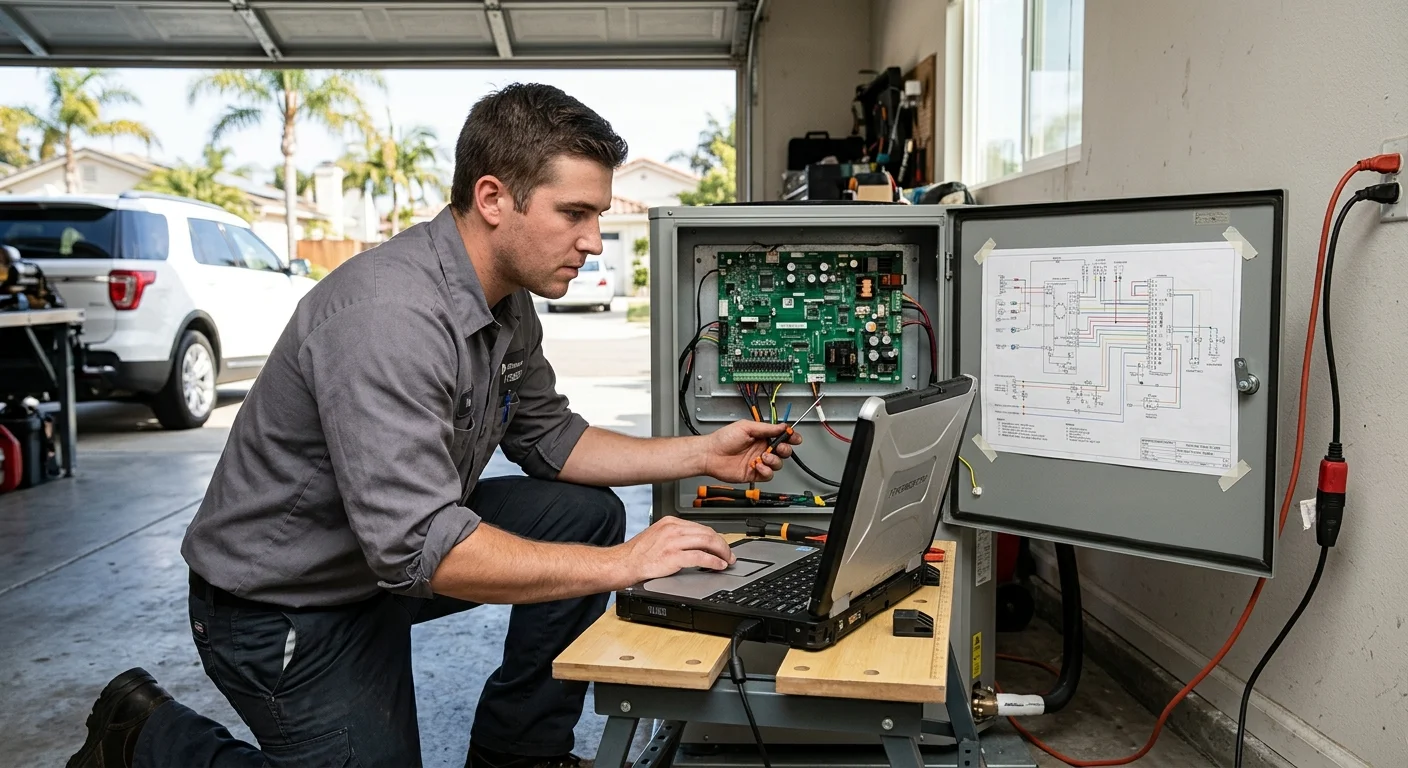
An inverter system deserves a model-specific diagnostic plan. Its controls may provide operating information that a generic HVAC checklist doesn’t address. Before authorizing work, ask how the contractor will read and interpret that information.
Start with the exact indoor and outdoor model information. Equipment from the same manufacturer can still use different controls or service procedures. The contractor should be willing to identify the service materials used for your system.
Ask whether the diagnostic process will cover:
- Current and stored fault information
- Thermostat and equipment communication
- Indoor and outdoor control settings
- Relevant electrical, refrigerant, and airflow readings
- Changes made during testing
- Conditions present when each reading was recorded
A fault message can guide the investigation, but you should still receive an explanation. Ask what was measured, what the manufacturer’s service material calls for, and how the evidence supports the recommendation. If a part is proposed, ask what test pointed to that part.
Some systems may also have manufacturer service tools or model-specific software. Ask whether the contractor has access to the tools needed for your equipment. If not, ask how the company will obtain technical support before replacing anything.
A clear diagnostic record helps when the first adjustment doesn’t resolve the symptom. It also gives another contractor useful context later. For an active problem, Heat Pro SD can connect you with a licensed pro through our heat pump repair service.
Manufacturer training, and how to verify it
“Manufacturer trained” sounds reassuring, but the phrase needs details. Ask which manufacturer provided the training, what equipment it covered, and when it occurred. Then request something you can verify. This page does not publish a count of specialists or a training standard.
A contractor may have training for one product family but not another. That’s why the exact equipment matters. Give the company your model information and ask whether the assigned technician has relevant experience. Don’t assume a logo on a website answers that question.
You can also contact the manufacturer or check its contractor directory, if one is available. Ask whether the listed company has a current relationship with the manufacturer. Confirm what the listing represents because directory requirements can differ.
Manufacturer training and a California contractor license answer different questions. Training may show exposure to particular equipment. The state license record helps you confirm whether the contractor is currently licensed.
Use the official California Contractors State License Board lookup. Compare the record with the business name shown on the estimate and contract. If anything doesn’t match, ask the contractor to explain it before signing.
Don’t treat a badge, directory listing, or verbal claim as complete proof. Combine license verification with model-specific questions and a written scope. A qualified contractor should be comfortable explaining who will perform the work and why that person fits the system.
The commissioning numbers a heat pump specialist records
Commissioning should produce more than a verbal “everything looks good.” Before installation begins, ask which readings the contractor plans to record. Also ask whether you’ll receive a written copy.
The appropriate record depends on the equipment and installation. A useful commissioning document may include:
- Indoor and outdoor model information
- Thermostat and control configuration
- Operating modes tested
- Airflow and static pressure readings, where applicable
- Entering and leaving air temperatures
- Refrigerant readings and the conditions present
- Electrical readings relevant to the equipment
- Fault information before and after adjustments
- Drainage and condensate observations
- Final settings and homeowner instructions
You don’t need to interpret every entry yourself. Ask the contractor to compare the results with the manufacturer’s published startup procedure. The explanation should connect each important reading to the final setup.
Conditions matter too. A number without context can be hard to evaluate later. Ask the contractor to note the operating mode, indoor conditions, outdoor conditions, and equipment settings used during testing. If a planned reading doesn’t apply to your configuration, the contractor should explain why.
Keep the final record with your contract, model information, and manufacturer documents. It can help another licensed contractor understand how the system was configured.
For a new ducted system, ask about commissioning before choosing the contractor for central heat pump installation. Make the documentation part of the written scope, not a request added after startup.
Questions that reveal experience in one phone call
A short phone conversation can expose vague answers before you schedule further work. Keep your model information and a description of the problem nearby. Then ask direct questions.
Useful questions include:
- Do you work on this exact heat pump manufacturer and system type?
- Will the assigned technician have model-specific experience?
- How will you review fault information and operating settings?
- Which diagnostic or commissioning readings will I receive?
- What manufacturer service materials will guide the work?
- How will you separate confirmed problems from possible causes?
- Will the written quote identify equipment, labor, controls, ducts, electrical work, and permits where applicable?
- Who provides the workmanship warranty, and where are its terms written?
- What happens if the first recommendation doesn’t resolve the documented symptom?
Pay attention to how the company answers. Clear limits are better than invented certainty. A contractor who hasn’t seen your exact setup may need an on-site inspection before reaching a conclusion.
For installation work, request an itemized written quote. It should separate the major parts of the proposed scope. Ask whether duct changes, controls, electrical work, removal, permits, and commissioning are included or excluded. Don’t rely on a single total with no explanation.
No universal quote fits every San Diego home. A City Heights bungalow, Chula Vista condo, and El Cajon detached home can present different questions. The contractor should base the scope on your property and equipment, not a generic package.
What to do when the only nearby company is a generalist
A generalist may still be a good fit. Don’t decide from the company label alone. Use the same evidence-based questions and focus on the technician assigned to your system.
If your search around Alpine, Ramona, or another San Diego County community returns a general HVAC company, ask how it handles unfamiliar equipment. The company may consult manufacturer service materials or technical support. Ask for that plan before approving parts or major changes.
You can also narrow the scope. A generalist might document the system, collect readings, and identify where model-specific help is needed. You can then seek another licensed contractor for the specialized portion. Keep every diagnostic record so the next person doesn’t start without context.
For replacement or installation, slow the decision down enough to compare written scopes. Check each contractor through the official CSLB lookup. Ask who will perform commissioning and what documentation you’ll receive. Confirm warranty terms directly with the contractor and manufacturer.
Nearby matters, but clarity matters more. A contractor should explain what is known, what remains uncertain, and what will be tested next. If the answers stay vague, continue looking before authorizing a large scope.
Heat Pro SD is a referral service, not the contractor performing the work. We connect San Diego County homeowners with licensed, independent local HVAC contractors. The matched contractor inspects the property, proposes the scope, and completes the physical work. Call (858) 400-4374 and leave a voicemail. The line plays a recording-consent notice.
When to call us
Call when your heat pump needs model-specific diagnosis, documented commissioning, installation, or replacement by a licensed pro. Leave a voicemail at (858) 400-4374. The line plays a recording-consent notice and is not answered live.