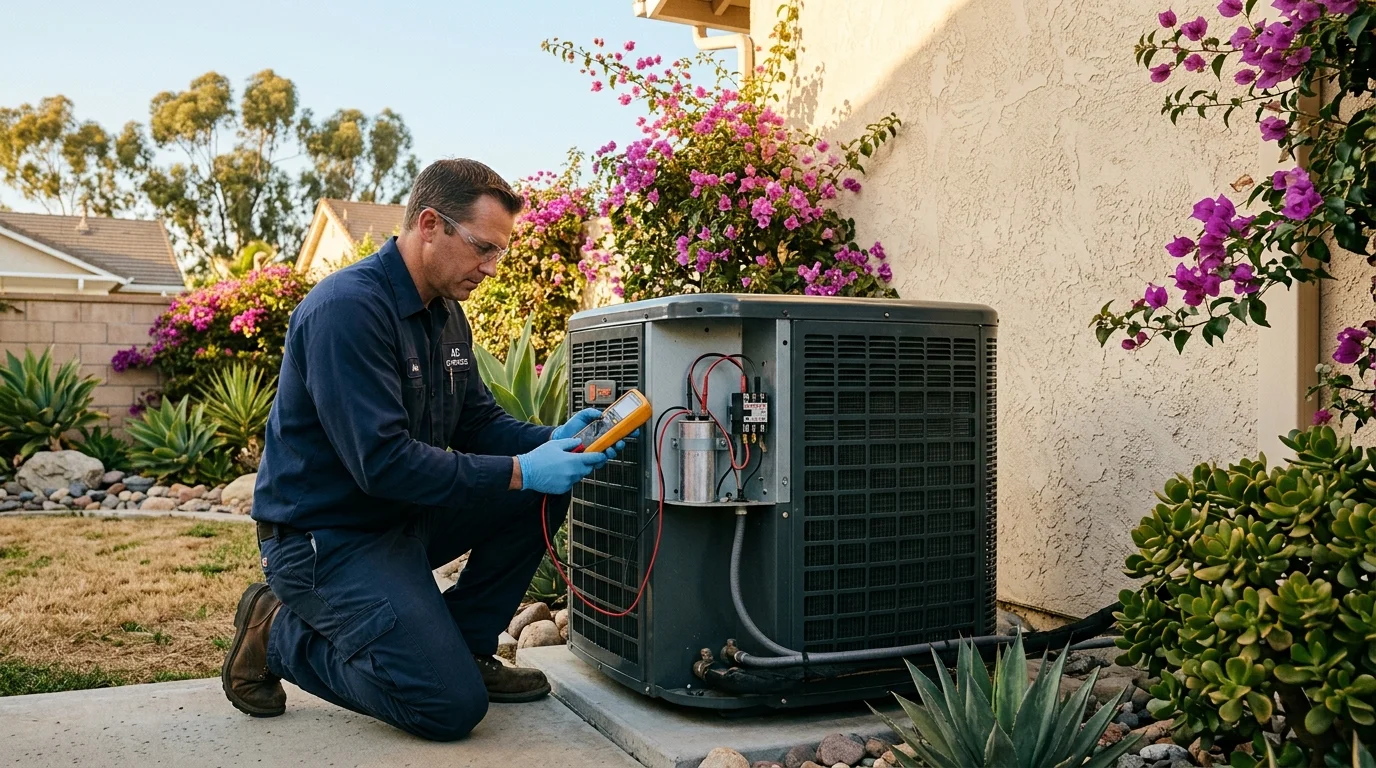
Heat pump repair cost in San Diego depends on the diagnosis, failed component, access, and labor involved. The most useful figure is an itemized quote from a licensed contractor after testing. A symptom alone, such as weak airflow or warm air, can’t reveal the full repair scope.
What a repair bill is actually made of
A repair bill usually starts with diagnostic work. The technician has to identify the actual failure before recommending a part. That can involve checking controls, electrical connections, airflow, temperatures, and system operation. The testing should connect the symptom to a specific finding.
The repair scope comes next. It may include the replacement part, installation labor, supporting materials, and testing after the work. Access can also change the job. A ground-level condenser beside a wide driveway presents a different work area than equipment on a roof or behind a narrow side gate.
That distinction matters across San Diego County. A roof-mounted unit at a North Park property may need a different access plan than a ground-level system in Chula Vista. An indoor unit above a hallway ceiling in Clairemont can also require more preparation than equipment inside an open garage.
Ask the contractor to separate diagnosis from the proposed repair. The written quote should identify the failed component and explain how the technician reached that conclusion. It should also show whether the proposed amount covers the complete repair or only one step.
A clear quote makes comparisons easier. It also helps prevent a low opening figure from growing through loosely described additions. Our heat pump repair service can connect you with a licensed independent pro who can inspect the system and prepare a repair recommendation.
The parts that cost the most to replace
The largest repair scopes tend to involve more than swapping a small, accessible electrical part. The component, system design, access, and required testing all shape the final quote.
Compressors and other sealed-system components can create extensive work. The contractor may need to confirm the failure, open the refrigerant circuit, replace the component, and test the completed repair. If a leak is suspected, ask whether leak detection is included or quoted separately.
Indoor and outdoor coils can also involve a broad scope. Access matters here. A coil inside a cramped attic or ceiling space may require different preparation than one inside an accessible cabinet. The quote should identify which coil is involved and what work surrounds its replacement.
Control boards and inverter components may require careful model matching. A board that looks similar may not be the correct revision for the unit. Ask the contractor to list the proposed part and confirm compatibility with the model number.
Fan motors and blower assemblies vary in scope as well. The repair might involve a motor, a control module, a wheel, or a larger assembly. Those aren’t interchangeable descriptions. The quote should name the failed piece.
Don’t judge the repair by the physical size of the part. Diagnosis, access, system disassembly, and final testing can matter just as much. Ask whether the quote includes every supporting material and all testing needed to return the system to operation.
Diagnostic fees and why they vary
A diagnostic fee pays for the work required to identify the problem. It isn’t automatically the repair itself. Contractors set their own policies, so ask what the fee covers before scheduling a visit.
Some diagnostic visits focus on the reported symptom. Others may include broader system testing. The difference should be explained clearly. Ask whether the contractor will inspect both indoor and outdoor equipment, check thermostat operation, and document the findings.
Access can affect the diagnostic process. A technician working on a condenser beside a patio has a different setup than one reaching rooftop equipment. Multi-zone systems can also require testing at several indoor units before the source of the problem becomes clear.
Brand and model can shape the process too. Some faults are visible during basic testing. Others require model-specific procedures or compatible diagnostic tools. Ask whether extra testing needs separate authorization.
Before the visit, get answers to these points:
- What does the diagnostic fee include?
- Does the fee cover a written diagnosis?
- Will any part of it be applied to approved work?
- Does further testing require separate approval?
- Will the contractor provide model and part details?
A diagnostic fee shouldn’t be compared in isolation. One contractor may quote a narrower visit, while another includes more testing and documentation. Compare the scope beside the amount. That shows what you’re actually agreeing to purchase.
How the age of the system changes the math
System age matters, but it shouldn’t decide the repair by itself. The better question is what condition the entire system is in and what the proposed repair accomplishes.
Start with the model and serial numbers. The contractor can use them to check part compatibility and current manufacturer information. Ask the manufacturer about applicable coverage and terms. Don’t assume coverage applies until the manufacturer confirms it for that equipment.
Repair history also belongs in the conversation. Repeated failures in different parts can change how a new repair looks. Gather old invoices if you have them. They can show what was replaced, which symptoms returned, and whether earlier work involved the same section of the system.
Then compare the repair with the system’s overall condition. Ask about the indoor and outdoor units, controls, airflow, and any visible damage. A single failed part in an otherwise serviceable system creates a different decision than several unresolved problems.
Our guide to heat pump lifespan in San Diego explains how operating conditions and maintenance history fit into that decision. Your manufacturer’s manual remains the right place to check service guidance for your model.
If replacement enters the discussion, request a separate proposal. Don’t let repair and replacement blur into one vague recommendation. A heat pump replacement proposal should explain its own equipment, scope, and terms. That gives you a clean comparison between restoring the existing system and changing it.
When a repair quote should send you to a second opinion
A second opinion makes sense when the recommendation is expensive, unclear, or difficult to connect with the diagnosis. It can also help when the contractor moves quickly from a common symptom to full system replacement.
Start by reading the diagnosis. Phrases like “unit is bad” or “system is old” don’t identify a failed component. Ask what test result supports the recommendation. If the contractor can’t explain the finding in plain language, pause before authorizing work.
Be careful when a quote changes substantially without a written explanation. New findings can appear after equipment is opened. When they do, ask for an updated scope before approving additional work. It should identify what changed and why.
A second opinion is also useful when:
- Several major components are listed without separate findings.
- The proposed part isn’t identified clearly.
- Repair and replacement appear in the same bundled amount.
- The contractor won’t provide a license number.
- The quote leaves major exclusions unstated.
- You feel pressured to approve work before reviewing the terms.
You can verify a contractor through the California Contractors State License Board license check. Match the business name and license details with the proposal you received.
A second opinion isn’t about finding someone who will promise the cheapest repair. It’s about confirming the failure, the proposed correction, and the scope. Give the second contractor the symptoms and system information. Let that technician perform an independent diagnosis instead of simply endorsing the first quote.
What to ask for in writing before work starts
A good written quote should tell you what the contractor found and what happens next. It doesn’t need complicated language. It does need enough detail to show what you’re authorizing.
Ask for the equipment location, model, and diagnosed failure. The proposed repair should name the component instead of using a broad label. If several parts are involved, each should have its own description.
The quote should also address these items:
- The diagnostic finding and proposed correction
- The part or assembly being installed
- Labor included in the repair
- Supporting materials included in the scope
- Testing planned after installation
- Charges that aren’t included
- The payment schedule
- How additional work will be approved
- Applicable manufacturer and contractor warranty terms
Ask whether the replacement part is new, remanufactured, or supplied through another channel. Have the contractor explain who provides any warranty and what the written terms cover. Heat Pro SD doesn’t provide a workmanship or equipment warranty. Those terms come from the independent contractor and applicable manufacturer.
If the contractor discovers another problem, request a written change before approving it. The update should explain the new finding, added work, and revised total. That keeps the decision tied to documented conditions.
Keep the proposal, final invoice, part information, and technician notes together. Those records can help with later service and future repair decisions. They also give another contractor useful context if the original symptom returns.
Finally, confirm the contractor’s license through the CSLB link before work begins. The business name on the quote should match the information you review. Clear documentation won’t guarantee a particular outcome, but it gives you a much better basis for authorizing the repair.
When to call us
Call when your heat pump has stopped working, keeps repeating the same fault, or needs a licensed diagnosis before repair. Call us at (858) 400-4374 and we’ll connect you with a licensed local HVAC contractor.