A different technology than every other heat pump on this site
Every other heat pump we cover on this site is air-source: it moves heat between the refrigerant in the system and the outdoor air. A geothermal, or ground-source, heat pump instead circulates fluid through pipes buried in the ground, where temperatures stay steadier year-round than the air above. It’s a genuinely different install, with different equipment, different labor, and a different cost structure. It’s worth understanding on its own before you decide whether it fits your property.
Why the ground matters
A few feet below the surface, ground temperature is more stable than outdoor air. In a cold climate that difference can be the reason someone considers a ground-source system. Compare air-source equipment against the calculated heating load for the address before assuming a loop field is required.
ENERGY STAR’s air-source heat pump guidance is the reference this site uses for the systems Heat Pro SD can match. See ENERGY STAR’s air-source heat pump guide.
What installation actually involves
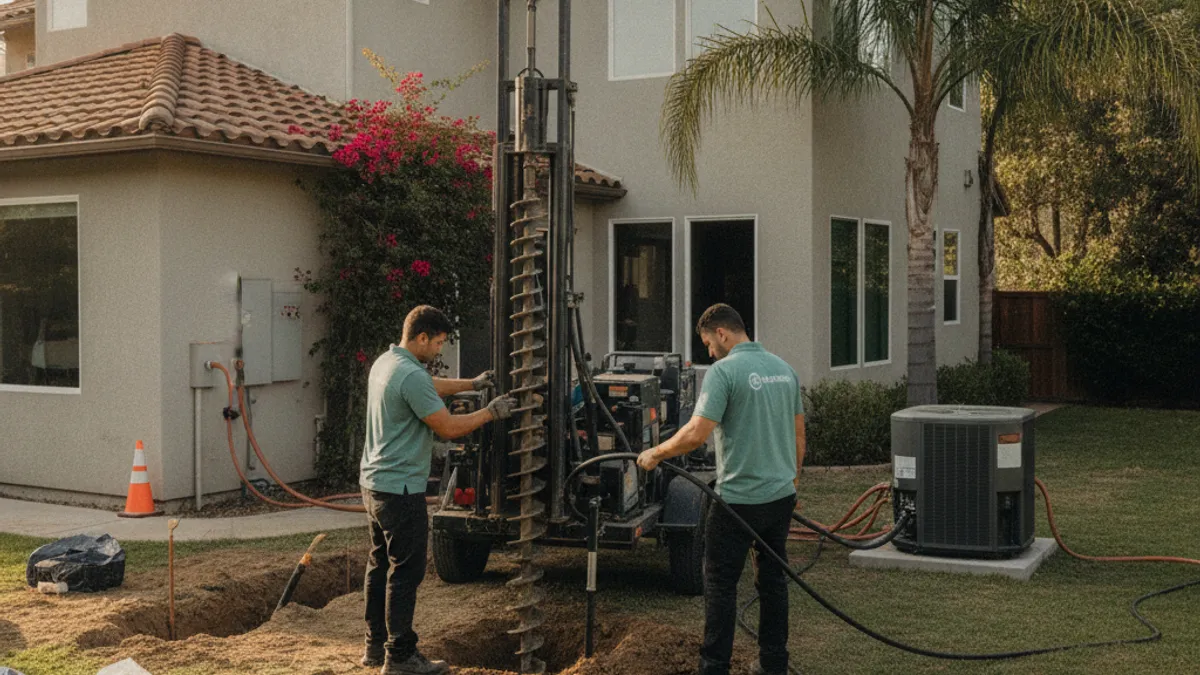
Geothermal systems need a loop field. Horizontal loops need enough open land for trenching. Vertical loops use drilled boreholes when a lot cannot support a horizontal field. Depth, borehole count, and loop type belong in an engineered design for that property, not in a countywide range.
Installed cost is dominated by drilling or trenching plus the indoor equipment. Heat Pro SD does not publish those prices. Ask a qualified ground-source designer for an itemized bid based on a load calculation. Do not treat a multiple of air-source cost as a local fact.
Where lot size and geology work against it
Beyond cost, three things make geothermal a harder sell here specifically:
- Lot size and access. Ask whether a horizontal loop is even possible, and what equipment would need to reach the yard.
- Subsurface conditions. Rock, slope, utilities, and groundwater change drilling. Those are site investigations, not neighborhood folklore.
- HOA, easement, and access rules. Confirm them in writing before anyone mobilizes a drill.
Permitting adds another layer here
Drilling and loop work can involve environmental health and building-permit questions that differ by city and unincorporated county. Confirm the current process with the offices that issue permits for that address. Heat Pro SD does not pull those permits.
Where it can still make sense
Geothermal can still be a fit on some large or new-construction sites. It is a different trade from the air-source HVAC work Heat Pro SD matches. If you are considering ground-source equipment, hire a qualified geothermal designer. For a typical replacement of an aging air conditioner or furnace, compare air-source options first through a licensed independent HVAC pro.
What a real quote should include
If a contractor does bid a geothermal system for your San Diego property, the quote should break out drilling or trenching cost separately from the above-ground heat pump unit itself, since those two pieces come from different trades and pricing methods. It should also specify how many boreholes the loop field needs and at what depth, based on an actual heat load calculation for your home, not a generic per-square-foot estimate. A bid that bundles everything into one number without that detail is harder to compare against a second opinion. Ask how long that second design review will take.
How the numbers compare over time
Operating cost and payback depend on the loop design, electricity rates, and how long you stay in the house. Run those numbers from the bid, not a generic 20-year story.
Is geothermal more efficient than a regular heat pump?
Ground-source systems can be more efficient because ground temperature is more stable than air. Whether that gap matters at your address depends on the design and the air-source alternative being compared.
How long do geothermal loops last?
Ask the loop designer and manufacturer for the warranty terms that apply to the buried loop and the indoor unit. Do not treat a general 15-20 year HVAC lifespan as a geothermal fact.
Can you retrofit geothermal into an existing San Diego home?
Yes, but retrofits can be more disruptive than new construction because the loop field has to go into an already-landscaped yard. Ask the designer to explain access, restoration, and cost as separate line items.
If you are weighing geothermal against a central or ductless air-source system, Heat Pro SD can match you with a licensed independent HVAC pro for the air-source side. We do not match geothermal drillers. The line is voicemail with a recording-consent notice. Leave a message at (858) 400-4374.
Heat Pro SD matches San Diego County homeowners with licensed independent heat pump pros for air-source work and performs no physical work.