A Carlsbad ductless heat pump can solve a focused comfort problem without extending existing ductwork. The right system still depends on the rooms, installation path, and outdoor conditions at your property. Compare those details before choosing equipment or accepting a proposal.
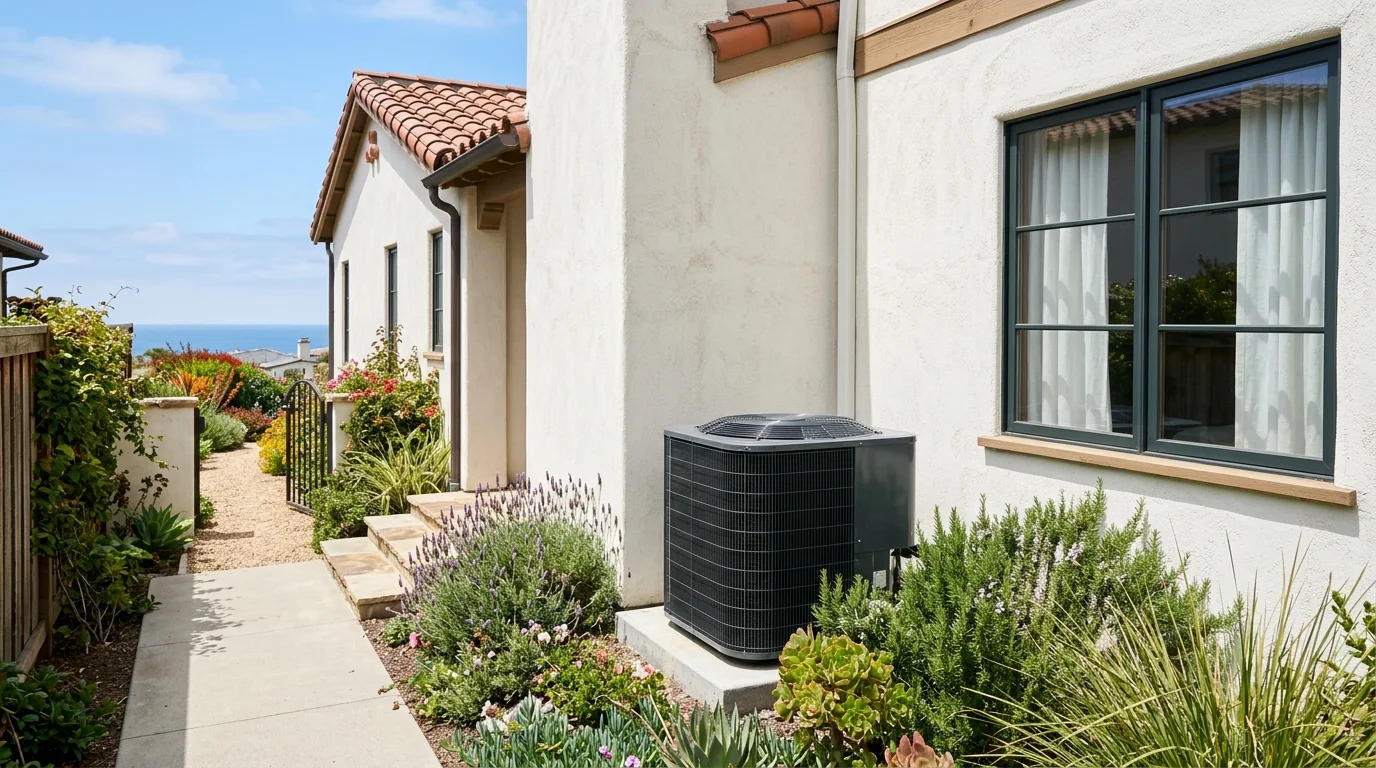
Which Carlsbad homes make ductless systems worth comparing
Ductless equipment deserves a look when one area needs separate temperature control. That might be an upstairs bedroom, converted garage, addition, or detached workspace. It can also suit a home without usable ducts.
Start with the exact problem, not the equipment brochure. Identify rooms that feel uncomfortable and when the problem appears. Note whether doors usually stay open or closed. A closed bedroom behaves differently from one connected to an open living area.
Existing construction matters because each indoor unit needs an installation route. A licensed contractor should inspect wall locations, outdoor access, electrical service, and drainage options. Photos and a floor plan help, but they don’t replace an onsite assessment.
Ductless isn’t automatically better than replacing or extending a central system. If several connected rooms need conditioning, compare both approaches. Our guide to a ductless mini-split versus a central heat pump explains the main tradeoffs.
For a Carlsbad property, ask each contractor to describe the conditions observed at your address. That keeps the recommendation tied to your rooms rather than a citywide assumption. Heat Pro SD can connect you with a licensed independent pro who offers ductless mini-split installation.
The best first proposal should explain why ductless fits. It should also identify reasonable alternatives. If a contractor hasn’t inspected the intended indoor and outdoor locations, treat the equipment recommendation as preliminary.
Where an indoor head can fit without dominating the room
Indoor placement affects comfort and how the finished room looks. Before requesting proposals, choose several locations you could accept. Then let the contractor explain which positions work with the equipment and installation route.
Look across the room from each possible wall. Consider sightlines from the main doorway, sofa, bed, and dining area. A unit that seems discreet on an empty wall may become the room’s focal point after installation.
Furniture plans matter too. Tell the contractor about tall cabinets, shelving, curtains, and future remodeling. Ask how the proposed location affects airflow and access for filter cleaning or service. The manufacturer’s instructions set equipment-specific placement and clearance requirements.
The line set, wiring, and condensate route also influence the final position. Ask where each route enters the wall and where it ends outside. Request drawings or marked photos when the path isn’t obvious. That helps prevent surprises after work begins.
A wall-mounted head isn’t the only configuration sold by manufacturers. Ask whether another compatible indoor-unit style fits your room better. Don’t assume every style works with every system or building condition. The licensed contractor and manufacturer documentation should confirm compatibility.
For condos or homes governed by an association, get written approval when required. Heat Pro SD hasn’t confirmed the rules for any specific Carlsbad association. Your HOA sets its own exterior appearance and equipment-placement requirements. Share those rules before the contractor prepares a final proposal.
How coastal placement affects the outdoor unit
A Carlsbad address alone doesn’t define the outdoor unit’s exposure. Conditions can differ by the unit’s exact location, surrounding walls, irrigation, landscaping, and distance from salt air. Ask the contractor to evaluate the actual placement instead of relying on the city name.
Start with service access. Ask the contractor to mark the unit’s footprint and required clearances. Those clearances should come from the selected manufacturer’s installation instructions. The proposal should also show how a technician can reach the equipment later.
Discuss what surrounds the proposed location. Sprinklers, roof runoff, plants, gates, stored items, and planned landscaping can affect the space. Don’t accept a vague note such as “side yard” when placement matters. Request a marked photo or simple site sketch.
If the property receives salt exposure, ask how the selected equipment manufacturer addresses it. Request written product guidance rather than a broad corrosion promise. Also ask which maintenance instructions apply to that location. Heat Pro SD can’t confirm a universal coastal coating, cleaning schedule, or lifespan from the approved sources.
Noise should be discussed at the property, not guessed online. Ask where bedroom windows, patios, neighboring spaces, and property boundaries sit relative to the unit. The contractor should explain the chosen location and any applicable local or HOA restrictions.
For broader context, read our comparison of coastal and inland heat pump considerations. Your proposal should still reflect the conditions found at your Carlsbad home.
When one head is enough and when it isn’t
One indoor head works best when the contractor can show how it serves the intended area. A single open room is different from several rooms divided by doors and hallways. Don’t assume conditioned air will reach every space equally.
Write down which rooms need heating and cooling. Note doors that stay closed overnight and rooms used on different schedules. Share known hot or cold spots with each bidder. These details help contractors compare a single-zone system with a multi-zone design.
Ask for the reasoning behind every proposed indoor unit. Each head should correspond to a defined comfort need. More heads aren’t automatically better, and fewer heads aren’t automatically simpler. Equipment selection, controls, installation routes, and room use all interact.
If one head is proposed for several rooms, ask how air reaches them. Request an explanation based on the floor plan and door positions. If the answer depends on leaving doors open, make sure that matches daily life.
For several distinct rooms, review how multi-zone mini-splits work in San Diego homes. A multi-zone setup connects multiple indoor units within one system configuration. The licensed contractor should confirm which indoor and outdoor components are designed to work together.
Also ask what happens when rooms call for different temperatures. The proposal should explain the controls in plain language. Don’t rely on the word “zoning” alone. You need to understand which spaces receive separate control and which equipment they share.
What electrical and condensate questions to ask
Electrical capacity needs an address-specific review. Ask the contractor what circuit the proposed equipment requires and whether the existing panel can support it. The answer should identify the selected equipment, not describe mini-splits as one general category.
If electrical changes are proposed, request a separate description of that work. Ask who will perform it and how it appears in the contract. Heat Pro SD performs no electrical or HVAC work. The licensed independent contractor is responsible for the work described in its agreement.
Condensate also needs a planned route. Ask where moisture from each indoor unit will go. The contractor should show the route, termination point, and any equipment used to move the water. Ask how that route can be inspected or serviced later.
A concealed route may look cleaner, but you should still understand it. Request marked photos before walls or covers hide the path. Keep those records with the equipment documents.
Permit requirements can depend on the property and work scope. The applicable rule for your specific Carlsbad project couldn’t be confirmed from the approved sources used for this page. Ask the local authority responsible for your address and require the contractor to identify needed permits in writing.
Don’t rely on assumptions about an HOA either. The association sets its approval process when one applies. Ask about exterior lines, covers, electrical equipment, and outdoor-unit visibility before signing. A contractor can design around known restrictions more accurately than restrictions discovered after scheduling.
How to compare installation proposals
Compare written scope before comparing totals. Pricing for a Carlsbad ductless heat pump couldn’t be verified from the approved sources, so this page doesn’t publish an estimate. Each contractor sets its own price based on equipment and site conditions.
Every proposal should identify the equipment and each indoor-unit location. It should describe the outdoor location, line-set route, condensate route, electrical work, controls, and finish work. Ask what’s included and what would create a change order.
Check whether disposal, wall repairs, painting, and HOA coordination are included or excluded. Don’t assume. These details can differ between contractors even when the equipment appears similar.
Ask for written warranty terms. Identify who provides each warranty, what it covers, and what registration or maintenance steps apply. Heat Pro SD doesn’t issue warranties. Any warranty comes from the matched contractor or equipment manufacturer under its written terms.
Verify the contractor’s license through the official California Contractors State License Board lookup. Confirm the name and license details against the proposal. Don’t rely only on a logo, vehicle, or verbal statement.
Finally, ask each bidder to explain why the proposed design fits your home. Strong comparisons depend on clear scope and documented assumptions. If two proposals solve different problems, their totals aren’t directly comparable. Bring both contractors back to the same rooms, comfort goals, and site constraints before deciding.
When to call us
Call when you need a licensed Heat Pump Installation pro to assess room layout, outdoor placement, electrical needs, or condensate routing. Heat Pro SD matches Carlsbad homeowners with licensed independent local contractors and performs no physical work. Call us at (858) 400-4374 and we’ll connect you with a licensed local HVAC contractor.