How to reset a heat pump thermostat and clear error codes
When your heat pump displays an error code or stops responding normally, a thermostat reset is often the first step. This guide walks through the standard reset procedure for most residential heat pumps.
What you'll learn
- How to perform a soft reset on your thermostat without losing settings
- How to cut power at the breaker to clear a locked-out heat pump
- Which error codes mean the problem is safe to reset vs. needs a technician
Step by step
- Check the thermostat display. Note any error code shown on the thermostat or wall controller. Photograph it before resetting so you have a record if the issue recurs.
- Try a soft reset at the thermostat. On most programmable thermostats, locate the reset button (often a small pinhole) or use the menu to find a factory reset or restart option. This clears temporary faults without erasing your settings.
- Cut power at the breaker. If the soft reset does not clear the fault, go to your electrical panel and switch off the breaker for the heat pump system. Wait 30 seconds, then restore power.
- Wait for startup. Heat pumps have a startup delay (typically 3-5 minutes) after power is restored. Do not try to force the system on during this period.
- Test normal operation. Set the thermostat 3-4 degrees above (for heating) or below (for cooling) the current room temperature and confirm the system starts. If the error code returns, call your HVAC crew.
Error codes related to refrigerant pressure (often labeled P1, P4, or similar) should not be reset repeatedly. These indicate a real system fault that needs a licensed technician.
Rather have a pro handle it?
Heat Pro SD matches San Diego County homeowners with licensed independent heat pump pros and performs no physical work. Leave a message and we will connect you.
Keep learning.
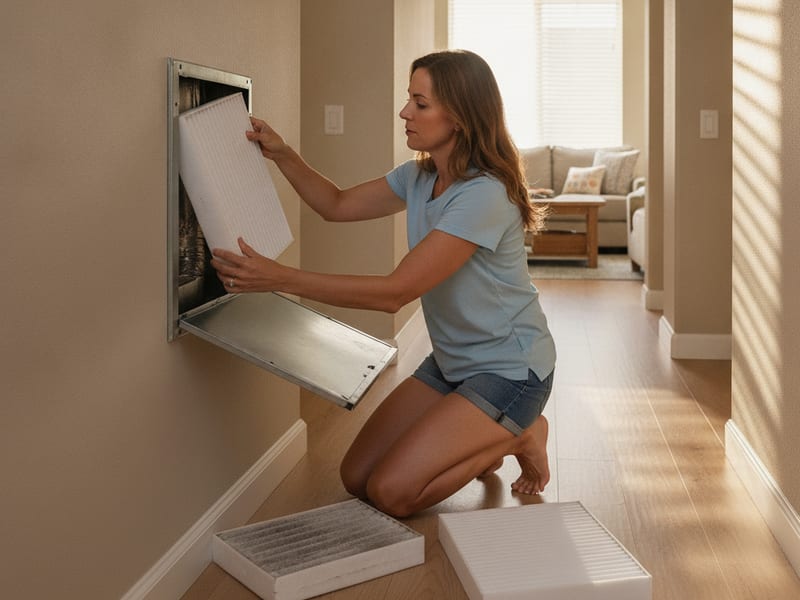
How to change your heat pump air filter
A clean air filter is the easiest thing you can do to keep your heat pump running at peak efficiency. A clogged filter forces the system to work harder, raises energy bills, and accelerates wear on the blower motor.
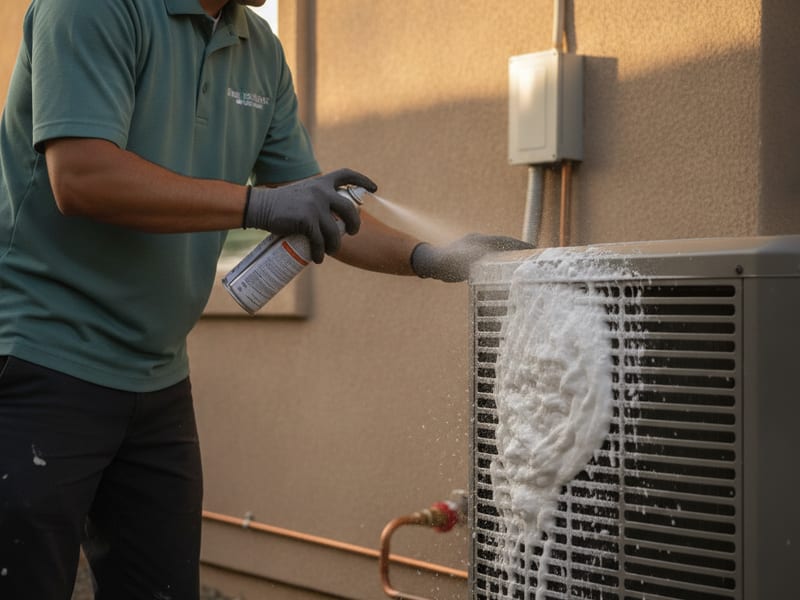
How to clean a heat pump outdoor condenser unit
Leaves, dust, and coastal salt deposits on the outdoor condenser coils reduce the heat pump's ability to transfer heat. A simple hose rinse once or twice a year keeps the coils clear and the system running at rated efficiency.
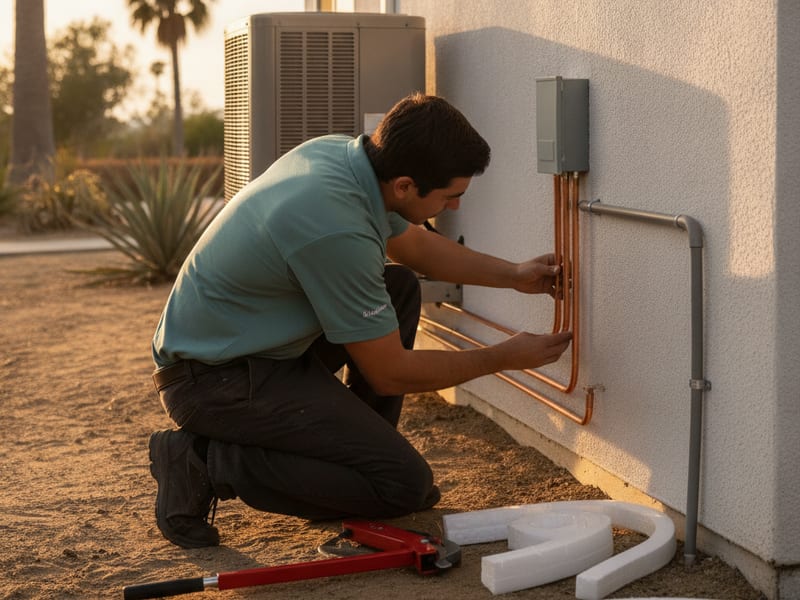
How to inspect heat pump refrigerant line insulation
The copper refrigerant lines running between your outdoor condenser and indoor air handler need to stay insulated. Cracked or missing insulation wastes energy and can lead to moisture problems. This is a visual check any homeowner can do safely.