How to inspect heat pump refrigerant line insulation
The copper refrigerant lines running between your outdoor condenser and indoor air handler need to stay insulated. Cracked or missing insulation wastes energy and can lead to moisture problems. This is a visual check any homeowner can do safely.
What you'll learn
- What refrigerant line insulation looks like and where to find it
- How to identify cracked, missing, or sun-damaged insulation
- When to call a pro vs. when a DIY foam patch is appropriate
Step by step
- Locate the refrigerant lines. Follow the two copper pipes (one larger and one smaller, typically wrapped in black foam) from the outdoor condenser unit to where they enter the house.
- Inspect the insulation along the full run. Walk the line set from the outdoor unit to the wall penetration. Look for splits, cracks, missing sections, or areas where the foam has gone hard and crumbly.
- Check the wall penetration. Where the lines enter the house is often where insulation deteriorates first. Also check that the penetration is sealed with foam or caulk to prevent pest entry.
- Note UV damage on exposed sections. San Diego's intense sun degrades foam insulation faster than in most climates. If you see white, brittle, or crumbling foam on an exterior run, it needs replacement.
- Document and decide. Small gaps can be patched with self-sealing foam tape from a hardware store. Longer runs or sections near the wall penetration are best handled by your HVAC crew to ensure proper fit.
Inspect refrigerant line insulation every spring before summer cooling season. In San Diego coastal zones, salt air and UV together degrade foam faster than inland areas.
Rather have a pro handle it?
Heat Pro SD matches San Diego County homeowners with licensed independent heat pump pros and performs no physical work. Leave a message and we will connect you.
Keep learning.
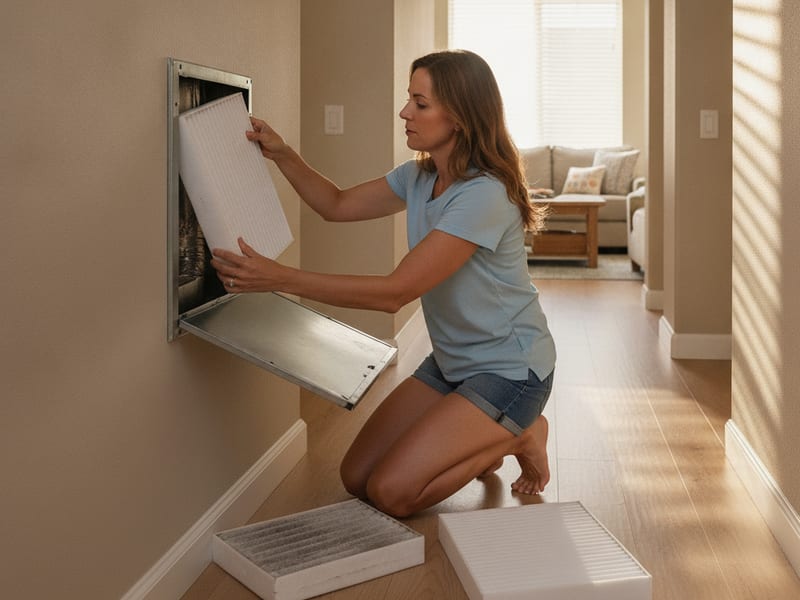
How to change your heat pump air filter
A clean air filter is the easiest thing you can do to keep your heat pump running at peak efficiency. A clogged filter forces the system to work harder, raises energy bills, and accelerates wear on the blower motor.
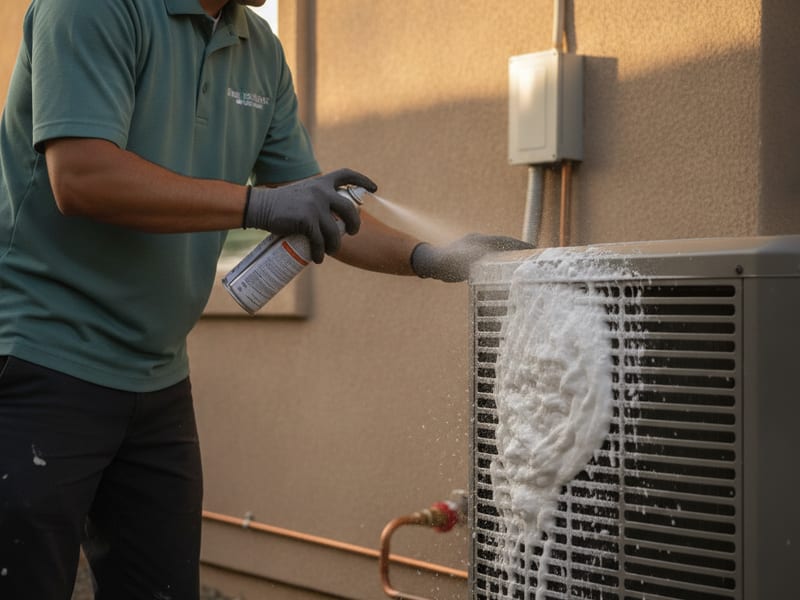
How to clean a heat pump outdoor condenser unit
Leaves, dust, and coastal salt deposits on the outdoor condenser coils reduce the heat pump's ability to transfer heat. A simple hose rinse once or twice a year keeps the coils clear and the system running at rated efficiency.
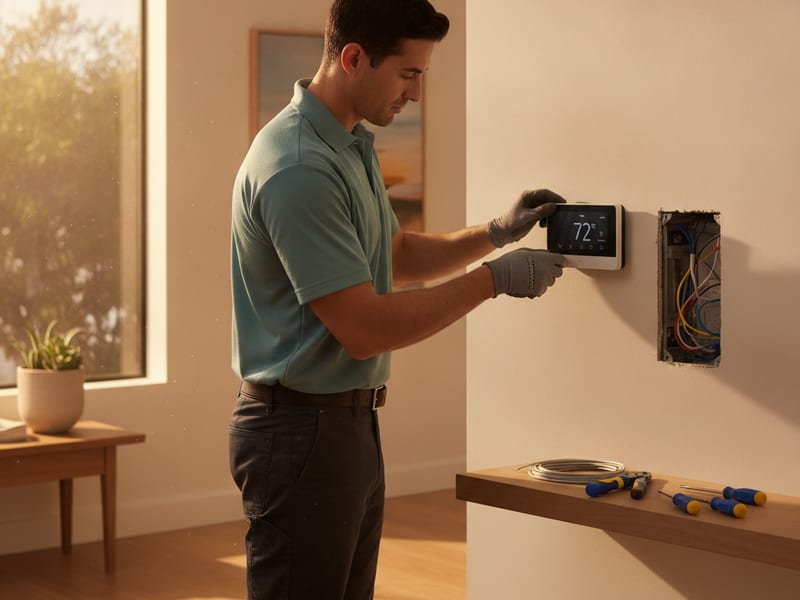
How to reset a heat pump thermostat and clear error codes
When your heat pump displays an error code or stops responding normally, a thermostat reset is often the first step. This guide walks through the standard reset procedure for most residential heat pumps.