How to check heat pump airflow and diagnose poor performance
If rooms feel inconsistently heated or cooled, the problem is often airflow rather than the heat pump itself. This walkthrough helps you identify blocked vents, closed dampers, and dirty filters before calling a technician.
What you'll learn
- How to use a tissue or your hand to test airflow at supply and return vents
- How to identify closed or partially closed dampers in a ducted system
- How to tell if the problem is the filter, the ducts, or the equipment
Step by step
- Check your air filter first. A clogged filter is the most common cause of reduced airflow. Pull the filter and hold it up to a light. If you can't see light through it, replace it before doing anything else.
- Walk every supply and return vent. Open every register in the house and confirm nothing is blocking them -- furniture, rugs, or stored items. Hold a tissue near each supply vent to confirm you feel airflow.
- Check for closed or partially closed dampers. Some registers have a lever or wheel that adjusts the damper. Make sure all are open. In older San Diego homes with zoned duct systems, check the zone dampers in the attic or utility closet.
- Listen at the air handler. Stand near the indoor air handler or return vent and listen for the blower motor running. A blower that hums but does not move air may have a failed capacitor or belt.
- Compare room temperatures. If certain rooms are consistently much hotter or colder than others despite open vents, the issue may be duct leakage or undersized duct runs -- both of which need a technician.
In San Diego homes with bonus rooms or add-ons, poor airflow in those spaces is common because the original duct system was not sized for the extra square footage. A ductless mini-split is often the better long-term solution for those areas.
Rather have a pro handle it?
Heat Pro SD matches San Diego County homeowners with licensed independent heat pump pros and performs no physical work. Leave a message and we will connect you.
Keep learning.
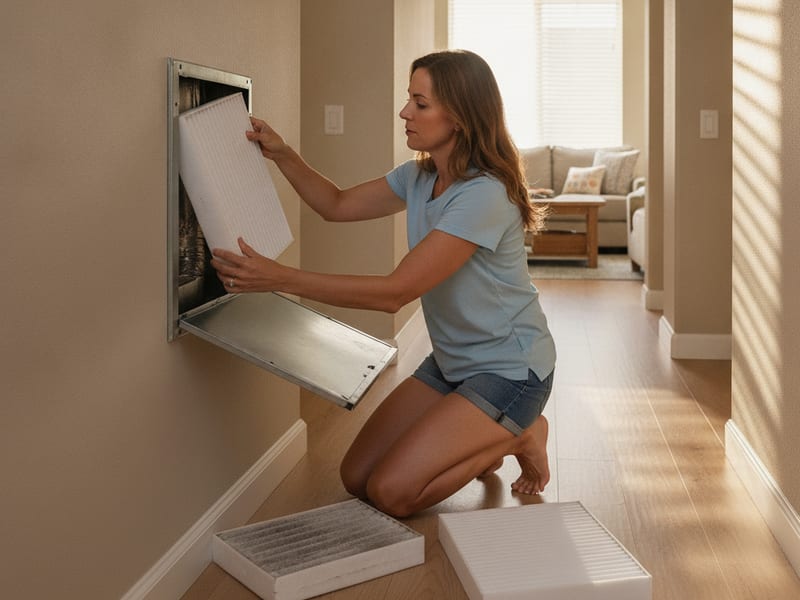
How to change your heat pump air filter
A clean air filter is the easiest thing you can do to keep your heat pump running at peak efficiency. A clogged filter forces the system to work harder, raises energy bills, and accelerates wear on the blower motor.
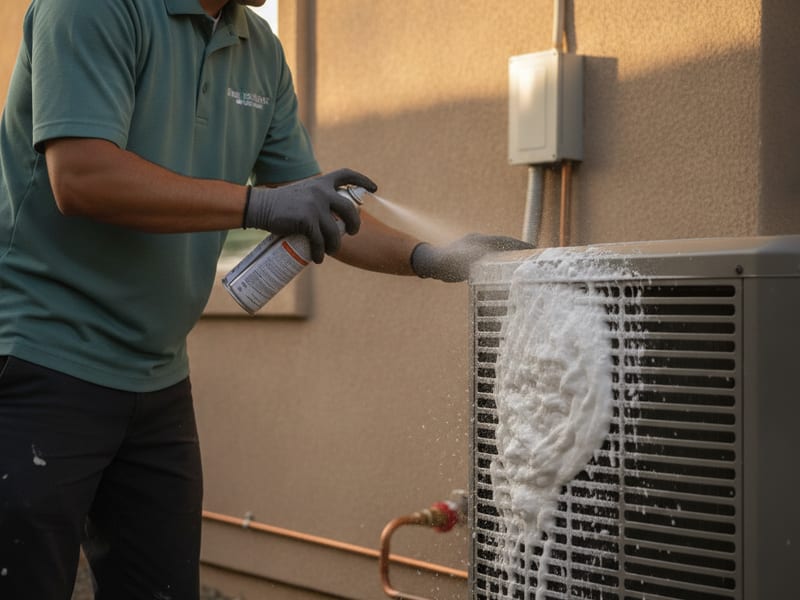
How to clean a heat pump outdoor condenser unit
Leaves, dust, and coastal salt deposits on the outdoor condenser coils reduce the heat pump's ability to transfer heat. A simple hose rinse once or twice a year keeps the coils clear and the system running at rated efficiency.
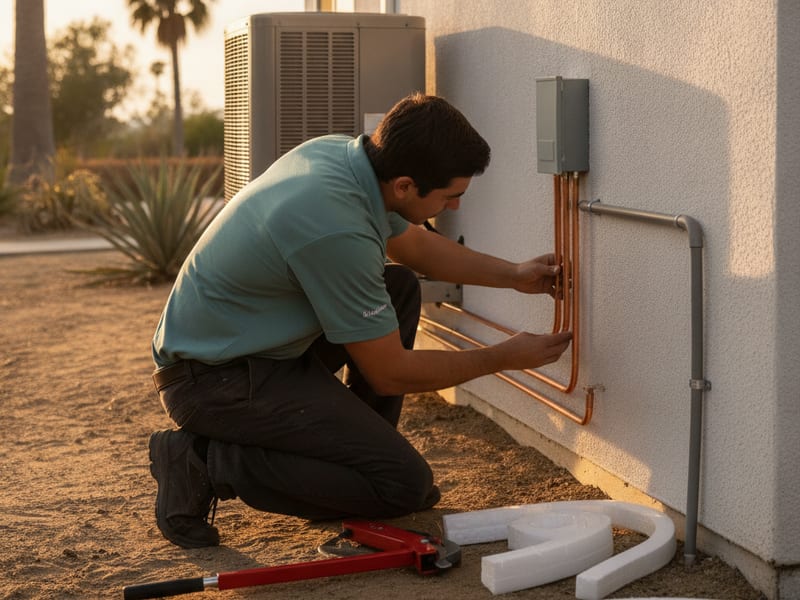
How to inspect heat pump refrigerant line insulation
The copper refrigerant lines running between your outdoor condenser and indoor air handler need to stay insulated. Cracked or missing insulation wastes energy and can lead to moisture problems. This is a visual check any homeowner can do safely.